Scalloped Potatoes
Scalloped Potatoes
There are few side dishes as purely comforting as a dish of Scalloped Potatoes fresh from the oven: thin slices of potato layered in a rich, garlicky cream sauce, baked low and…
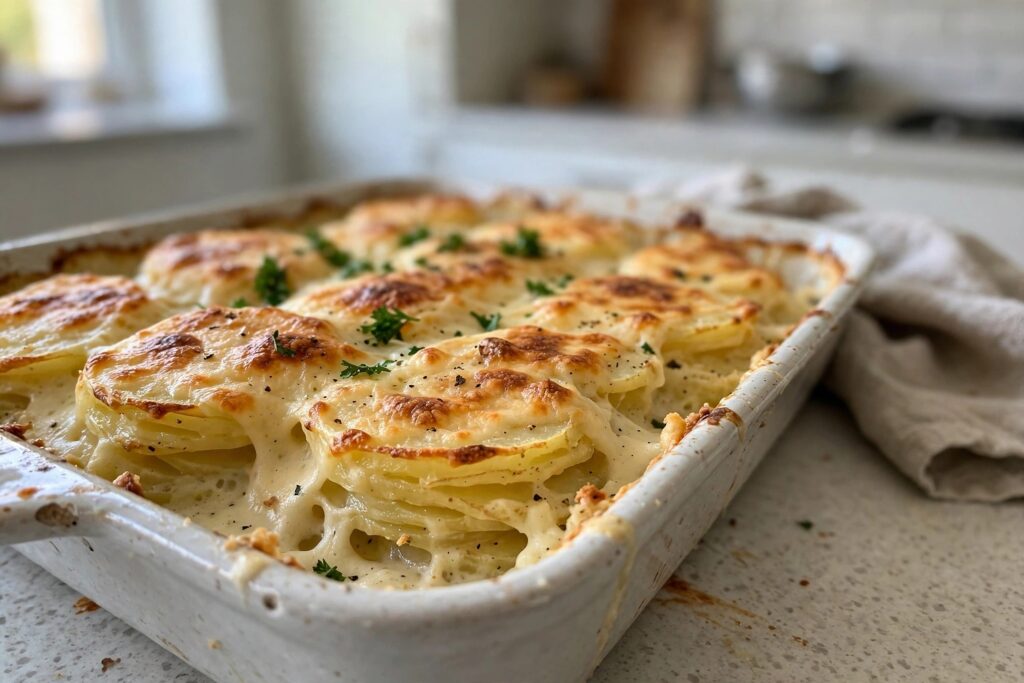
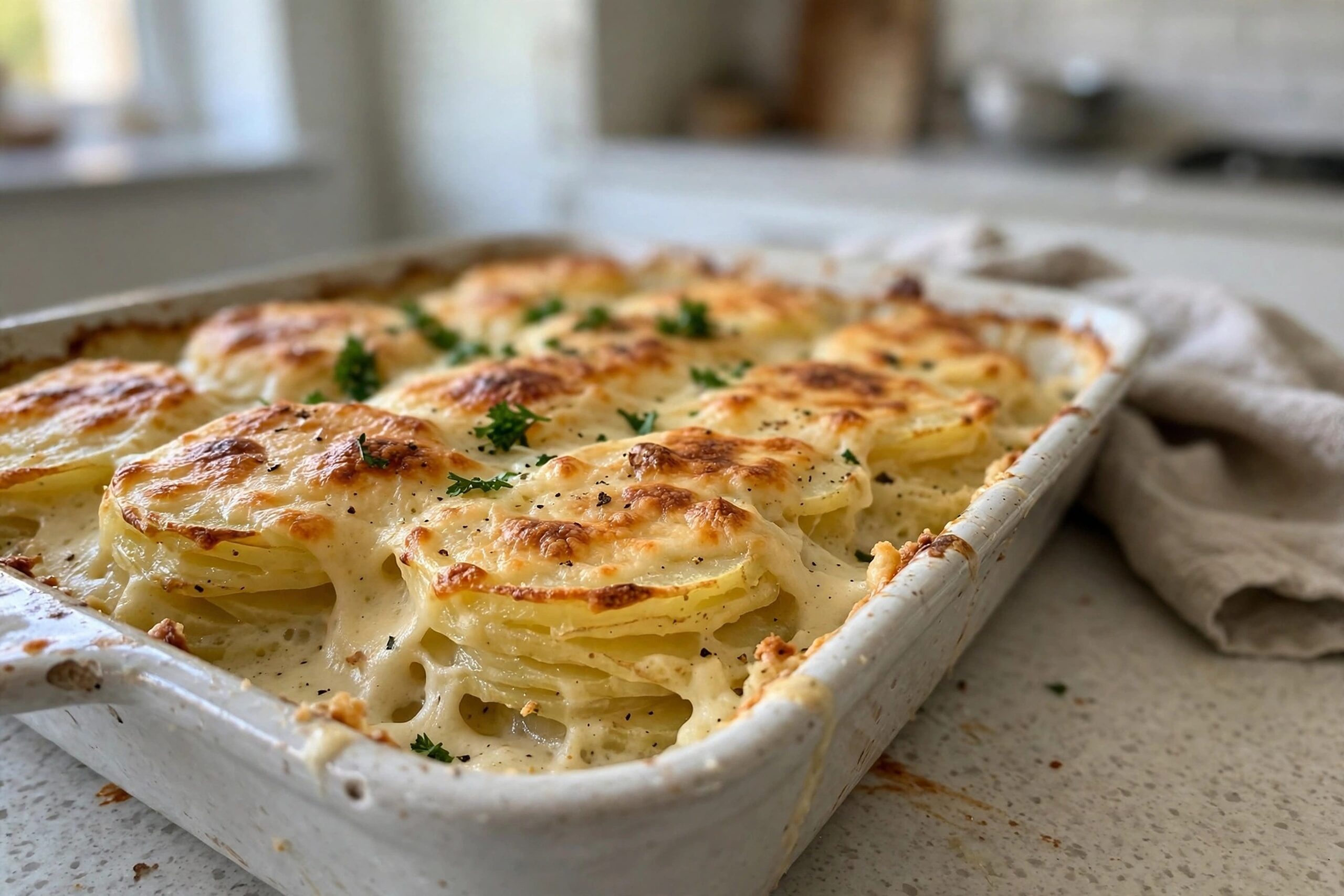
There are few side dishes as purely comforting as a dish of Scalloped Potatoes fresh from the oven: thin slices of potato layered in a rich, garlicky cream sauce, baked low and slow until every layer is tender and the top is golden at the edges. It is the kind of dish that makes people linger at the table, going back for just one more spoonful.
I’m Samuel, and here at Samuel’s Recipes I make scalloped potatoes the traditional way — no cheese in the sauce itself (that would make them au gratin, and I will happily argue about that at the table), just potatoes, cream, garlic, butter, and patience. The starch from the potatoes thickens the sauce as it bakes, so you get something silky and rich without any flour or complicated steps.
Below you will find the complete recipe, my tips for slicing evenly and baking until truly tender, easy variations, and make-ahead advice for holidays. This is a dish worth doing right, and it is easier than you think.
Why You’ll Love This Recipe
- Creamy in every layer: the potatoes release starch as they bake, turning the cream into a velvety sauce that coats every slice.
- Simple, classic ingredients: potatoes, cream, milk, garlic, butter, and thyme — nothing fussy, nothing hard to find.
- Golden, bubbling top: a final uncovered bake gives you those crisped edges everyone fights over.
- Perfect holiday side: it sits happily beside turkey, roast chicken, beef, or a glazed holiday centerpiece.
- Make-ahead friendly: assemble it earlier in the day, or bake it a day ahead and reheat — it is forgiving.
- Feeds a crowd: one 9×13-inch dish serves eight generously and scales up for bigger gatherings.
Ingredients
For the Potatoes
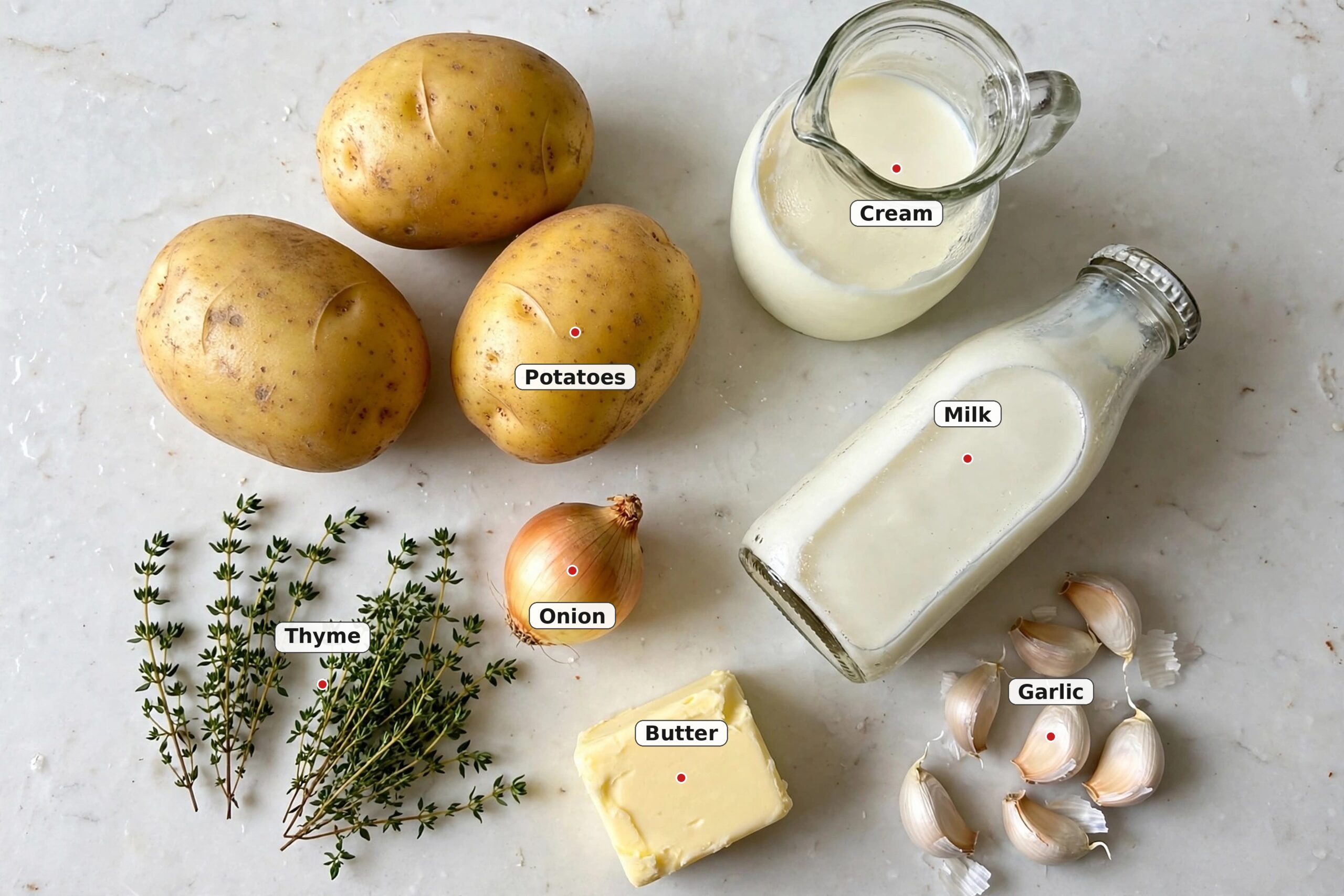
- 3 pounds (1.4 kg) Yukon Gold or russet potatoes, peeled and sliced 1/8 inch thick
- 2 tablespoons unsalted butter, softened, for the dish and dotting the top
- 1 small yellow onion, very thinly sliced (optional)
For the Cream Sauce
- 1 1/2 cups (360 ml) heavy cream
- 1 cup (240 ml) whole milk
- 3 garlic cloves, minced or grated
- 1 1/2 teaspoons fine salt
- 1/2 teaspoon black pepper
- 1/4 teaspoon ground nutmeg
- 1 teaspoon fresh thyme leaves, plus more for serving
- Chopped fresh parsley, for garnish
Instructions
Step 1: Preheat your oven to 375°F (190°C). Butter a 9×13-inch baking dish generously with about half the softened butter, making sure to get into the corners. This keeps the potatoes from sticking and adds flavor to the edges.
Step 2: Peel the potatoes and slice them 1/8 inch thick — about the thickness of two stacked coins. A mandoline makes this fast and even, but a sharp knife and a little patience work just as well. Even thickness matters more than speed: slices that match will finish cooking at the same time. Do not rinse the slices; you want their starch for the sauce.
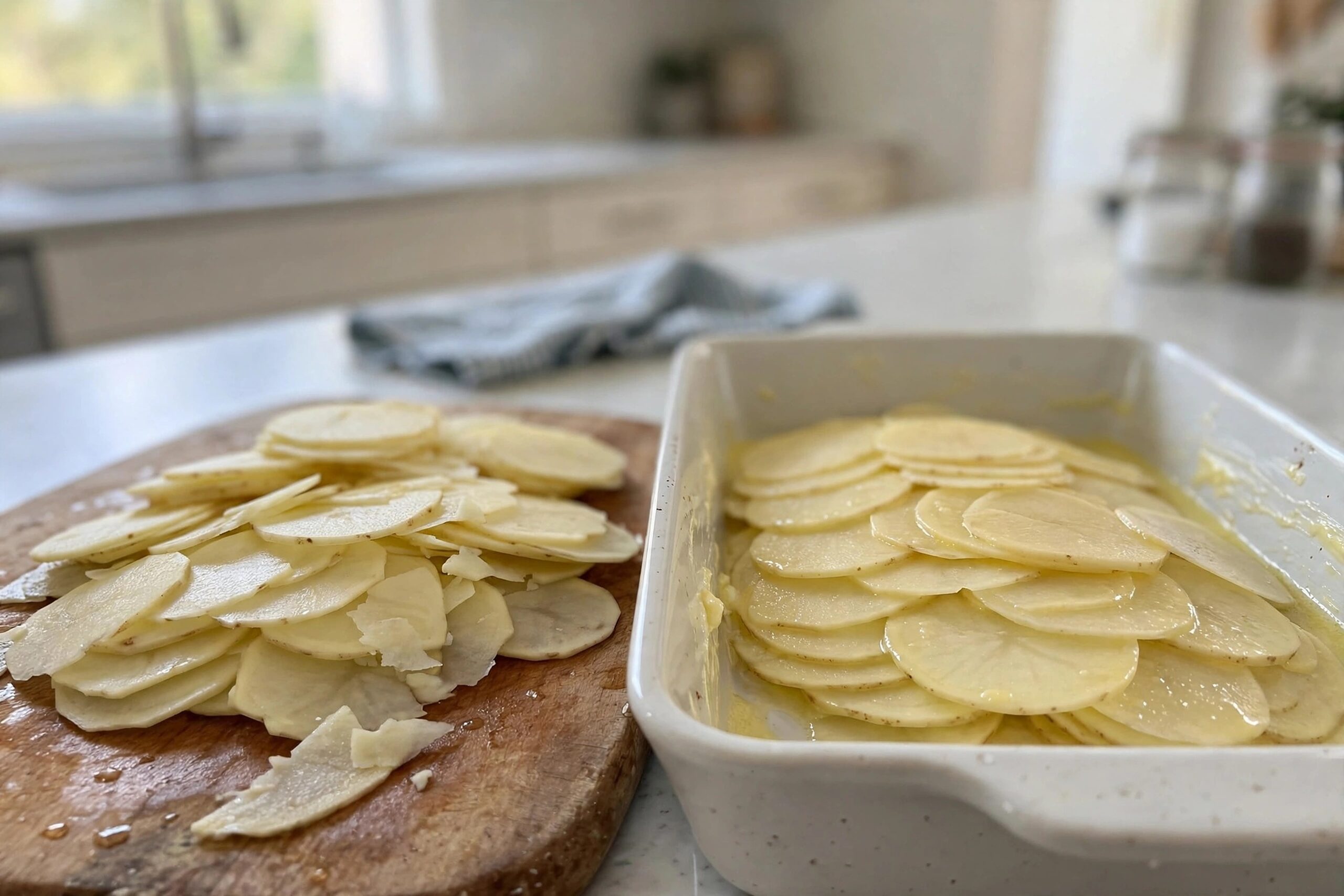
Step 3: In a medium saucepan over medium heat, combine the cream, milk, garlic, salt, pepper, nutmeg, and thyme. Warm it until it just begins to steam and small bubbles appear at the edges, about 5 minutes. Do not let it boil hard. Warming the sauce first gives the potatoes a head start and seasons them evenly.
Step 4: Arrange one-third of the potato slices in the baking dish in overlapping rows, like shingles on a roof. Scatter one-third of the onion slices over them if you are using onion. Repeat twice more, finishing with a neat top layer of potatoes.
Step 5: Slowly pour the warm cream mixture evenly over the potatoes. It should come almost to the top layer but not completely cover it — the very top slices peeking out are the ones that will turn golden. Gently press down with a spatula to settle the layers and release any air pockets.
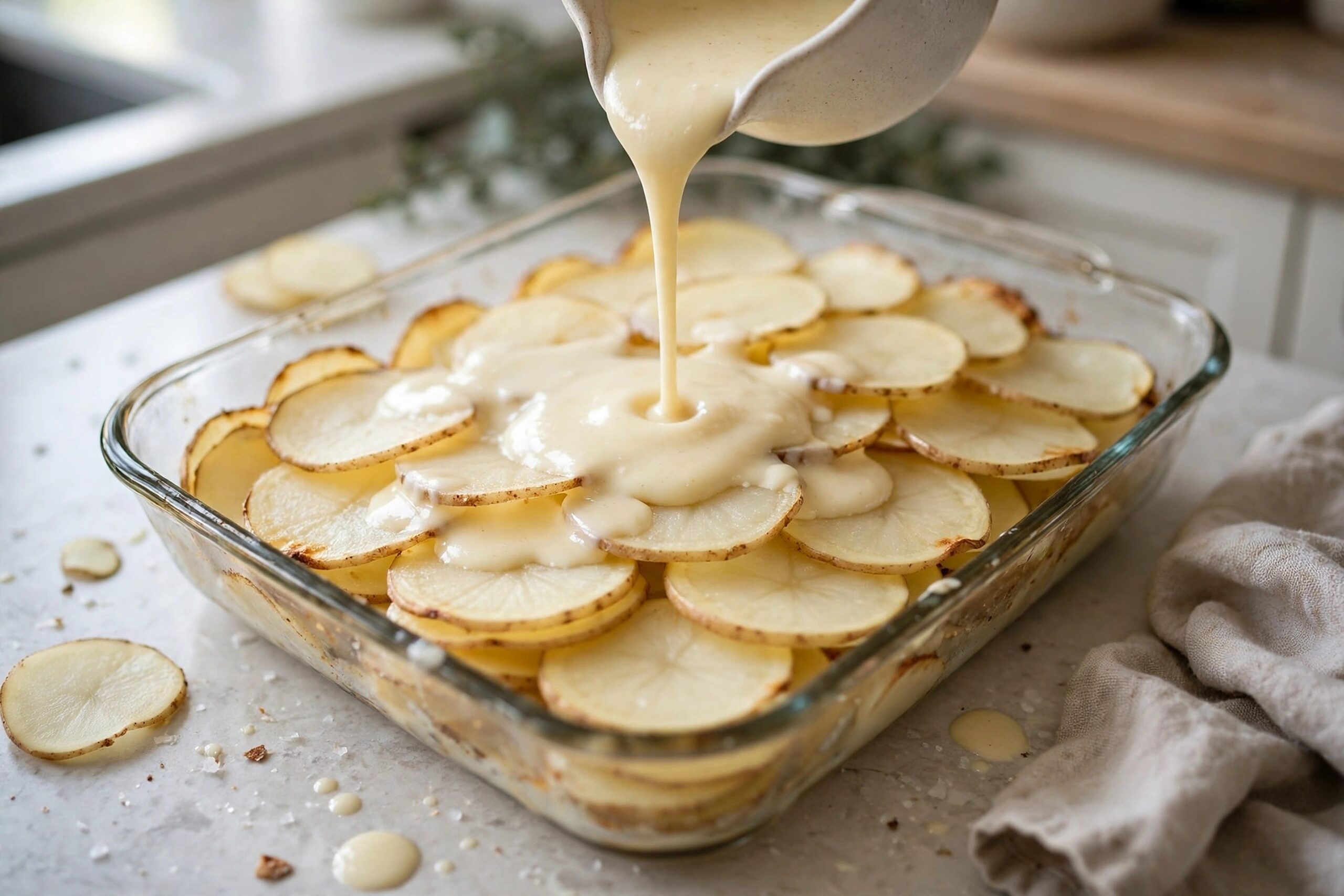
Step 6: Dot the top with the remaining butter, cut into small pieces. Cover the dish tightly with foil.
Step 7: Bake covered for 45 minutes. The potatoes should be steaming in the sauce and starting to turn tender. Covering first is essential — it traps the steam that cooks the potatoes through before the top browns.
Step 8: Remove the foil and bake for another 25 to 30 minutes, until the top is golden in spots, the sauce is bubbling thickly around the edges, and a knife slides into the center potatoes with no resistance at all. If any slice still feels firm, give it 10 more minutes — undercooked scalloped potatoes are the one mistake worth avoiding.
Step 9: If you want a deeper golden top, place the dish under the broiler for 1 to 2 minutes at the very end, watching it the whole time. It goes from golden to too dark in seconds.
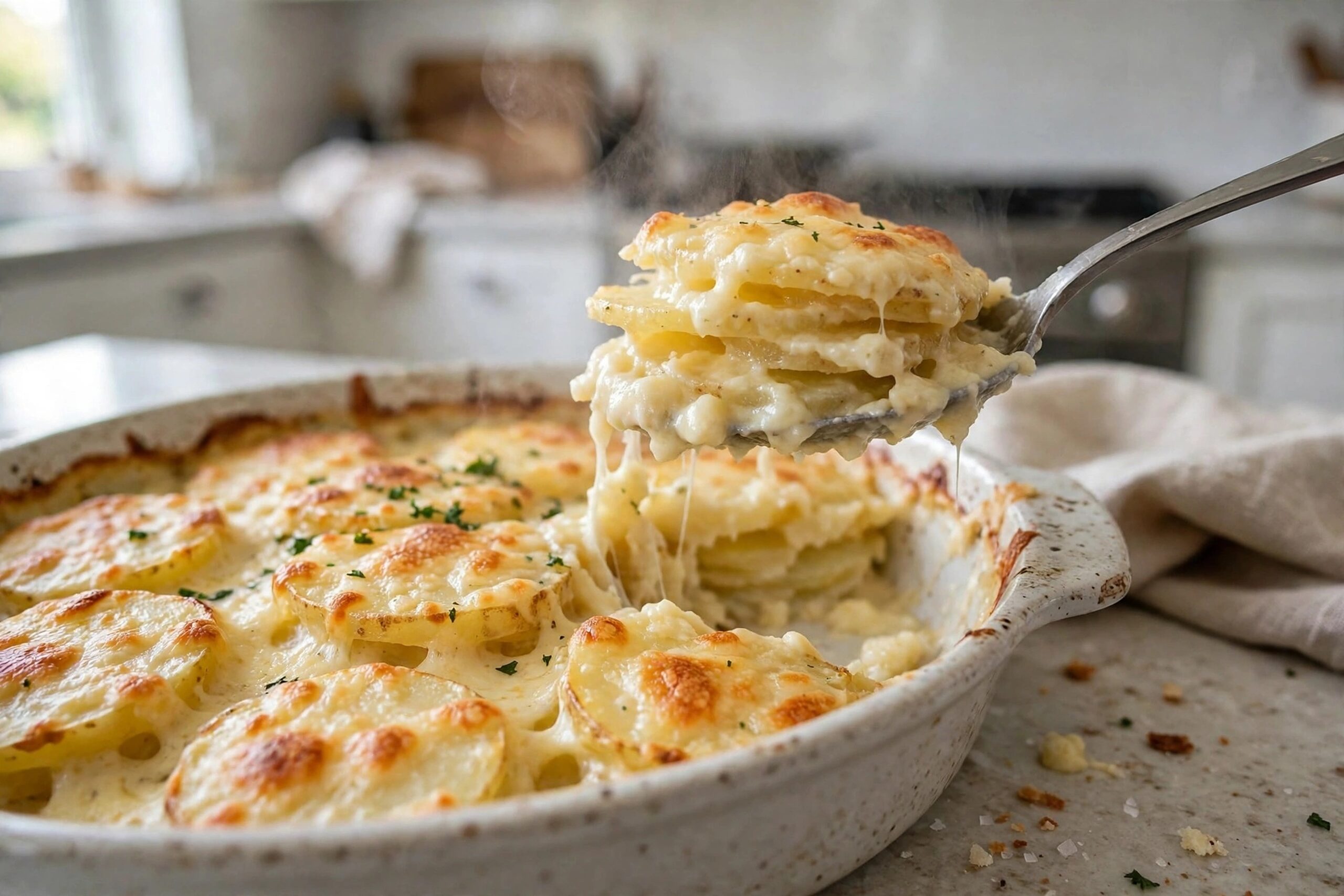
Step 10: Let the dish rest for at least 15 minutes before serving. This rest is not optional in my kitchen: the sauce thickens as it stands, so your servings hold together in creamy layers instead of sliding into a puddle. Scatter parsley and extra thyme over the top and serve warm.
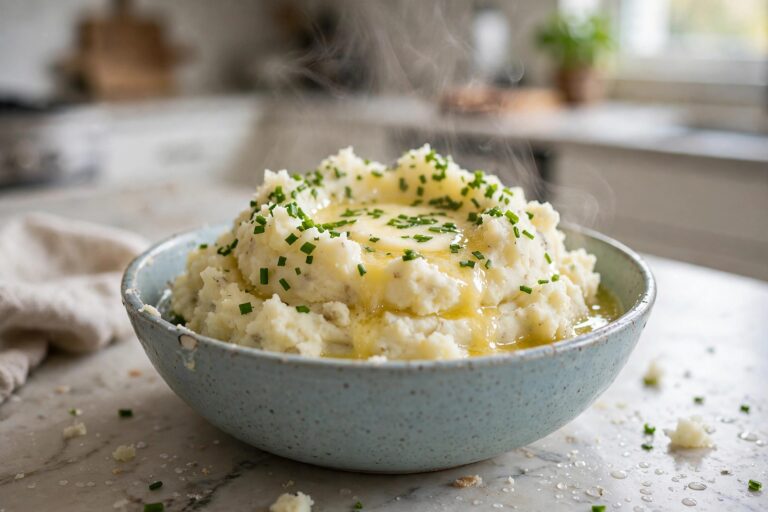
 Try this nextGarlic Mashed Potatoes
Tips for the Best Scalloped Potatoes
- Slice thin and even: 1/8 inch is the sweet spot. Thicker slices take much longer and can stay firm in the middle while the top over-browns.
- Do not rinse the potatoes: their surface starch is what thickens the cream into a sauce. Rinsed potatoes make a thin, watery dish.
- Warm the sauce first: cold cream poured over potatoes adds 15 minutes or more to the bake and cooks unevenly.
- Bake covered, then uncovered: foil first for tenderness, open heat second for that golden top. Skipping the covered stage is the most common reason for crunchy potatoes.
- Test with a knife, not the clock: ovens and potato varieties vary. The knife should meet no resistance in the very center.
- Rest before serving: fifteen minutes turns a bubbling, loose sauce into a silky one that coats every layer.
Easy Variations
Potatoes Au Gratin Style
Add 1 1/2 cups of shredded Gruyère or sharp cheddar between the layers and on top. Technically that makes it au gratin rather than scalloped — and it is absolutely delicious, so call it what you like and enjoy it.
Garlic and Herb
Double the garlic, add a bay leaf to the warming cream (remove it before pouring), and finish with chives along with the parsley for a more aromatic, bistro-style dish.
Half and Half Swap
Replace the cream and milk with 2 1/2 cups of half-and-half for a slightly lighter version that is still rich and creamy. The sauce will be a touch thinner, so let it rest the full 15 minutes.
How to Store / Make Ahead
Make ahead: assemble the dish completely, cover, and refrigerate for up to 8 hours before baking; add 10 minutes to the covered baking time. Or bake it fully a day ahead — scalloped potatoes reheat remarkably well.
Refrigerator: store leftovers covered for up to 4 days.
Reheating: cover with foil and warm in a 350°F (175°C) oven for 20 to 25 minutes, until hot and bubbling. Add a splash of cream before reheating if the sauce looks tight. Individual portions microwave well in about 2 minutes.
Freezer: freezing is not ideal — cream sauces can separate and potatoes can turn grainy — but baked leftovers freeze acceptably for up to 1 month. Thaw overnight and reheat covered.
Frequently Asked Questions
What is the difference between scalloped potatoes and au gratin?
Traditionally, scalloped potatoes are baked in a cream or milk sauce with no cheese, while au gratin includes cheese and often a breadcrumb top. My recipe is a true scallop — add cheese and you have a wonderful gratin instead.
Why are my potatoes still hard after baking?
Usually the slices were too thick, the dish was not covered long enough, or the sauce started cold. Slice to 1/8 inch, warm the sauce, keep the foil on for the full first stage, and always test the center with a knife.
Which potatoes are best?
Yukon Golds are my favorite — they hold their shape, taste buttery, and make a silky sauce. Russets work well too and thicken the sauce even more, though they soften and slump a bit more in the dish.
Can I use only milk instead of cream?
You can, but the sauce will be thinner and more likely to look curdled after the long bake. If you must, use whole milk and whisk 1 tablespoon of flour into it before warming to help it stay smooth.
Why did my sauce separate or look curdled?
A hard boil or very high oven heat can split a cream sauce. Warm the sauce gently without boiling, bake at 375°F rather than higher, and let the dish rest before cutting in — it often comes back together as it stands.
Final Thoughts
Scalloped potatoes ask for two things: thin, even slices and a little patience in the oven. In return they give you one of the most comforting side dishes ever to come out of an American kitchen — creamy, golden, and rich enough to make a simple roast dinner feel like an occasion.
Make them for your next holiday or Sunday supper, give them their full rest, and serve them proudly in the dish they baked in. Tell me in the comments what you served alongside. Happy cooking!
Samuel
Scalloped Potatoes
There are few side dishes as purely comforting as a dish of Scalloped Potatoes fresh from the oven: thin slices of potato layered in a rich, garlicky cream sauce, baked low and…
Ingredients
Potatoes
Cream Sauce
Method
- 1Preheat your oven to 375°F (190°C). Butter a 9×13-inch baking dish generously with about half the softened butter, making sure to get into the corners. This keeps the potatoes from sticking and adds flavor to the edges.
- 2Peel the potatoes and slice them 1/8 inch thick — about the thickness of two stacked coins. A mandoline makes this fast and even, but a sharp knife and a little patience work just as well. Even thickness matters more than speed: slices that match will finish cooking at the same time. Do not rinse the slices; you want their starch for the sauce.
- 3In a medium saucepan over medium heat, combine the cream, milk, garlic, salt, pepper, nutmeg, and thyme. Warm it until it just begins to steam and small bubbles appear at the edges, about 5 minutes. Do not let it boil hard. Warming the sauce first gives the potatoes a head start and seasons them evenly.
- 4Arrange one-third of the potato slices in the baking dish in overlapping rows, like shingles on a roof. Scatter one-third of the onion slices over them if you are using onion. Repeat twice more, finishing with a neat top layer of potatoes.
- 5Slowly pour the warm cream mixture evenly over the potatoes. It should come almost to the top layer but not completely cover it — the very top slices peeking out are the ones that will turn golden. Gently press down with a spatula to settle the layers and release any air pockets.
- 6Dot the top with the remaining butter, cut into small pieces. Cover the dish tightly with foil.
- 7Bake covered for 45 minutes. The potatoes should be steaming in the sauce and starting to turn tender. Covering first is essential — it traps the steam that cooks the potatoes through before the top browns.
- 8Remove the foil and bake for another 25 to 30 minutes, until the top is golden in spots, the sauce is bubbling thickly around the edges, and a knife slides into the center potatoes with no resistance at all. If any slice still feels firm, give it 10 more minutes — undercooked scalloped potatoes are the one mistake worth avoiding.
- 9If you want a deeper golden top, place the dish under the broiler for 1 to 2 minutes at the very end, watching it the whole time. It goes from golden to too dark in seconds.
- 10Let the dish rest for at least 15 minutes before serving. This rest is not optional in my kitchen: the sauce thickens as it stands, so your servings hold together in creamy layers instead of sliding into a puddle. Scatter parsley and extra thyme over the top and serve warm.
Notes
Make ahead: assemble the dish completely, cover, and refrigerate for up to 8 hours before baking; add 10 minutes to the covered baking time. Or bake it fully a day ahead — scalloped potatoes reheat remarkably well. Refrigerator: store leftovers covered for up to 4 days.