Herb Roasted Chicken
Herb Roasted Chicken
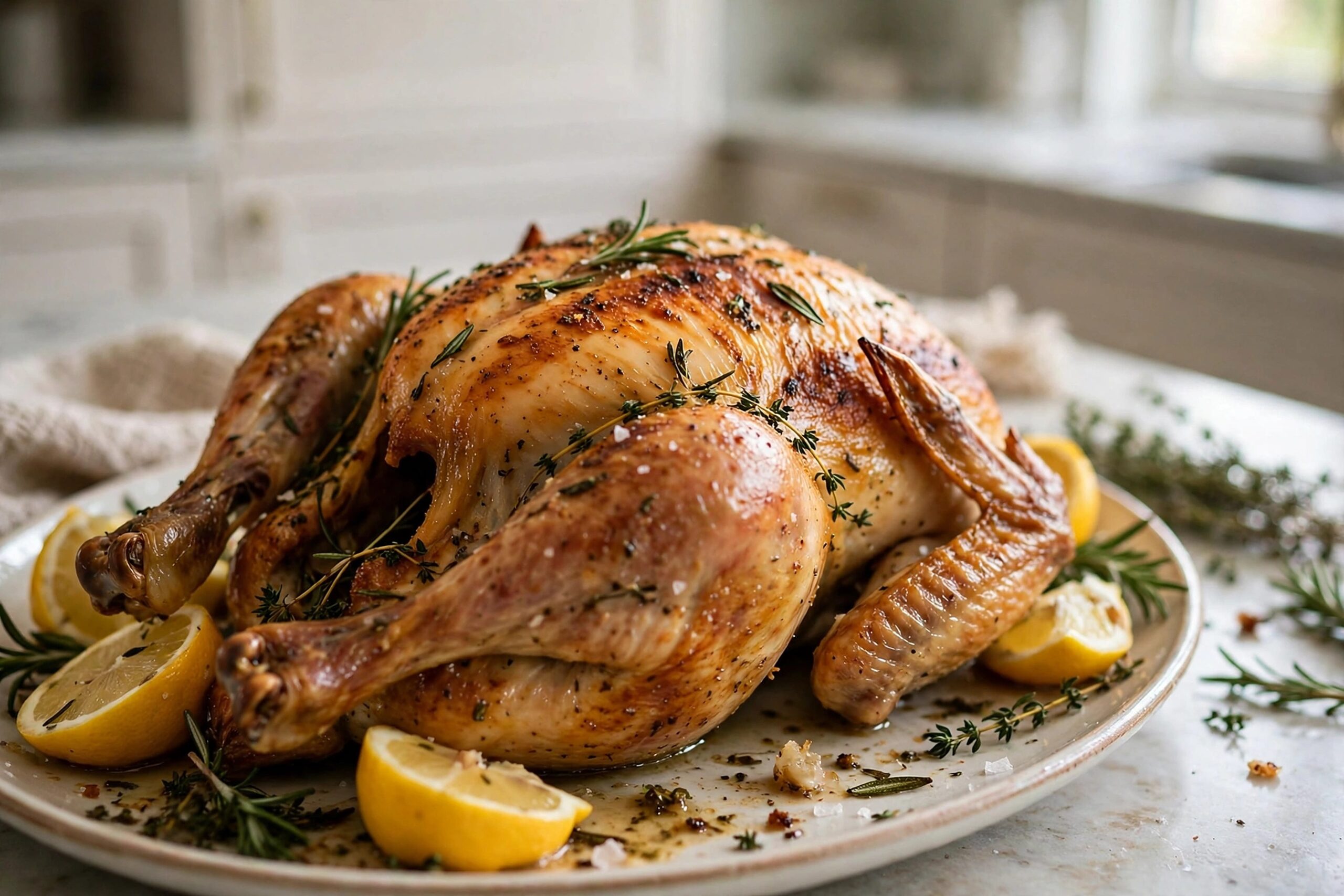
There are few things in a kitchen as satisfying as pulling a whole Herb Roasted Chicken out of the oven: skin deep golden and crisp, the pan fragrant with garlic, lemon and…
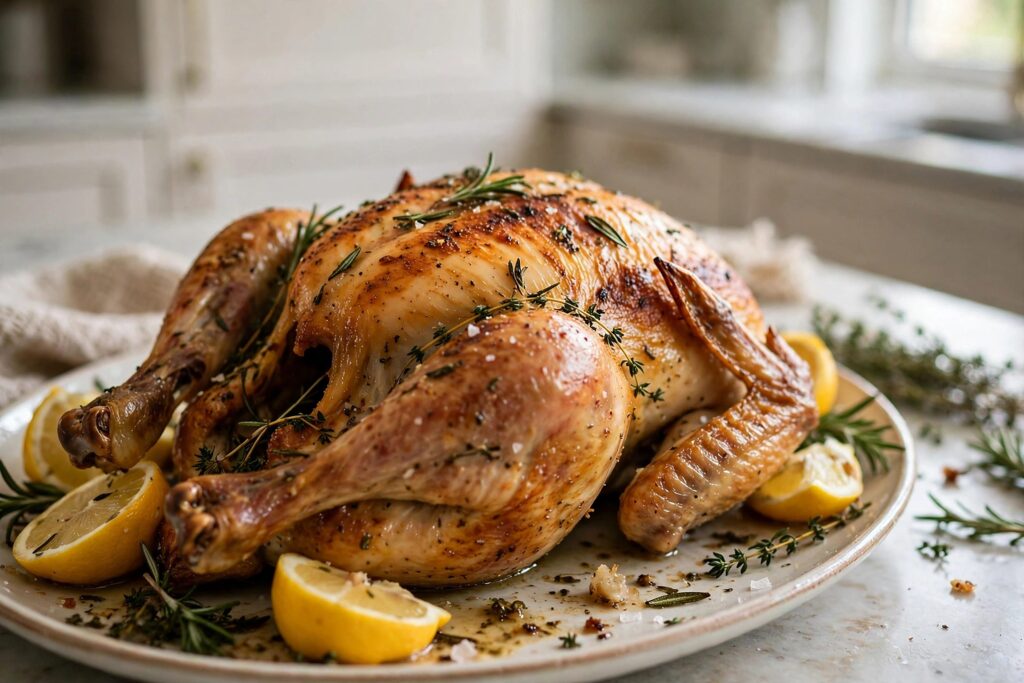
There are few things in a kitchen as satisfying as pulling a whole Herb Roasted Chicken out of the oven: skin deep golden and crisp, the pan fragrant with garlic, lemon and herbs, and the whole house smelling like Sunday supper. It looks like company food, but it asks very little of the cook.
I’m Samuel, and here at Samuel’s Recipes this is the roast chicken I have settled on after years of testing. The method is straightforward — a soft herb butter worked under and over the skin, a lemon and garlic tucked inside, a proper rest before carving — but those few steps are the difference between a dry bird and a truly juicy one.
Serve it with mashed potatoes, roasted vegetables, or a pan of crispy breakfast-style potatoes, and save the leftovers for sandwiches, burritos and soup. One chicken, several good meals, and a technique you’ll use for the rest of your cooking life.
Why You’ll Love This Recipe
- Juicy every time: herb butter under the skin bastes the breast meat as it roasts.
- Crispy golden skin: drying the bird and starting with a hot oven gives real crunch.
- Simple ingredients: butter, garlic, lemon and common herbs — nothing hard to find.
- Mostly hands-off: about 20 minutes of prep, then the oven does the work.
- Leftovers that shine: the meat is perfect for sandwiches, salads, burritos and soups.
- Company worthy: it arrives at the table looking like you worked all afternoon.
Ingredients
For the Chicken
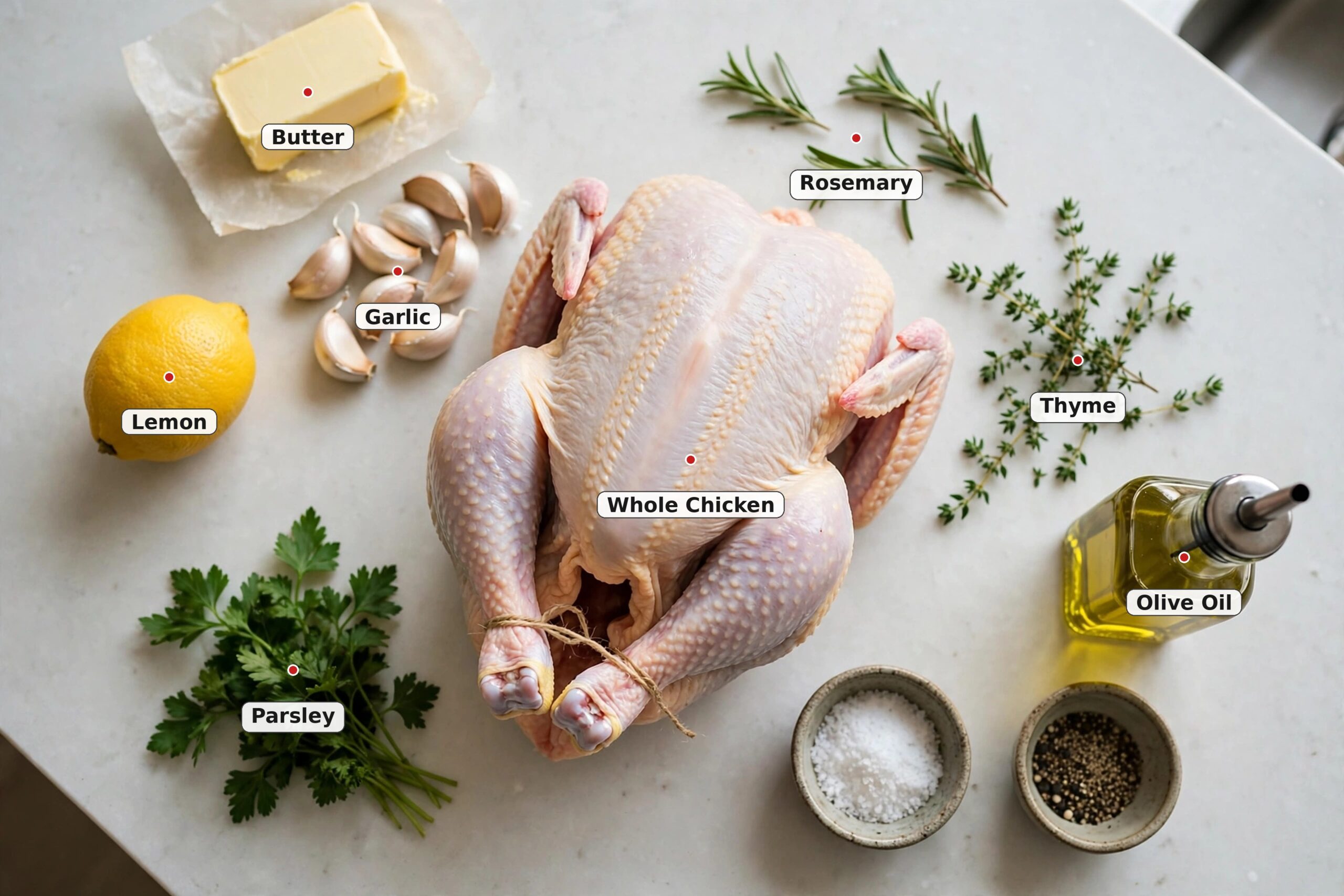
- 1 whole chicken, about 4 to 4 1/2 pounds (1.8 to 2 kg), giblets removed
- 2 teaspoons fine salt
- 1 teaspoon black pepper
- 1 lemon, halved
- 1 head of garlic, halved crosswise
- Kitchen twine, for tying the legs
For the Herb Butter
- 4 tablespoons (55 g) unsalted butter, softened
- 3 cloves garlic, minced
- 1 tablespoon fresh rosemary, finely chopped
- 1 tablespoon fresh thyme leaves
- 1 tablespoon fresh parsley, finely chopped, plus more for serving
- 1 teaspoon lemon zest
- 1 tablespoon olive oil
Instructions
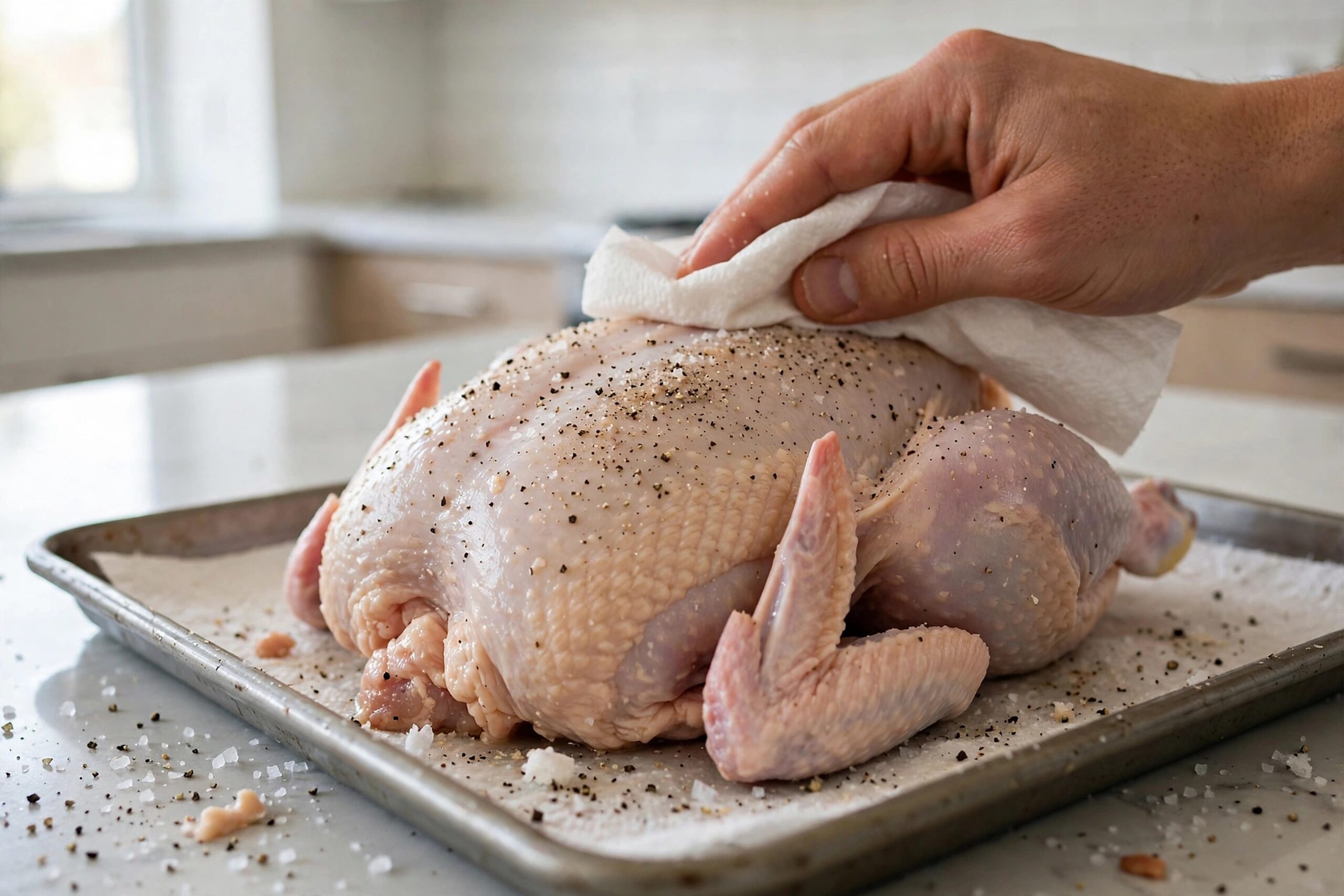
Step 1: Pat the chicken very dry, inside and out, with paper towels. Season all over — including inside the cavity — with the salt and pepper. If you have time, refrigerate it uncovered overnight; the salt seasons deeply and the dry skin roasts crisper.
Step 2: Take the chicken out of the refrigerator 30 minutes before roasting so it isn’t ice-cold in the center. Heat the oven to 425°F (220°C) and set a rack in the lower third.
Step 3: Make the herb butter: mash the softened butter with the minced garlic, rosemary, thyme, parsley and lemon zest until evenly combined and fragrant.
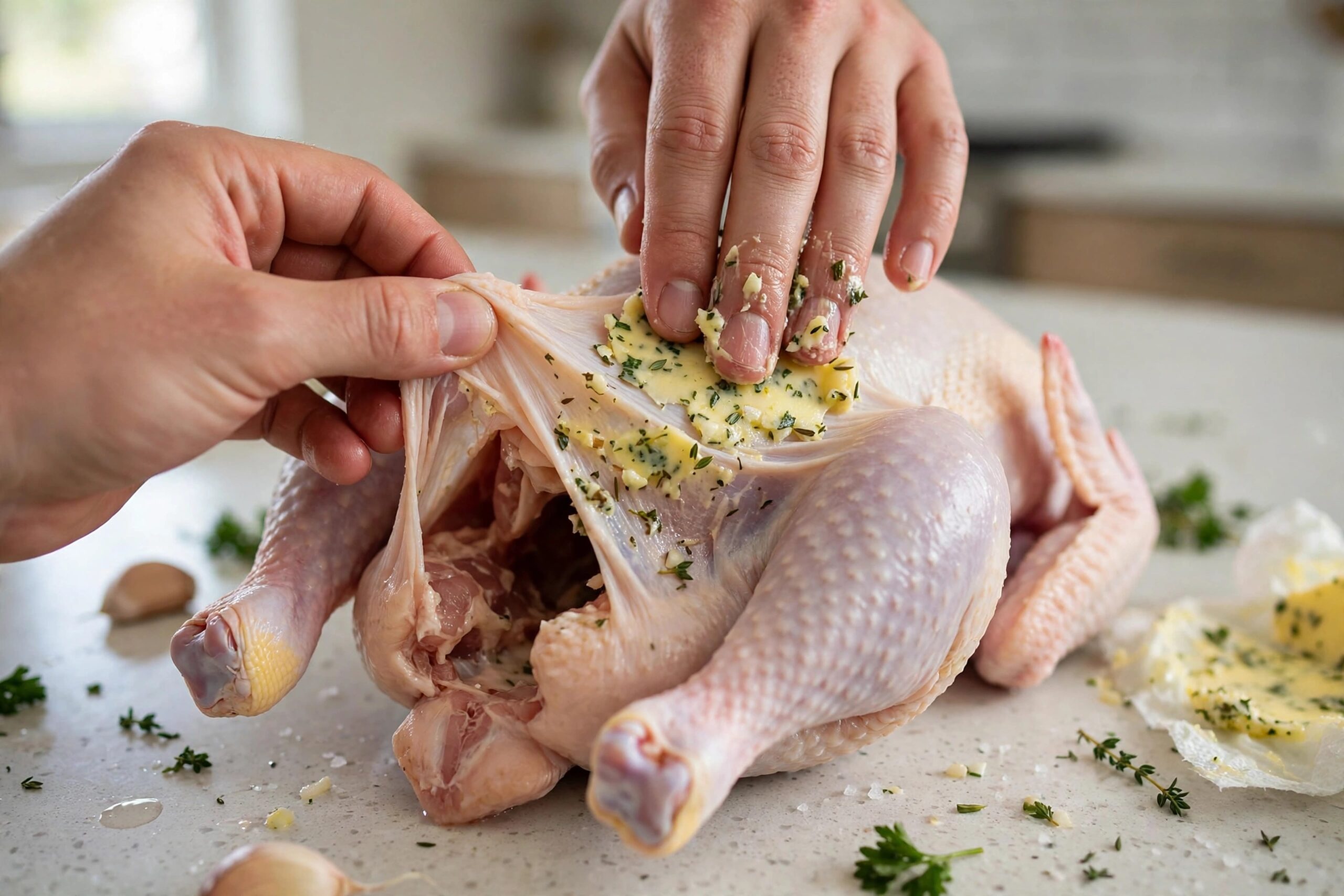
Step 4: Gently loosen the skin over the breast with your fingertips, sliding your hand between the skin and the meat without tearing it. Spread about two-thirds of the herb butter under the skin, directly onto the breast meat, smoothing it toward the thighs.
Step 5: Rub the remaining herb butter and the olive oil all over the outside of the chicken. This outer layer seasons the skin and helps it turn deep golden.
Step 6: Stuff the cavity with the lemon halves and the halved head of garlic. They perfume the meat from the inside as it roasts and keep the breast moist.
Step 7: Tie the legs together with kitchen twine and tuck the wing tips underneath the bird. Trussing helps the chicken cook evenly and keeps it compact and handsome.
Step 8: Place the chicken breast-side up in a cast iron skillet or roasting pan. Roast for 20 minutes at 425°F (220°C) to set the skin, then reduce the heat to 375°F (190°C) and continue roasting for 40 to 55 minutes.
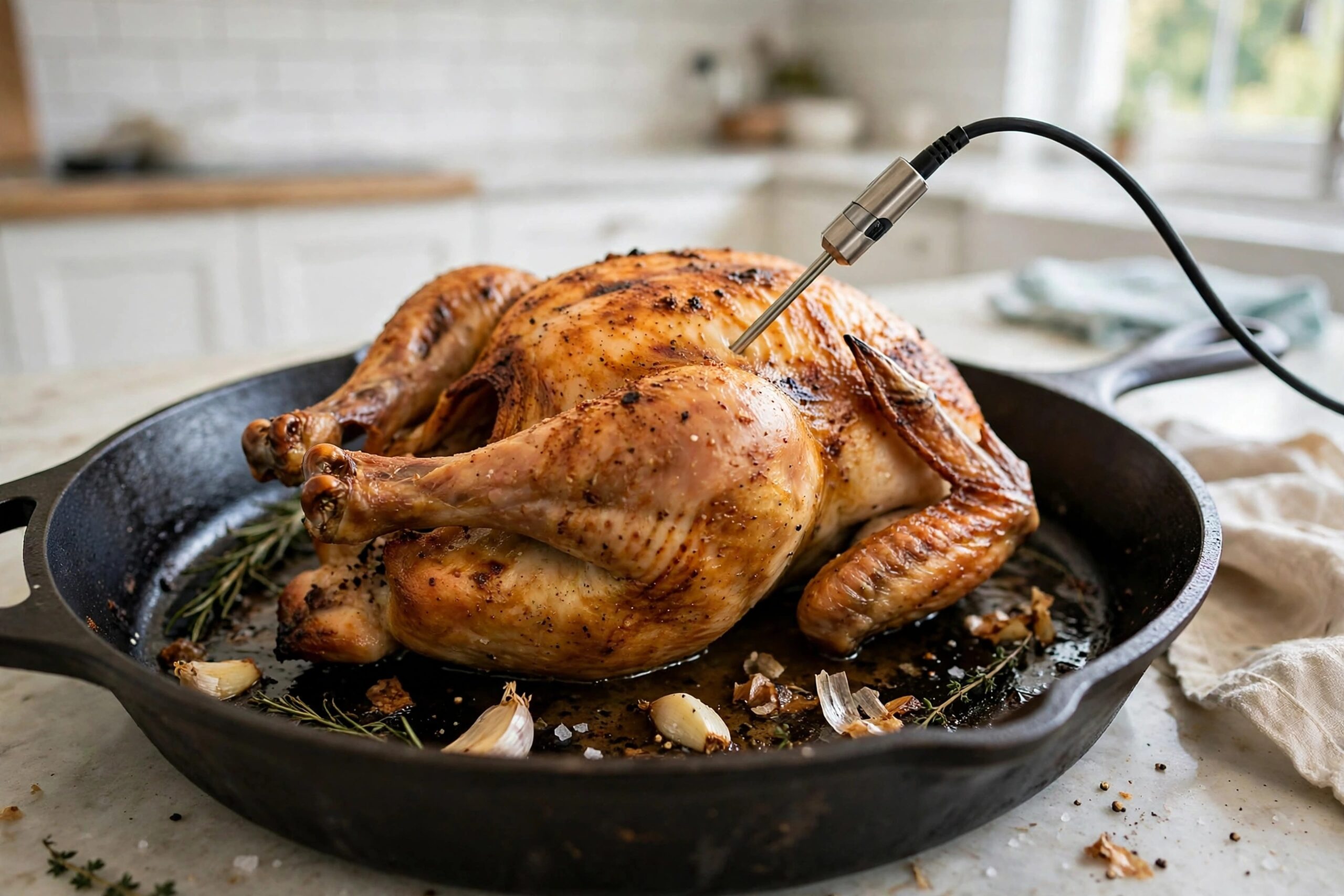
Step 9: The chicken is done when a thermometer in the thickest part of the thigh reads 165°F (74°C), the juices run clear, and the leg moves loosely in its socket. If the skin browns too fast, tent loosely with foil.
Step 10: Rest the chicken, tented with foil, for at least 15 minutes before carving. Resting lets the juices settle back into the meat — carve too soon and they end up on the board instead. Scatter with extra parsley, carve, and serve with the pan juices spooned over.
How to Carve the Chicken
Carving is easier than it looks, and a rested bird makes it easier still. Set the chicken breast-up on a board with a groove to catch the juices. First, pull each leg away from the body and cut through the joint where the thigh meets the breast; separate the drumstick from the thigh at its natural joint if you like. Next, slice down along one side of the breastbone, following the rib cage with your knife, and lift the whole breast half away in one piece. Lay it skin-side up and slice it across into thick pieces — this keeps a portion of crisp skin on every slice, which is exactly what everybody hopes for. Repeat on the other side, then arrange everything on a warm platter and spoon the pan juices over the top.
Don’t throw anything away. The wings are the cook’s treat, the carcass makes broth, and any small pieces left on the board are tomorrow’s chicken salad in the making.
 Try this nextLemon Garlic Butter Salmon
Tips for a Perfect Roast Chicken
- Dry skin is crisp skin: pat the bird dry, and use the overnight uncovered rest in the fridge whenever you can plan it.
- Butter goes under the skin: that is where it bastes the lean breast meat. Butter only on top mostly runs off into the pan.
- Use a thermometer: it removes all the guesswork. Thigh at 165°F (74°C) means juicy and safe, every time.
- Rest without exception: fifteen minutes is the minimum. The meat relaxes, the juices redistribute, and carving gets easier.
- Save the carcass: simmer it with water, onion and herbs for a fine homemade chicken broth for soups later in the week.
- Room-temperature start: thirty minutes out of the fridge helps the chicken roast evenly from edge to center.
Easy Variations
Garlic and Lemon Chicken
Double the lemon zest, add extra garlic to the butter, and roast lemon wedges in the pan alongside for a brighter, sharper flavor.
Smoked Paprika Chicken
Add 2 teaspoons of smoked paprika and 1/2 teaspoon of cumin to the herb butter for a deeper color and a gentle smoky warmth.
One-Pan Chicken and Vegetables
Scatter chunks of potato, carrot and onion tossed with oil and salt in the pan around the chicken. They roast in the drippings while the bird cooks — a complete supper in one pan.
How to Store / Make Ahead
Make ahead: season and butter the chicken up to a day ahead; keep it uncovered in the refrigerator and roast when ready. The flavor only improves.
Refrigerator: store carved meat in an airtight container for up to 4 days.
Freezer: freeze shredded or sliced meat for up to 3 months, in portions with a spoonful of pan juices to keep it moist.
Reheating: warm slices gently in a covered skillet with a splash of broth, or in a 325°F (165°C) oven until just heated through, to avoid drying.
Frequently Asked Questions
How long does a whole chicken take to roast?
Plan on about 20 minutes per pound at these temperatures — roughly 1 hour to 1 hour 15 minutes for a 4-pound bird — but always trust the thermometer over the clock.
Should I rinse the chicken?
No. Rinsing spreads bacteria around the sink and doesn’t clean the bird. Simply pat it dry with paper towels and season it well; the oven does the rest.
Why is my breast meat dry?
Usually the chicken was roasted too long, or it was carved without resting. The herb butter under the skin, an accurate thermometer, and a full 15-minute rest solve nearly every case.
Can I use dried herbs instead of fresh?
Yes — use one-third the amount, since dried herbs are more concentrated: about 1 teaspoon each of dried rosemary and thyme. Crush them between your fingers as you add them to wake up their flavor.
What should I serve with roast chicken?
Mashed or roasted potatoes, green beans, a crisp salad and warm biscuits make the classic plate. The pan juices, spooned over everything, tie it all together.
Final Thoughts
A good roast chicken is less a recipe than a rhythm: dry, season, butter, roast, rest, carve. Learn that rhythm once and you have a Sunday centerpiece, a week’s worth of leftovers, and a pot of broth all from a single bird.
Roast one this weekend, carve it at the table, and enjoy the kind of meal that makes people linger a little longer. Tell me in the comments what you served alongside. Happy cooking!
Samuel
Herb Roasted Chicken
There are few things in a kitchen as satisfying as pulling a whole Herb Roasted Chicken out of the oven: skin deep golden and crisp, the pan fragrant with garlic, lemon and…
Ingredients
Chicken
Herb Butter
Method
- 1Pat the chicken very dry, inside and out, with paper towels. Season all over — including inside the cavity — with the salt and pepper. If you have time, refrigerate it uncovered overnight; the salt seasons deeply and the dry skin roasts crisper.
- 2Take the chicken out of the refrigerator 30 minutes before roasting so it isn’t ice-cold in the center. Heat the oven to 425°F (220°C) and set a rack in the lower third.
- 3Make the herb butter: mash the softened butter with the minced garlic, rosemary, thyme, parsley and lemon zest until evenly combined and fragrant.
- 4Gently loosen the skin over the breast with your fingertips, sliding your hand between the skin and the meat without tearing it. Spread about two-thirds of the herb butter under the skin, directly onto the breast meat, smoothing it toward the thighs.
- 5Rub the remaining herb butter and the olive oil all over the outside of the chicken. This outer layer seasons the skin and helps it turn deep golden.
- 6Stuff the cavity with the lemon halves and the halved head of garlic. They perfume the meat from the inside as it roasts and keep the breast moist.
- 7Tie the legs together with kitchen twine and tuck the wing tips underneath the bird. Trussing helps the chicken cook evenly and keeps it compact and handsome.
- 8Place the chicken breast-side up in a cast iron skillet or roasting pan. Roast for 20 minutes at 425°F (220°C) to set the skin, then reduce the heat to 375°F (190°C) and continue roasting for 40 to 55 minutes.
- 9The chicken is done when a thermometer in the thickest part of the thigh reads 165°F (74°C), the juices run clear, and the leg moves loosely in its socket. If the skin browns too fast, tent loosely with foil.
- 10Rest the chicken, tented with foil, for at least 15 minutes before carving. Resting lets the juices settle back into the meat — carve too soon and they end up on the board instead. Scatter with extra parsley, carve, and serve with the pan juices spooned over.
Notes
Make ahead: season and butter the chicken up to a day ahead; keep it uncovered in the refrigerator and roast when ready. The flavor only improves. Refrigerator: store carved meat in an airtight container for up to 4 days.