Sweet and Buttery Southern Cornbread
Sweet and Buttery Southern Cornbread
Every Southern table has its own cornbread, and this is mine: Sweet and Buttery Southern Cornbread, baked in a sizzling cast-iron skillet so the edges come out crisp and deep golden while…
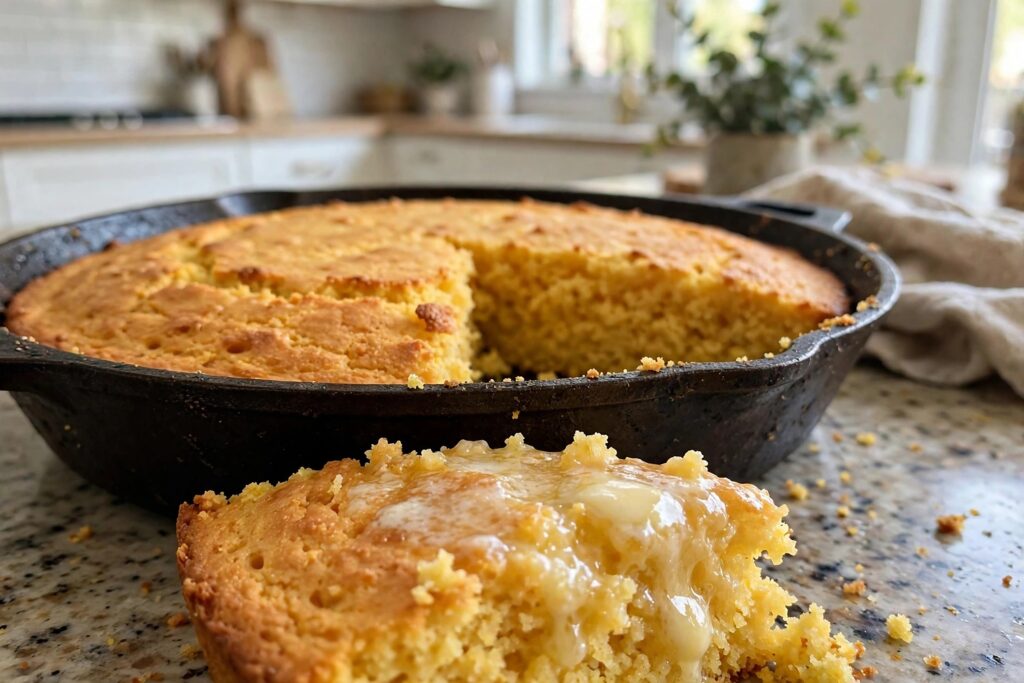
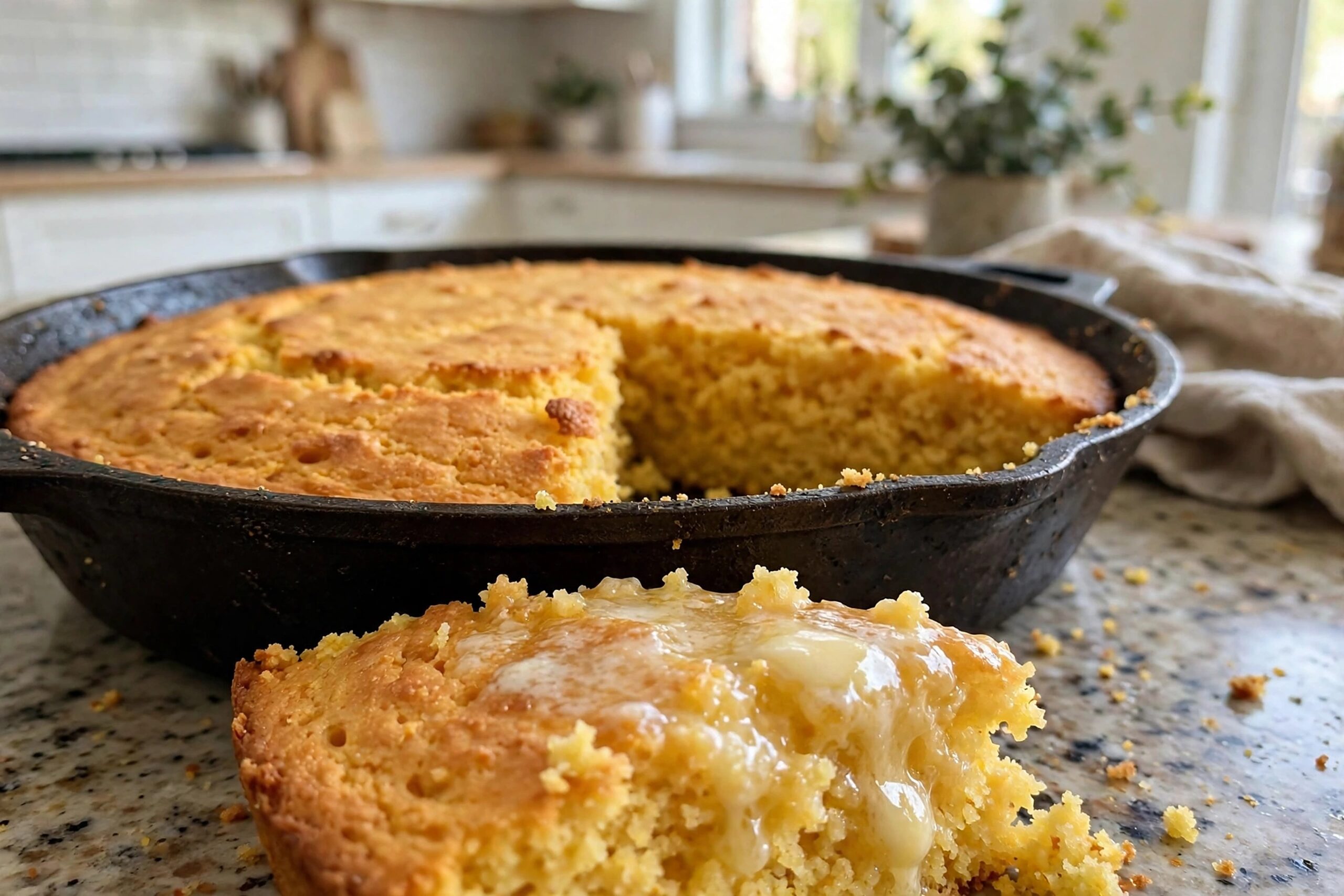
Every Southern table has its own cornbread, and this is mine: Sweet and Buttery Southern Cornbread, baked in a sizzling cast-iron skillet so the edges come out crisp and deep golden while the middle stays soft, tender and rich with butter. It’s the wedge that belongs next to a bowl of chili, a pot of greens, or simply on its own, warm, with a little extra butter melting into the crumb.
I’m Samuel, and here at Samuel’s Recipes I like food that brings people back to the table for seconds. This cornbread is sweet — not cake sweet, but with enough sugar to round out the cornmeal and make the whole skillet sing. It mixes up in one bowl in about ten minutes, and the hot skillet does the rest of the work.
In this post you’ll find the full recipe with step-by-step instructions, my tips for those famous crisp edges, a few easy variations, and the best way to store and reheat leftovers so they taste freshly baked. Preheat the oven, get the skillet in there, and let’s make cornbread.
Why You’ll Love This Recipe
- Crisp edges, tender middle: batter poured into a preheated, buttered cast-iron skillet gives you that contrast in every single wedge.
- One bowl, ten minutes: whisk the dry, whisk the wet, stir them together and bake. No mixer, no fuss.
- Genuinely buttery: melted butter in the batter and more in the hot skillet — the flavor is rich all the way through, not just on top.
- The perfect side dish: made for beef chili, vegetable soup, baked beans and Sunday roasts, but just as welcome at breakfast with jam.
- Keeps and reheats beautifully: leftovers warm up tender in the oven and freeze well for up to 3 months.
- A forgiving classic: no delicate techniques here — if you can stir a batter, you can bake this cornbread.
Ingredients
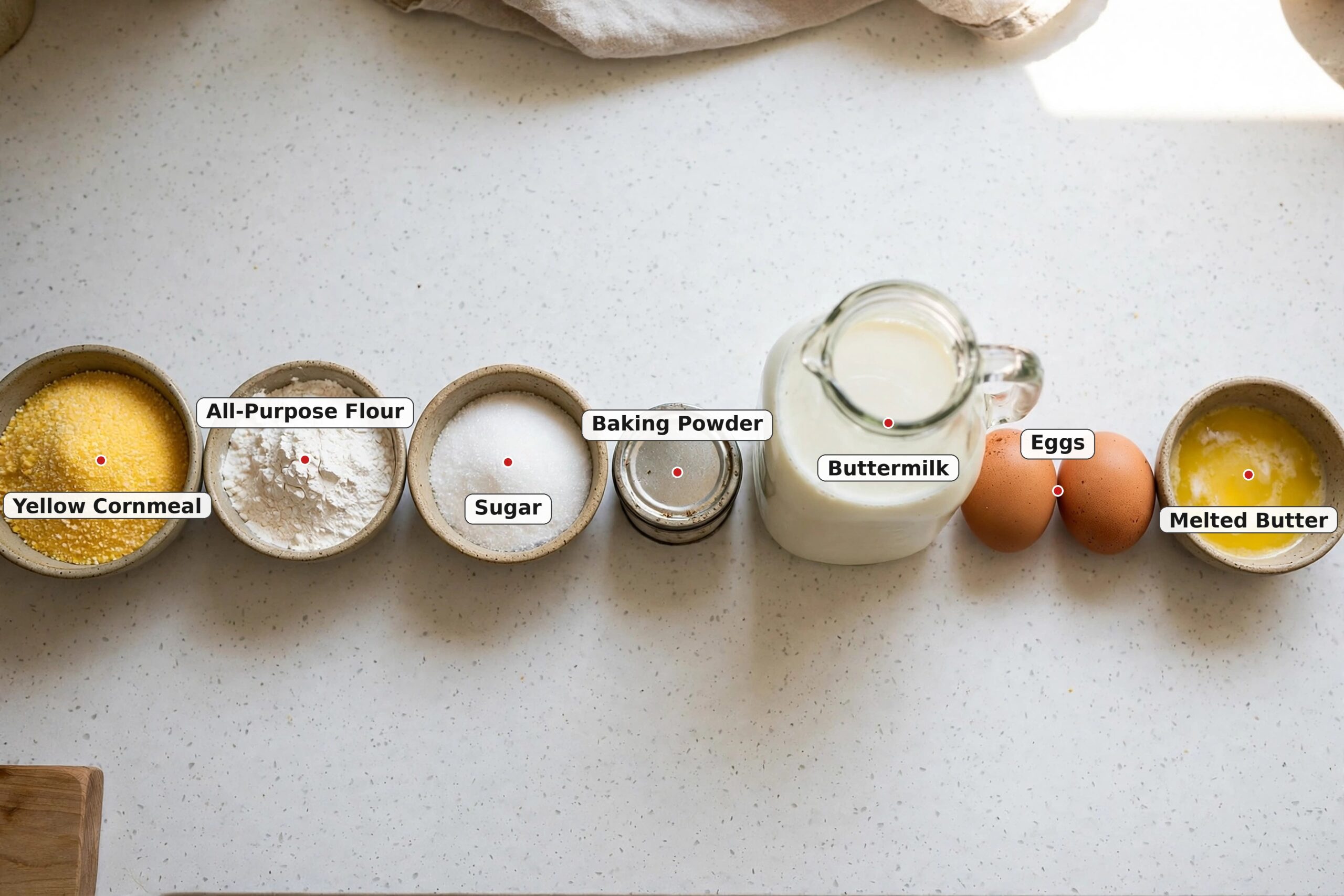
- 1 1/2 cups (210 g) yellow cornmeal, medium or fine grind
- 1/2 cup (65 g) all-purpose flour
- 1/4 cup (50 g) granulated sugar — the sweetness in this Southern-style loaf
- 1 tablespoon baking powder
- 1 teaspoon fine salt
- 1 cup (240 ml) buttermilk, shaken well
- 2 large eggs, at room temperature if possible
- 1/3 cup (75 g) unsalted butter, melted, for the batter
- 1 tablespoon unsalted butter, for the skillet
Instructions
Step 1: Place a 10-inch (25 cm) cast-iron skillet in the oven and preheat the oven to 425°F (220°C). Heating the skillet along with the oven is the whole trick to crisp, golden edges — don’t skip it.
Step 2: While the oven heats, whisk the cornmeal, flour, sugar, baking powder and salt together in a large mixing bowl until evenly combined.
Step 3: In a second bowl or large measuring jug, whisk the buttermilk, eggs and melted butter until smooth.
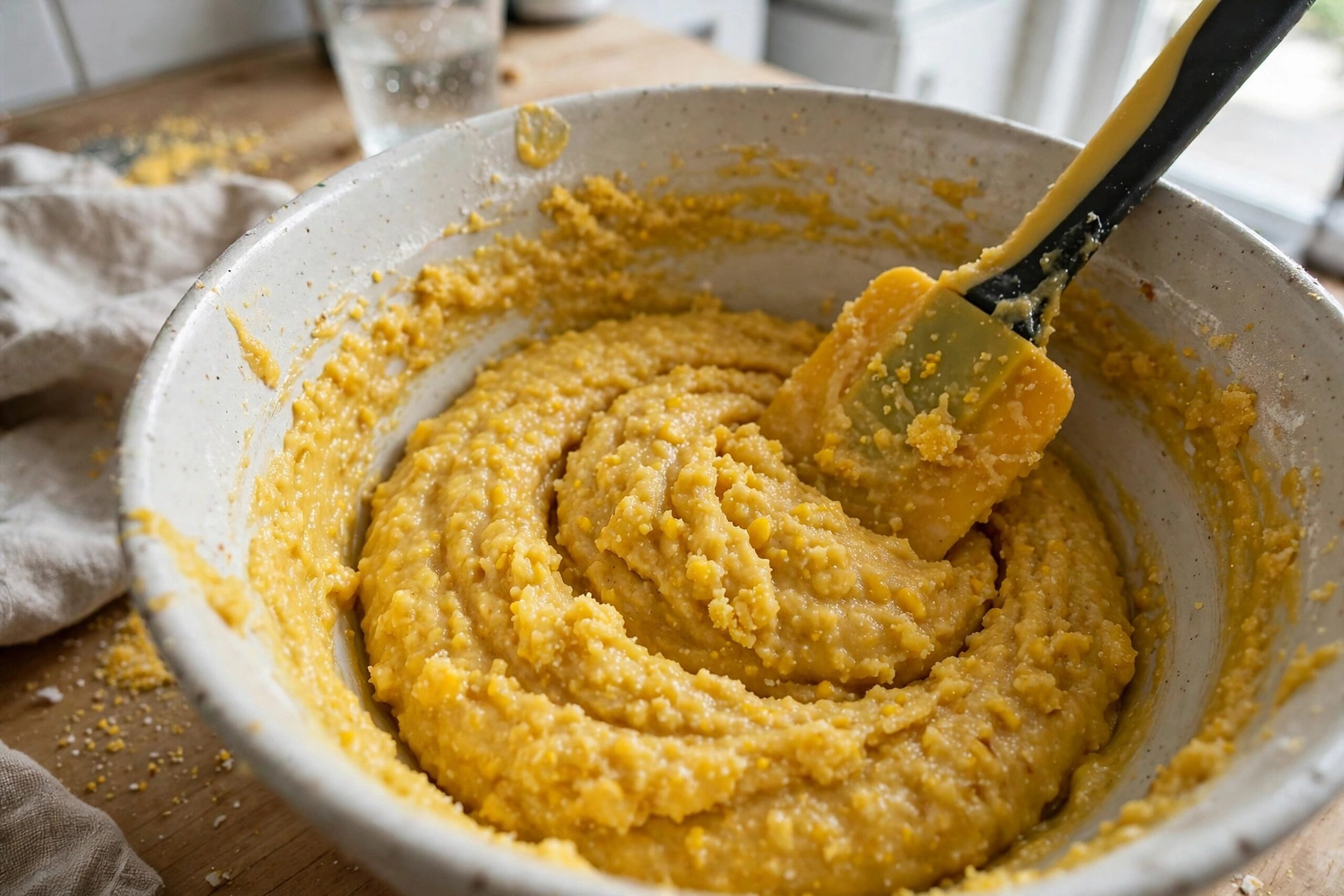
Step 4: Pour the wet ingredients into the dry and stir with a spatula just until everything is moistened and no dry pockets remain. A few small lumps are fine. Like most quick breads, cornbread gets tough if you stir it too much, so stop early rather than late.
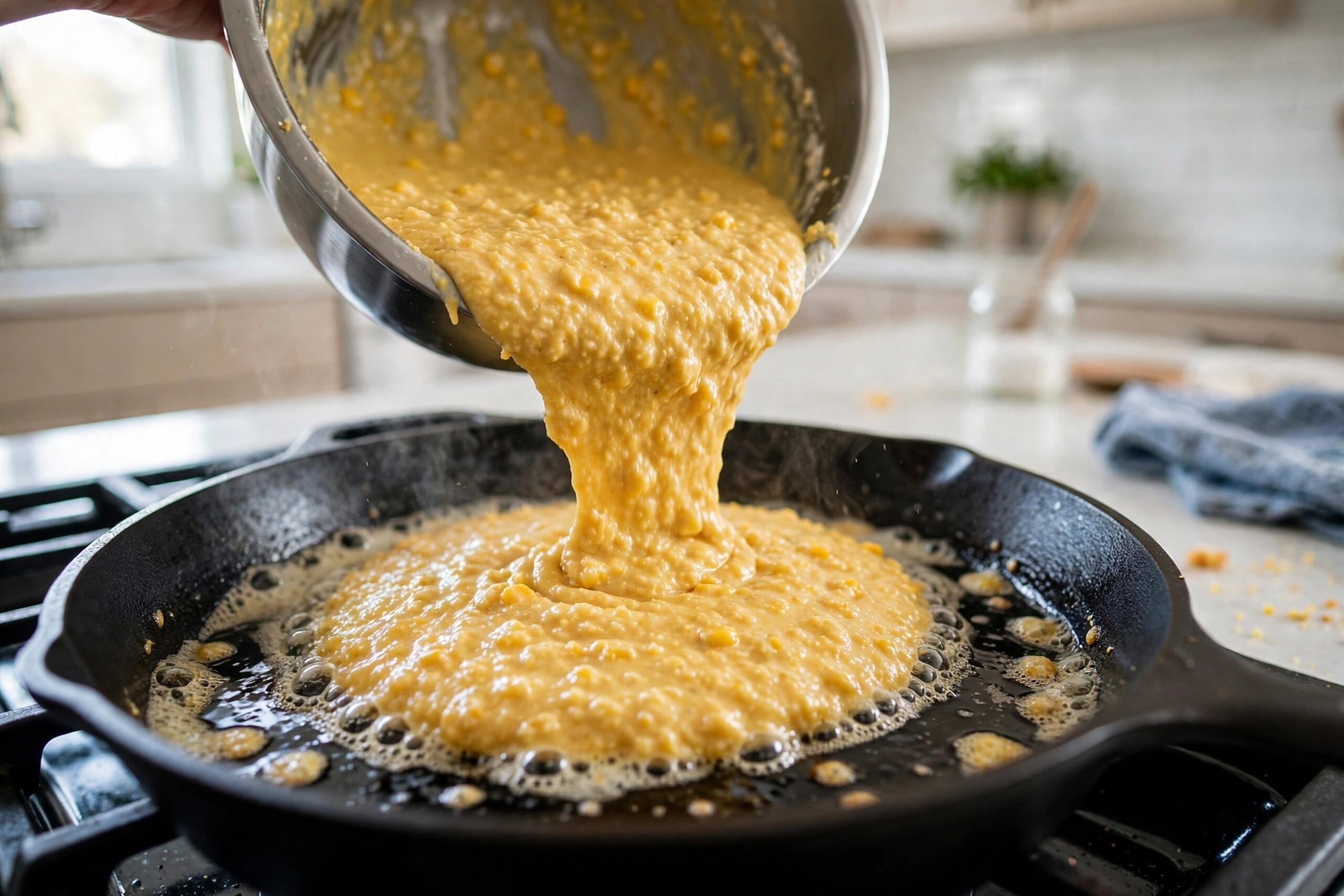
Step 5: Carefully remove the hot skillet from the oven using oven mitts — the handle is just as hot as the pan. Add the tablespoon of butter and swirl it around until it melts, foams and coats the bottom and sides.
Step 6: Pour the batter into the hot, buttered skillet. It should sizzle as it hits the pan — that sizzle is the sound of your crisp crust forming. Smooth the top gently with the spatula.
Step 7: Return the skillet to the oven and bake for 20 to 22 minutes, until the top is deep golden, the edges are pulling slightly away from the sides, and a toothpick inserted in the center comes out clean or with a few moist crumbs.
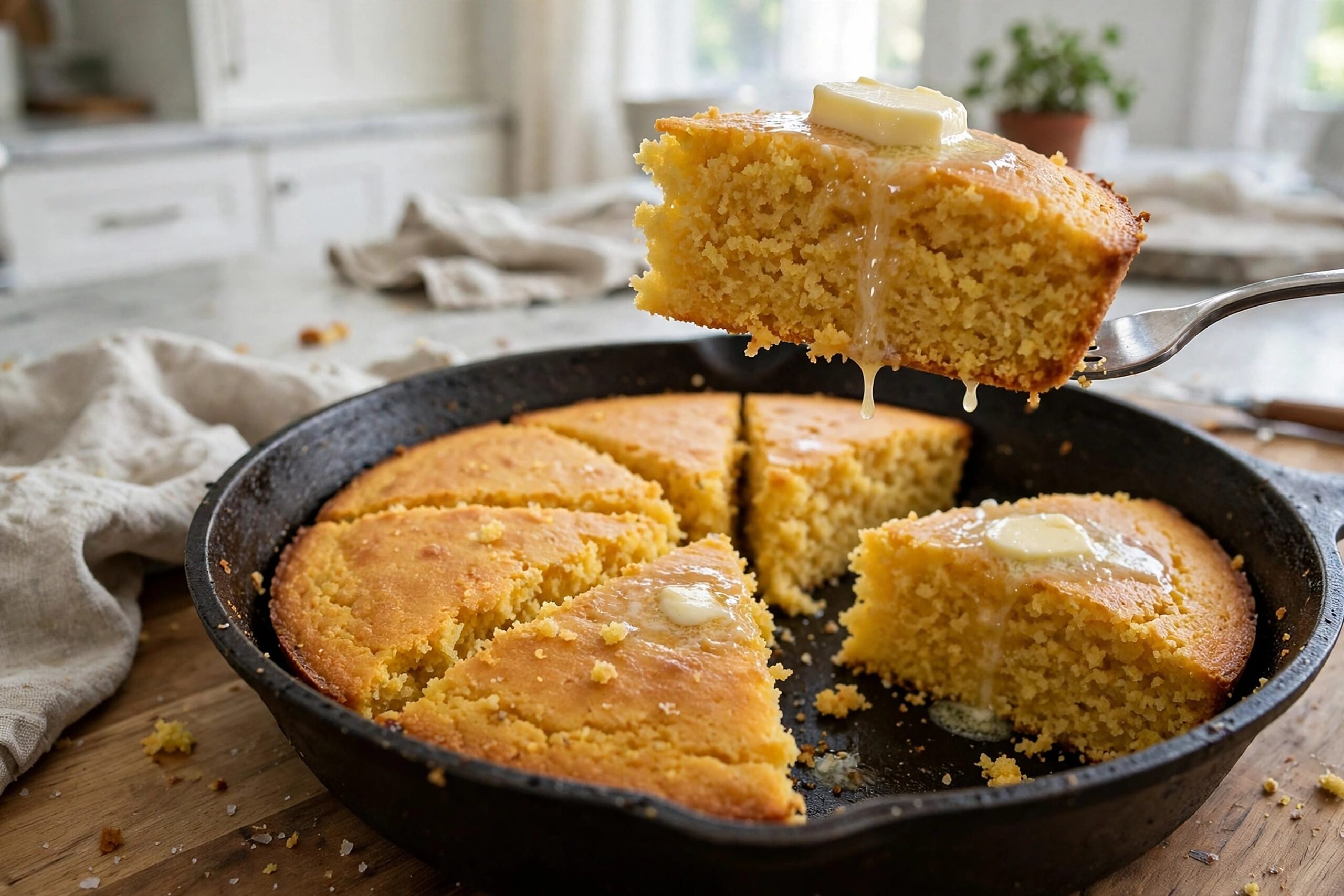
Step 8: Let the cornbread cool in the skillet for 5 to 10 minutes. This short rest lets the crumb set so the wedges cut cleanly instead of crumbling apart.
Step 9: Slice into 8 wedges and serve warm, straight from the skillet, with extra butter for the table. Leftovers, if you have any, store as directed below.
 Try this nextScalloped Potatoes
Tips for Perfect Southern Cornbread
- Preheat the skillet, always: cold batter in a cold pan gives pale, soft edges. A screaming-hot skillet is non-negotiable for the classic crust.
- Don’t overmix: stir until the dry ingredients just disappear. Overworked batter means dense, heavy cornbread.
- Room-temperature eggs and buttermilk: they blend more smoothly and help the cornbread rise evenly. Ten minutes on the counter is plenty.
- Check the baking powder: cornbread depends on it for lift. If your tin has been open more than six months, replace it.
- Let it rest before slicing: five patient minutes in the pan means neat wedges instead of a pile of crumbs.
- No cast iron? No problem: a 9-inch (23 cm) metal cake pan or an 8-inch (20 cm) square baking pan works well. Preheat a metal pan the same way; if using glass, don’t preheat it empty — just butter it generously and add 2 to 3 minutes to the bake.
Easy Variations
Corn Kernel Cornbread
Fold 1 cup (150 g) of corn kernels — fresh, thawed frozen or well-drained canned — into the batter before baking. The kernels add little bursts of sweetness and moisture throughout every wedge.
Cheddar and Green Onion Cornbread
Stir 1 cup (110 g) of shredded sharp cheddar and 3 finely sliced green onions into the batter, and scatter a little extra cheddar over the top before baking. Wonderful alongside a pot of vegetable soup.
Honey Butter Cornbread
While the cornbread rests, stir 2 tablespoons of honey into 3 tablespoons of softened butter and spread it over the warm top, letting it melt into every crack. Serve any extra at the table for spreading.
How to Store
Room temperature: wrap the cooled cornbread tightly or keep it in an airtight container on the counter for up to 2 days. Cornbread dries out quickly in the open air, so wrap it well.
Refrigerator: for longer keeping, refrigerate wrapped wedges for up to 5 days. Bring them back to life with a warm oven before serving — the fridge makes cornbread a little firm.
Freezer: wrap individual wedges in plastic wrap, then foil, and freeze for up to 3 months. Thaw at room temperature for about an hour, still wrapped.
Reheating: warm wedges in a 350°F (175°C) oven for 8 to 10 minutes, wrapped loosely in foil, until heated through and the edges crisp again. A 20-second pass in the microwave works in a hurry, though the crust will be softer.
Frequently Asked Questions
Why did my cornbread turn out dry and crumbly?
Usually it’s one of three things: it baked a few minutes too long, the batter was overmixed, or the cornmeal was a very coarse grind that drinks up more liquid. Pull the cornbread as soon as the toothpick comes out clean, stir gently, and if your cornmeal is coarse, let the batter rest 10 minutes before baking so it can hydrate.
Can I leave out the sugar?
You can, and plenty of Southern cooks do — this recipe is written sweet, in the style many families prefer. Leaving the sugar out gives a more savory, traditional skillet bread; reducing it to 2 tablespoons is a good middle ground.
Can I use regular milk instead of buttermilk?
Yes. Stir 1 tablespoon of lemon juice or white vinegar into 1 cup (240 ml) of regular milk and let it stand for 10 minutes before using. The tang and tenderness will be very close to the real thing.
Can I bake this as muffins?
Absolutely. Divide the batter among a well-greased 12-cup muffin tin, filling each cup about two-thirds full, and bake at 425°F (220°C) for 13 to 15 minutes, until golden and a toothpick comes out clean.
Why does the skillet need to be cast iron?
Cast iron holds fierce, even heat, which is what creates the crisp bottom and edges while the center stays tender. A heavy metal pan comes close; thin pans and glass dishes give a softer crust, though the cornbread will still taste wonderful.
Final Thoughts
A skillet of cornbread is one of the simplest pleasures in a home kitchen: a bowl of batter, a hot oven, and twenty minutes later you’re cutting wedges for the table. This sweet and buttery version is the one that sits next to our chili all winter, shows up beside the soup pot, and gets eaten standing at the counter more often than I’d care to admit.
Bake a skillet this week and serve it warm with plenty of butter. Then come back and tell me in the comments what you served it with — I’m always looking for a new excuse to make another batch. Happy cooking!
Samuel
Sweet and Buttery Southern Cornbread
Every Southern table has its own cornbread, and this is mine: Sweet and Buttery Southern Cornbread, baked in a sizzling cast-iron skillet so the edges come out crisp and deep golden while…
Ingredients
Method
- 1Place a 10-inch (25 cm) cast-iron skillet in the oven and preheat the oven to 425°F (220°C). Heating the skillet along with the oven is the whole trick to crisp, golden edges — don’t skip it.
- 2While the oven heats, whisk the cornmeal, flour, sugar, baking powder and salt together in a large mixing bowl until evenly combined.
- 3In a second bowl or large measuring jug, whisk the buttermilk, eggs and melted butter until smooth.
- 4Pour the wet ingredients into the dry and stir with a spatula just until everything is moistened and no dry pockets remain. A few small lumps are fine. Like most quick breads, cornbread gets tough if you stir it too much, so stop early rather than late.
- 5Carefully remove the hot skillet from the oven using oven mitts — the handle is just as hot as the pan. Add the tablespoon of butter and swirl it around until it melts, foams and coats the bottom and sides.
- 6Pour the batter into the hot, buttered skillet. It should sizzle as it hits the pan — that sizzle is the sound of your crisp crust forming. Smooth the top gently with the spatula.
- 7Return the skillet to the oven and bake for 20 to 22 minutes, until the top is deep golden, the edges are pulling slightly away from the sides, and a toothpick inserted in the center comes out clean or with a few moist crumbs.
- 8Let the cornbread cool in the skillet for 5 to 10 minutes. This short rest lets the crumb set so the wedges cut cleanly instead of crumbling apart.
- 9Slice into 8 wedges and serve warm, straight from the skillet, with extra butter for the table. Leftovers, if you have any, store as directed below.
Notes
Room temperature: wrap the cooled cornbread tightly or keep it in an airtight container on the counter for up to 2 days. Cornbread dries out quickly in the open air, so wrap it well. Refrigerator: for longer keeping, refrigerate wrapped wedges for up to 5 days. Bring them back to life with a warm oven before serving — the fridge makes cornbread a little firm.