Creamy Tomato Soup
Creamy Tomato Soup
Some soups are a meal, and some soups are a memory. Creamy Tomato Soup is both. One spoonful takes me straight back to rainy afternoons, a pot bubbling gently on the stove,…
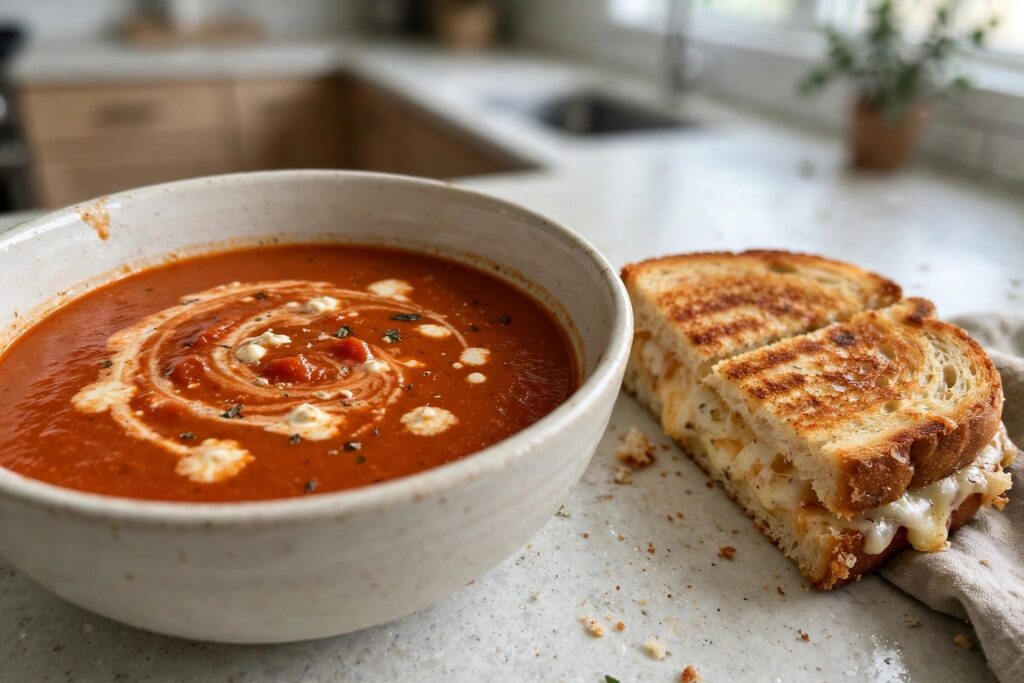
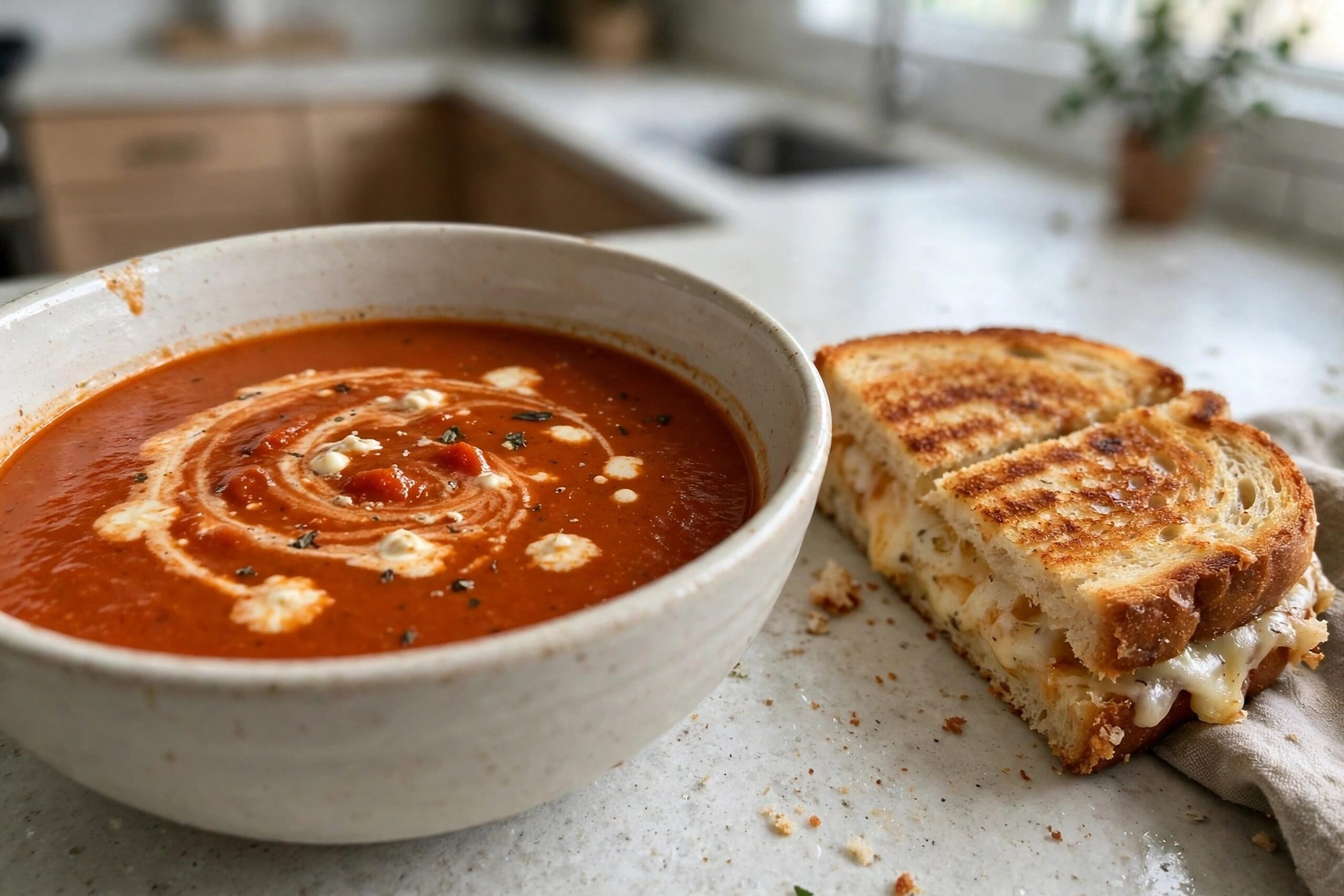
Some soups are a meal, and some soups are a memory. Creamy Tomato Soup is both. One spoonful takes me straight back to rainy afternoons, a pot bubbling gently on the stove, and a grilled cheese sandwich cut on the diagonal, ready for dunking. This homemade version is everything the canned soup wishes it could be: bright tomato flavor, a silky body, and just enough cream to make it feel like a treat.
I’m Samuel, and here at Samuel’s Recipes I believe tomato soup should taste like tomatoes first and cream second. The secret is simple: good canned tomatoes, a slow-cooked onion for sweetness, a pinch of sugar only if your tomatoes need it, and blending until the soup is completely smooth. No fuss, no long ingredient list, and no reason to ever settle for a thin, tinny soup again.
Below you’ll find the full recipe with step-by-step instructions, tips for the smoothest texture, easy variations including a dairy-free option, and storage advice for freezing a batch ahead. Get the bread and cheese ready — this soup deserves a proper partner.
Why You’ll Love This Recipe
- Rich, real tomato flavor: whole peeled tomatoes and tomato paste give depth that canned soup can’t match.
- Silky smooth texture: a good blend and a swirl of cream make every spoonful luxurious without being heavy.
- Ready in about 45 minutes: mostly hands-off simmering while the flavors come together.
- Pantry staples: canned tomatoes, onion, garlic, broth and cream — ingredients most kitchens already have.
- Freezer friendly: make a double batch and freeze the extra for an easy future lunch.
- Made for dunking: the classic partner for grilled cheese, garlic bread or buttery croutons.
Ingredients
For the Soup
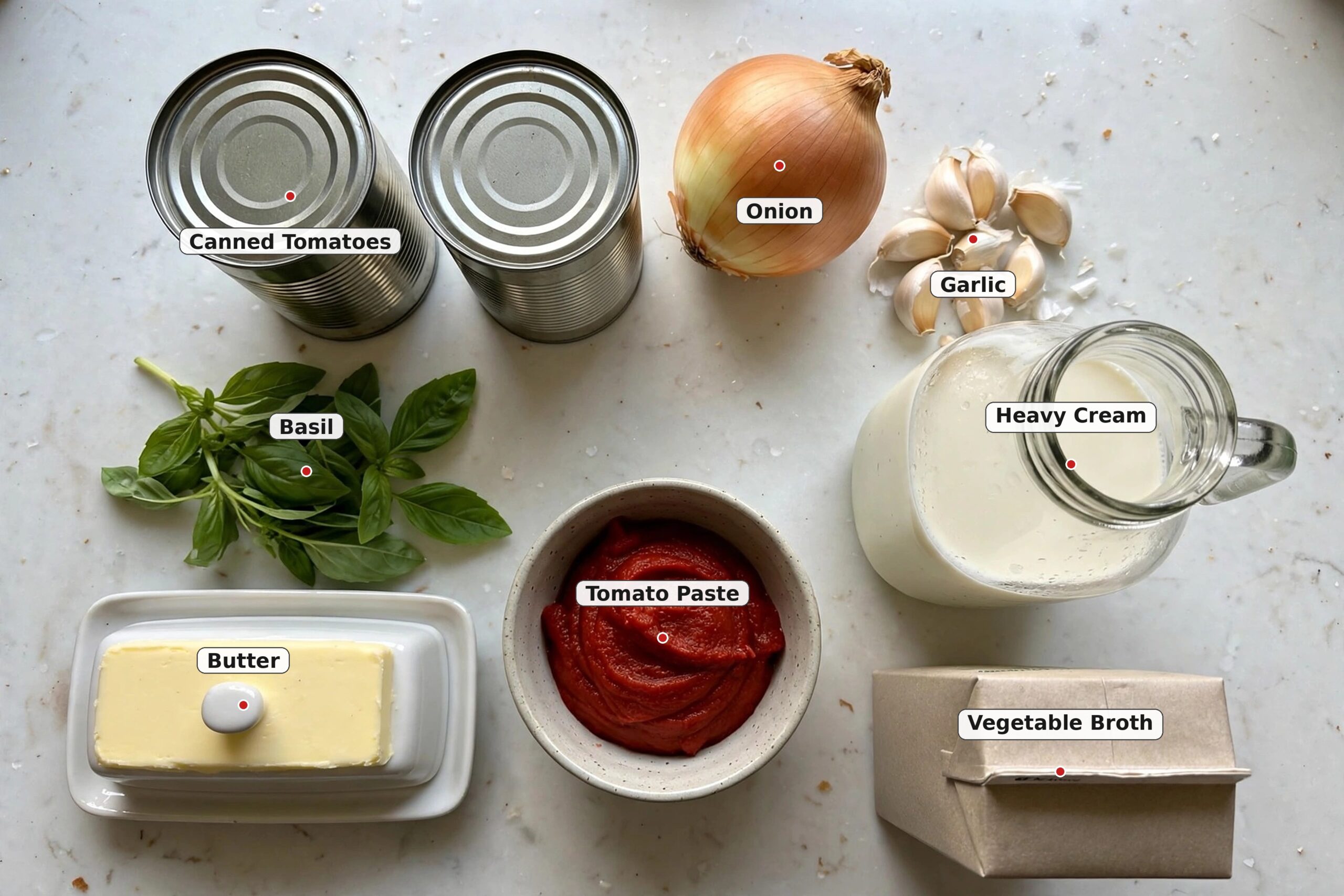
- 2 tablespoons unsalted butter
- 1 tablespoon olive oil
- 1 large yellow onion (about 200 g), diced
- 3 garlic cloves, minced
- 2 tablespoons tomato paste
- 2 cans (28 ounces / 794 g each) whole peeled tomatoes, with their juices
- 2 cups (480 ml) vegetable broth or chicken broth
- 1 teaspoon fine salt, plus more to taste
- 1/2 teaspoon black pepper
- 1 teaspoon granulated sugar (optional, to balance acidity)
- 1/2 teaspoon dried basil or a small handful of fresh basil leaves
To Finish
- 3/4 cup (180 ml) heavy cream, plus more for swirling
- Fresh basil leaves, for serving (optional)
Instructions
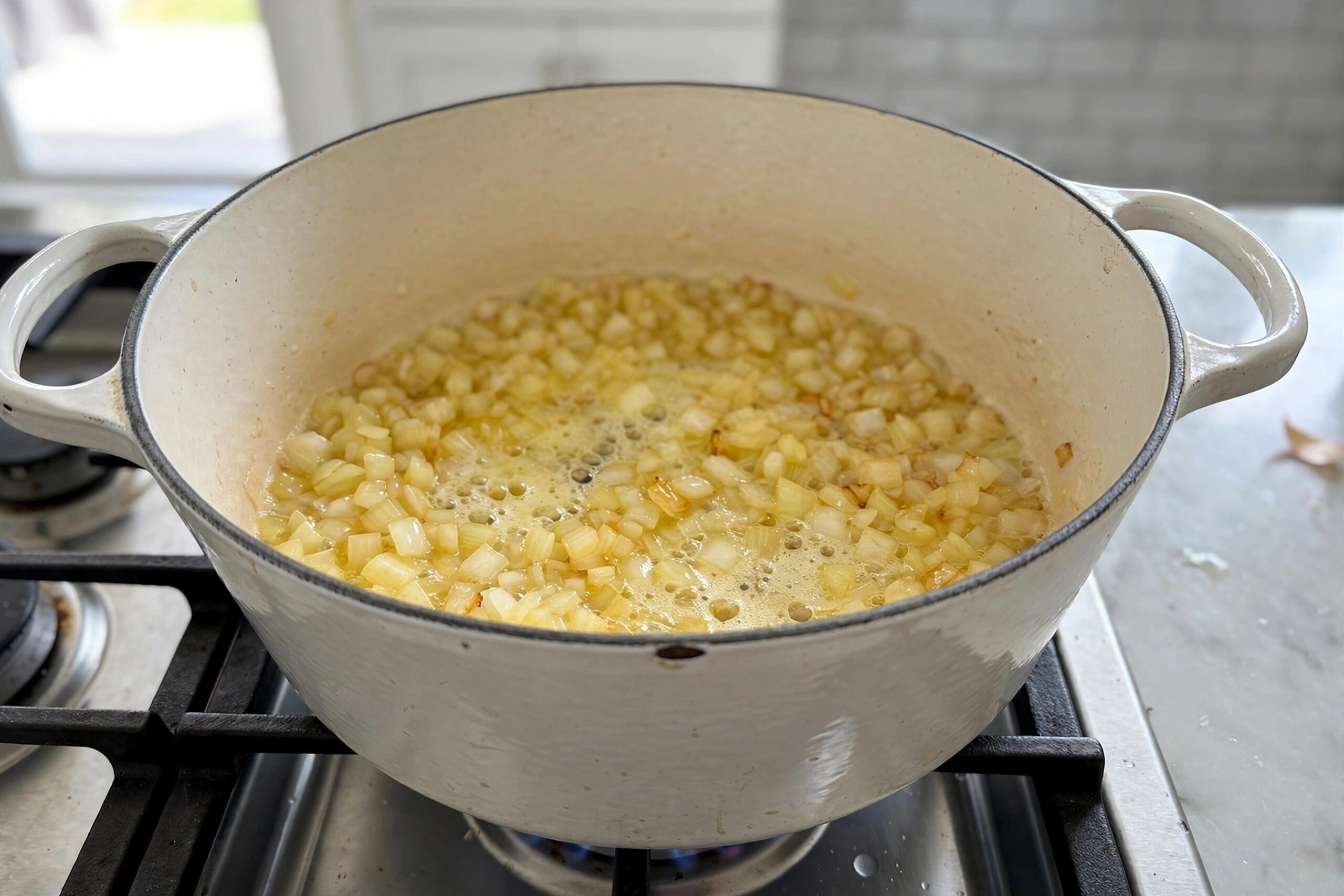
Step 1: Melt the butter with the olive oil in a large Dutch oven over medium heat. The oil keeps the butter from browning too quickly, and together they give the onion a rich, sweet start.
Step 2: Add the diced onion and a pinch of the salt. Cook, stirring occasionally, for 8 to 10 minutes, until the onion is very soft, sweet and translucent with just the faintest golden edges. Do not rush this step — well-cooked onion is the quiet backbone of the whole soup and removes any raw sharpness.
Step 3: Stir in the garlic and tomato paste. Cook for 2 minutes, stirring constantly, until the paste darkens to a brick red and smells sweet and concentrated. This brief fry takes the raw edge off the paste and deepens the tomato flavor noticeably.
Step 4: Pour in the tomatoes with all their juices, crushing each tomato gently by hand or with the back of a spoon as you add it. Add the broth, remaining salt, pepper, sugar if using, and dried basil if using. Stir well, scraping the bottom of the pot.
Step 5: Bring the soup to a boil, then reduce the heat to low and simmer gently, partially covered, for 25 minutes. Stir now and then. The tomatoes will break down, the flavors will marry, and the soup will turn a deep, rich red.
Step 6: Take the pot off the heat. If you are using fresh basil, stir the leaves in now so they wilt into the hot soup. Let the soup cool for 5 minutes — blending very hot soup needs a little respect and a little patience.
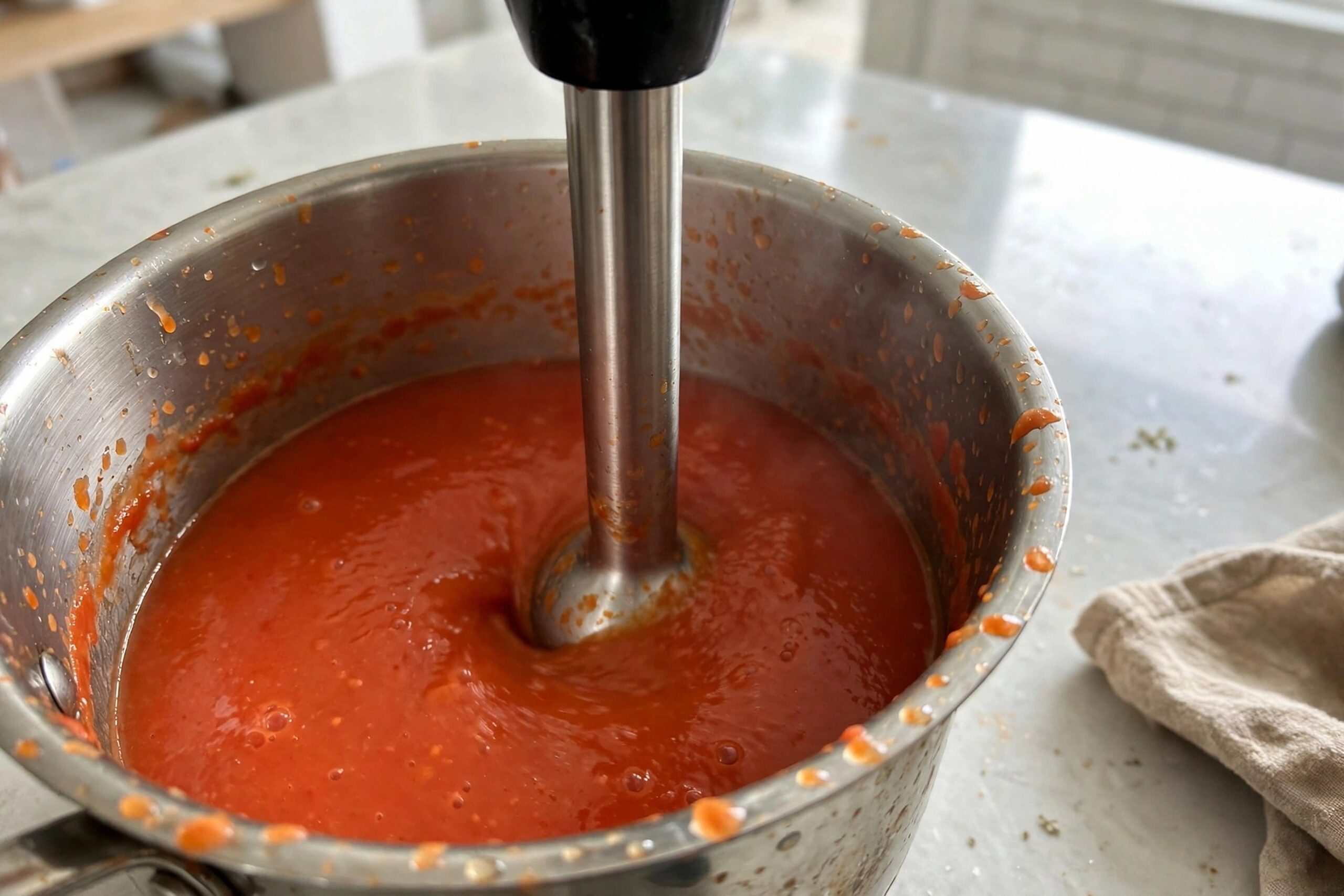
Step 7: Blend the soup until completely smooth. An immersion blender right in the pot is easiest; work it slowly around the pot for a full 1 to 2 minutes. If using a countertop blender, blend in batches, never filling the jar more than halfway, and hold the lid down with a folded towel. Return the blended soup to the pot.
Step 8: Stir in the heavy cream. Warm the soup gently over low heat for 3 to 4 minutes until it is steaming again, but do not let it boil once the cream is in — boiling can dull the fresh flavor and risk splitting.
Step 9: Taste and adjust. Add more salt a pinch at a time, a little more sugar if the tomatoes were sharp, or an extra splash of cream if you want it richer. The soup should taste bright, savory and rounded, with tomato clearly in charge.
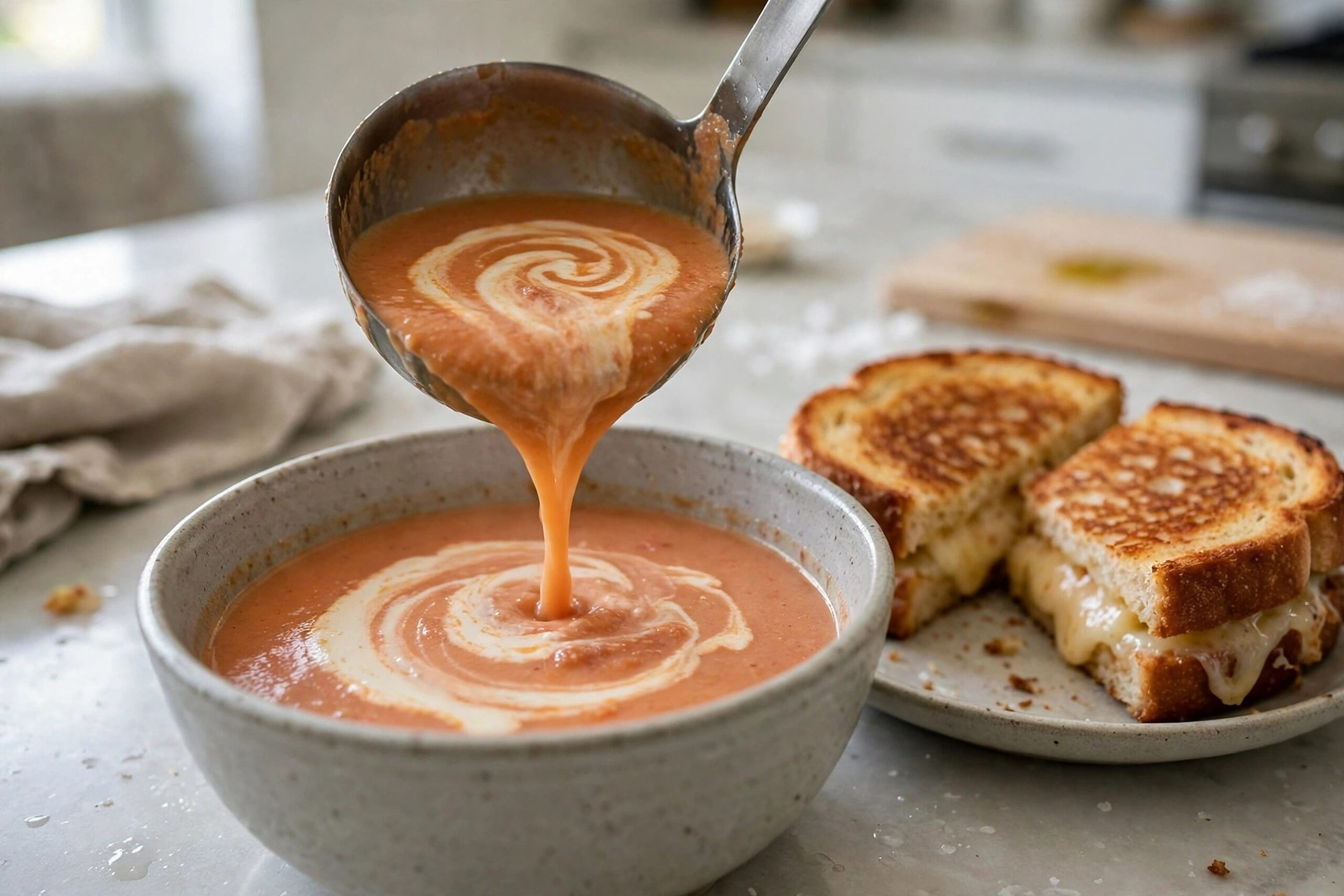
Step 10: Ladle into warm bowls. Swirl a spoonful of cream over the top of each bowl, add a basil leaf or a crack of black pepper, and serve at once with grilled cheese sandwiches, garlic bread or croutons for dunking and crunching.
 Try this nextSweet Corn Chowder
Tips for the Smoothest, Richest Soup
- Choose good tomatoes: whole peeled tomatoes, especially San Marzano style, give the best flavor and blend the smoothest. Avoid tomatoes packed with firming agents if you can.
- Cook the tomato paste: those 2 minutes of frying the paste are small but mighty — raw paste tastes tinny, cooked paste tastes rich.
- Blend longer than you think: an extra 30 seconds of blending is the difference between good and truly silky. For an ultra-smooth soup, pass it through a fine-mesh strainer after blending.
- Balance, don’t sweeten: sugar is a seasoning here, not a flavor. Add it only after tasting, a half teaspoon at a time, just until the acidity rounds out.
- Keep cream off the boil: gentle heat after adding cream protects the texture and the fresh dairy flavor.
Easy Variations
Roasted Red Pepper Tomato Soup
Add a 12-ounce (340 g) jar of drained roasted red peppers along with the tomatoes. They blend in seamlessly, adding sweetness and a gentle smokiness that suits the soup beautifully.
Dairy-Free Tomato Soup
Swap the butter for extra olive oil and replace the heavy cream with full-fat coconut milk or a homemade cashew cream. The soup stays rich and smooth, with the tomato still front and center.
Spicy Tomato Soup
Add 1/4 to 1/2 teaspoon of red pepper flakes with the garlic, and finish each bowl with a drizzle of olive oil. The warmth builds slowly and makes the soup especially good on cold nights.
How to Store and Make Ahead
Refrigerator: cool completely and refrigerate in airtight containers for up to 5 days. The flavor deepens overnight, so day-two soup is a genuine pleasure.
Freezer: freeze the soup before adding the cream for the best texture, for up to 3 months. Thaw overnight, reheat gently, then stir in the cream fresh. Fully finished soup with cream can also be frozen, though it may need a good whisk or a quick blend after thawing to come back together.
Reheating: warm over medium-low heat, stirring often, until steaming. Do not boil. If the soup thickened in the fridge, loosen it with a splash of broth or water.
Make ahead: this soup is an ideal make-ahead lunch. Prepare it fully 1 to 2 days in advance, refrigerate, and reheat gently when needed — just save the cream swirl and basil for serving.
Frequently Asked Questions
Can I use fresh tomatoes instead of canned?
You can, in peak tomato season. Use about 4 pounds (1.8 kg) of ripe tomatoes, peeled if you like, and expect a lighter, fresher flavor and a paler color. You may need a little extra tomato paste for depth and a slightly longer simmer to cook off the extra water.
Why does my tomato soup taste acidic?
Tomatoes vary. Cook the onion fully for natural sweetness, make sure the tomato paste gets its 2 minutes of frying, and then balance with a pinch of sugar and the cream. A tiny pinch of baking soda — no more than 1/8 teaspoon — can also tame sharp acidity, though it will foam briefly when added.
Can I make this soup without a blender?
You can mash the tomatoes thoroughly with a potato masher for a rustic, slightly chunky soup. It will not be silky, but it will still be delicious, especially with croutons on top. A food mill is another good old-fashioned option for a smooth result.
What should I serve with creamy tomato soup?
A grilled cheese sandwich is the classic answer, and I am not about to argue with tradition. Garlic bread, cheese croutons, a simple green salad or a quesadilla cut into strips for dunking all work wonderfully too.
Can I use milk instead of heavy cream?
Yes, though the soup will be lighter and a touch less rich. Use whole milk, add it off the boil as directed, and consider stirring in a spoonful of cream cheese or a knob of butter at the end to restore some body.
Final Thoughts
Homemade creamy tomato soup is one of those simple upgrades that changes how you feel about a whole category of food. One pot, a handful of pantry staples and about 45 minutes stand between you and a bowl of soup that is bright, silky and deeply comforting — plus, of course, the grilled cheese that goes with it.
Make it on the next rainy day, cut that sandwich on the diagonal, and dunk with confidence. Come back and tell me in the comments what your favorite dunking partner is. Happy cooking!
Samuel
Creamy Tomato Soup
Some soups are a meal, and some soups are a memory. Creamy Tomato Soup is both. One spoonful takes me straight back to rainy afternoons, a pot bubbling gently on the stove,…
Ingredients
Soup
To Finish
Method
- 1Melt the butter with the olive oil in a large Dutch oven over medium heat. The oil keeps the butter from browning too quickly, and together they give the onion a rich, sweet start.
- 2Add the diced onion and a pinch of the salt. Cook, stirring occasionally, for 8 to 10 minutes, until the onion is very soft, sweet and translucent with just the faintest golden edges. Do not rush this step — well-cooked onion is the quiet backbone of the whole soup and removes any raw sharpness.
- 3Stir in the garlic and tomato paste. Cook for 2 minutes, stirring constantly, until the paste darkens to a brick red and smells sweet and concentrated. This brief fry takes the raw edge off the paste and deepens the tomato flavor noticeably.
- 4Pour in the tomatoes with all their juices, crushing each tomato gently by hand or with the back of a spoon as you add it. Add the broth, remaining salt, pepper, sugar if using, and dried basil if using. Stir well, scraping the bottom of the pot.
- 5Bring the soup to a boil, then reduce the heat to low and simmer gently, partially covered, for 25 minutes. Stir now and then. The tomatoes will break down, the flavors will marry, and the soup will turn a deep, rich red.
- 6Take the pot off the heat. If you are using fresh basil, stir the leaves in now so they wilt into the hot soup. Let the soup cool for 5 minutes — blending very hot soup needs a little respect and a little patience.
- 7Blend the soup until completely smooth. An immersion blender right in the pot is easiest; work it slowly around the pot for a full 1 to 2 minutes. If using a countertop blender, blend in batches, never filling the jar more than halfway, and hold the lid down with a folded towel. Return the blended soup to the pot.
- 8Stir in the heavy cream. Warm the soup gently over low heat for 3 to 4 minutes until it is steaming again, but do not let it boil once the cream is in — boiling can dull the fresh flavor and risk splitting.
- 9Taste and adjust. Add more salt a pinch at a time, a little more sugar if the tomatoes were sharp, or an extra splash of cream if you want it richer. The soup should taste bright, savory and rounded, with tomato clearly in charge.
- 10Ladle into warm bowls. Swirl a spoonful of cream over the top of each bowl, add a basil leaf or a crack of black pepper, and serve at once with grilled cheese sandwiches, garlic bread or croutons for dunking and crunching.
Notes
Refrigerator: cool completely and refrigerate in airtight containers for up to 5 days. The flavor deepens overnight, so day-two soup is a genuine pleasure. Freezer: freeze the soup before adding the cream for the best texture, for up to 3 months. Thaw overnight, reheat gently, then stir in the cream fresh. Fully finished soup with cream can also be frozen, though it may need a good whisk or a quick blend after thawing to come back together.