Classic Beef Stew
Classic Beef Stew
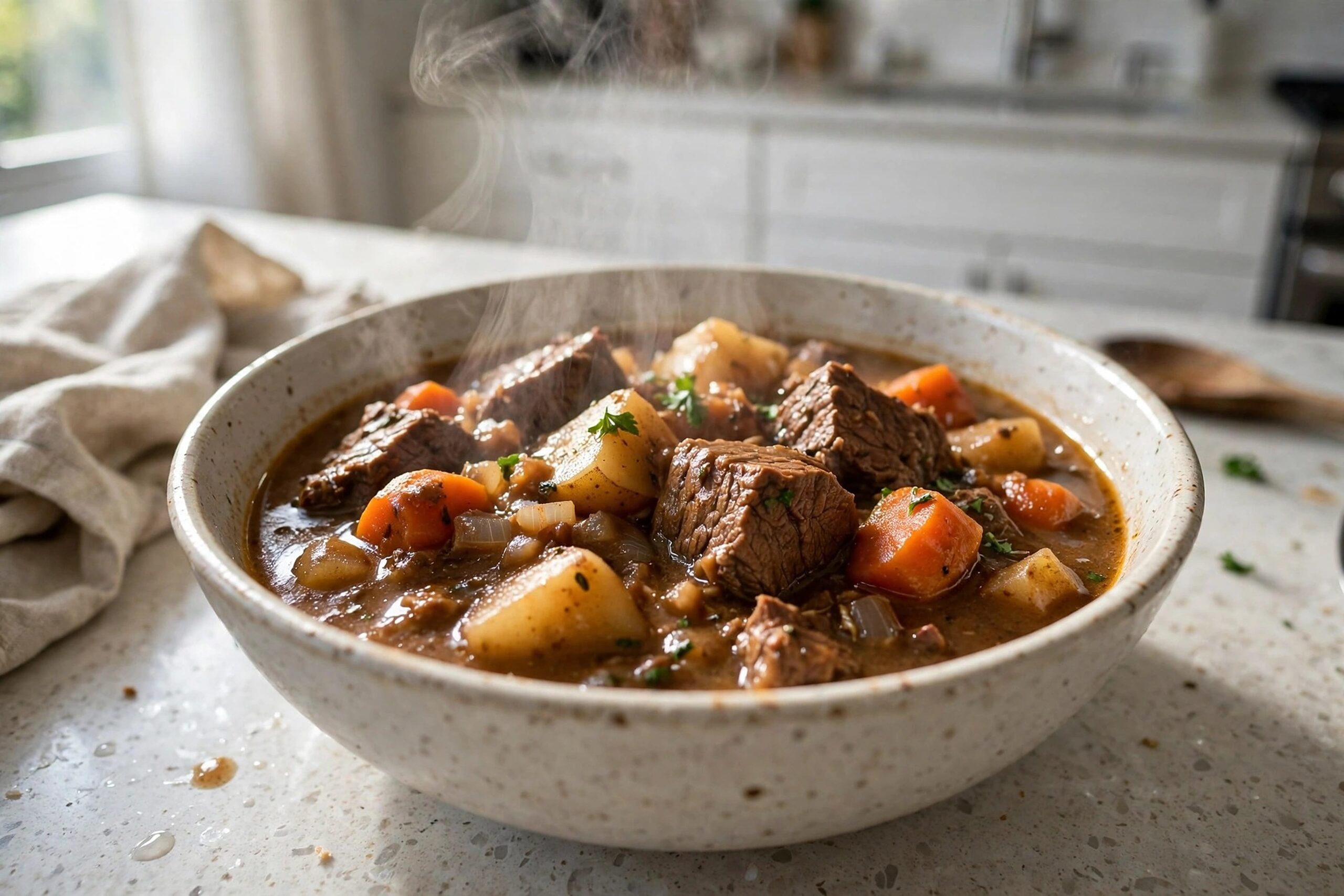
When the days get short and the kitchen windows fog up, there is one pot I reach for without thinking: Classic Beef Stew. Chunks of beef simmered low and slow until they…
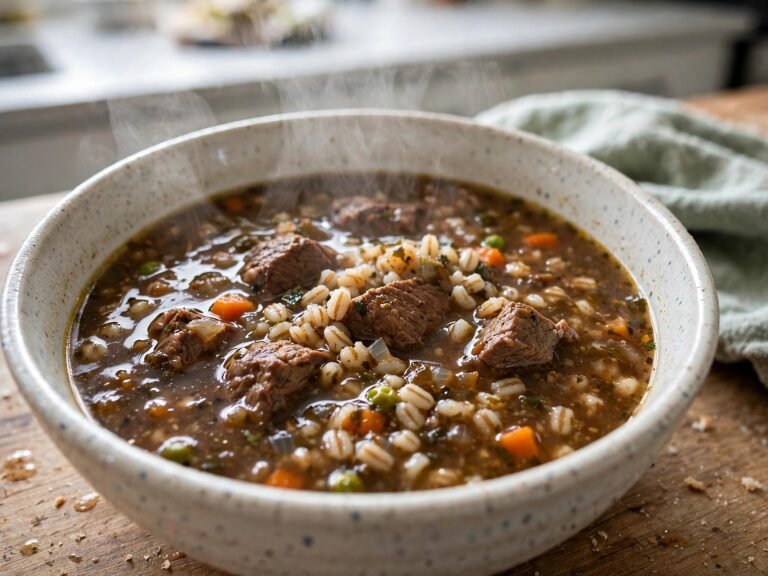
When the days get short and the kitchen windows fog up, there is one pot I reach for without thinking: Classic Beef Stew. Chunks of beef simmered low and slow until they fall apart at the touch of a fork, potatoes and carrots soaked in a rich, savory gravy, and a house that smells like Sunday at Grandma’s. This is comfort food in its purest form, and it never goes out of style.
I’m Samuel, and here at Samuel’s Recipes I believe a great beef stew is built in layers. Brown the beef properly first — that deep crust is where the flavor lives. Cook the onions in those drippings. Let time do the rest. There are no shortcuts worth taking here, but there is also nothing difficult: one pot, a patient simmer, and ingredients you can find in any grocery store in America.
Below you’ll find the complete recipe with step-by-step instructions, tips for tender beef every time, variations for the slow cooker and the oven, and storage advice — because this stew is famously even better on the second day. Tie on an apron and let’s build a proper stew.
Why You’ll Love This Recipe
- Fall-apart tender beef: a long, gentle simmer turns humble chuck roast into the most tender bites imaginable.
- Rich, savory gravy: browned beef, tomato paste and beef broth cook down into a gravy that coats every spoonful.
- A complete meal in one pot: beef, potatoes, carrots and onions — just add bread for soaking up the gravy.
- Better the next day: the flavors deepen overnight, making this the ultimate make-ahead supper.
- Freezer friendly: stew freezes and reheats beautifully for busy weeks.
- Flexible cooking methods: stovetop, oven or slow cooker instructions all included.
Ingredients
For the Beef
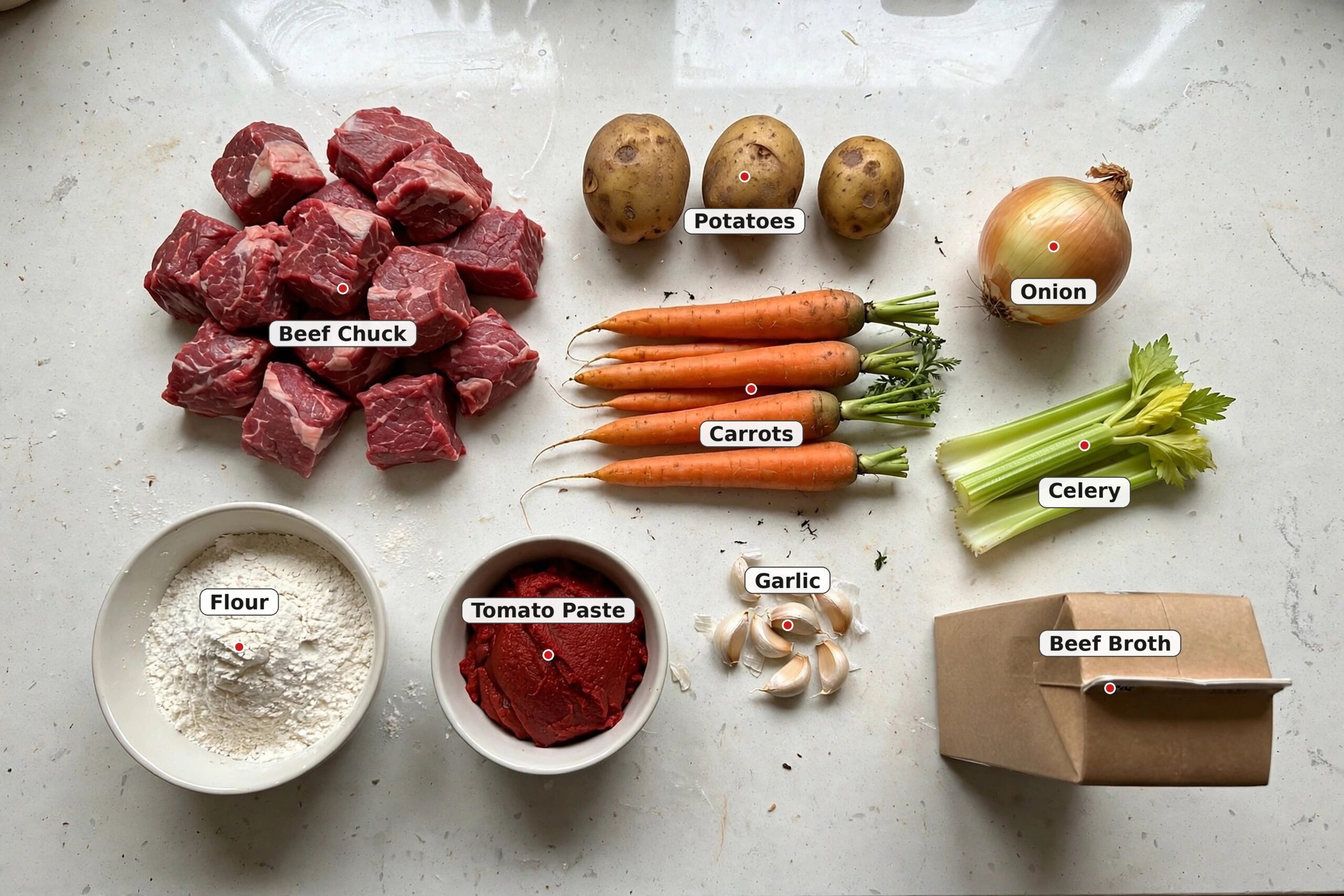
- 2 1/2 pounds (1.1 kg) beef chuck roast, cut into 1 1/2-inch (4 cm) cubes
- 1 teaspoon fine salt
- 1 teaspoon black pepper
- 1/4 cup (30 g) all-purpose flour
- 3 tablespoons vegetable oil, divided
For the Stew
- 1 large yellow onion (about 200 g), diced
- 4 garlic cloves, minced
- 2 tablespoons tomato paste
- 4 cups (960 ml) beef broth
- 1 tablespoon Worcestershire sauce
- 1 teaspoon dried thyme
- 2 bay leaves
- 4 medium carrots (about 300 g), peeled and cut into chunks
- 1 1/2 pounds (680 g) Yukon Gold potatoes, cut into chunks
- 2 celery stalks (about 100 g), sliced
- 1 cup (150 g) frozen peas (optional)
- 2 tablespoons fresh parsley, chopped, for serving
Instructions
Step 1: Pat the beef cubes very dry with paper towels — this is the single most important step for good browning, because wet beef steams instead of searing. Season with the salt and pepper, then toss with the flour until every piece is lightly coated. The flour will help the gravy thicken later.
Step 2: Heat 1 tablespoon of the oil in a large Dutch oven over medium-high heat until it shimmers. Working in two or three batches so the pot is never crowded, brown the beef for 4 to 5 minutes per batch, turning the pieces until they have a deep brown crust on most sides. Add more oil between batches as needed. Transfer the browned beef to a plate. Crowded beef will not brown, so patience here pays off in flavor you can taste in every bite.
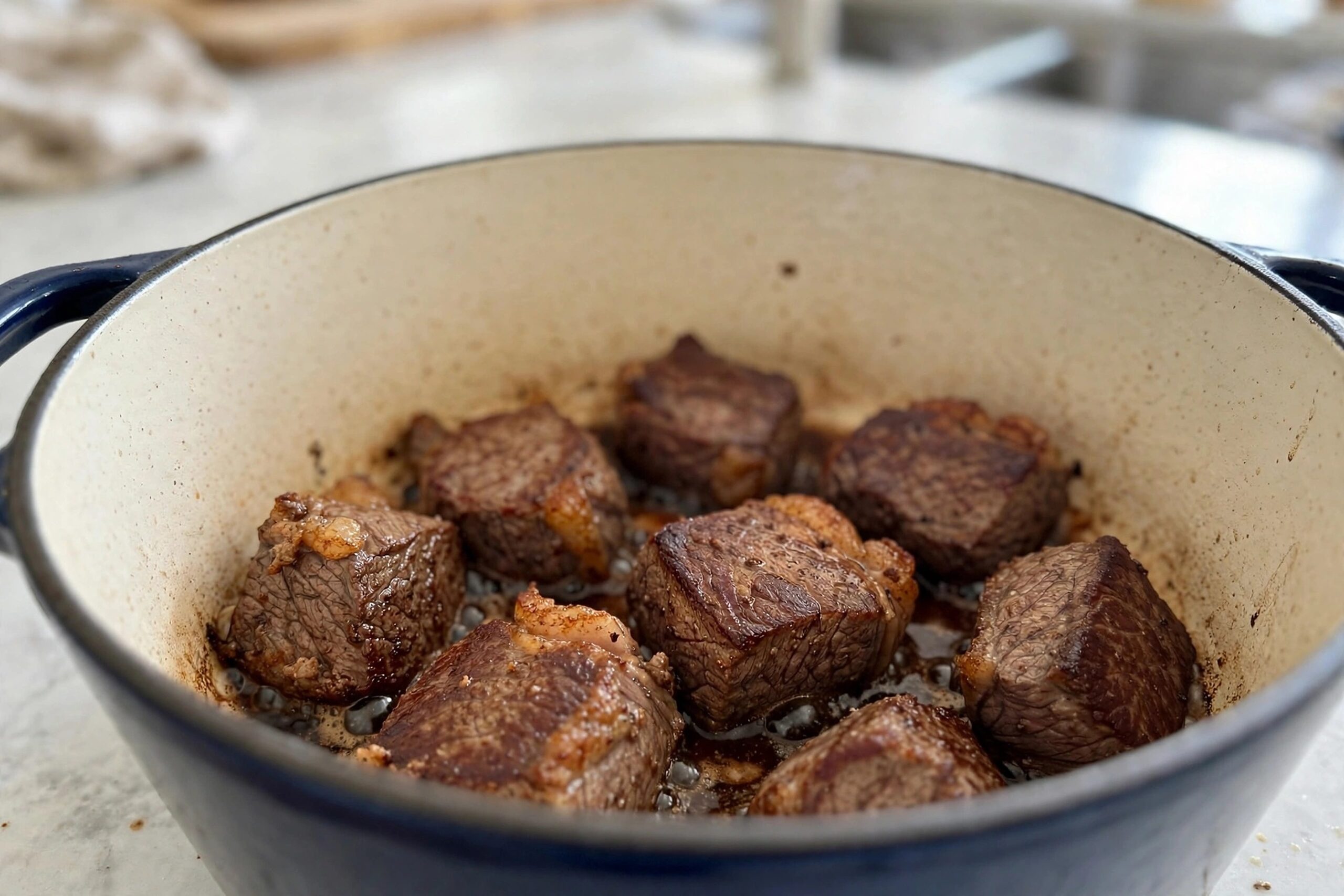
Step 3: Reduce the heat to medium. Add the onion to the drippings in the pot and cook, stirring and scraping up the browned bits from the bottom, for 5 to 6 minutes, until softened and lightly golden. Those browned bits are pure flavor — let the onion’s moisture lift every last one into the stew.
Step 4: Stir in the garlic and tomato paste and cook for 1 to 2 minutes, stirring constantly, until the paste darkens slightly and smells sweet. This quick fry deepens the gravy and removes the paste’s raw edge.
Step 5: Pour in the beef broth and Worcestershire sauce, scraping the bottom of the pot clean. Return the beef and any juices from the plate to the pot, and add the thyme and bay leaves. Bring the stew to a boil, then reduce the heat to the lowest setting that keeps a bare, gentle simmer.
Step 6: Cover the pot and simmer gently for 1 hour 30 minutes, stirring occasionally. Keep the bubbles lazy — a hard boil tightens beef instead of tenderizing it. By the end of this stage the beef should be starting to yield when pressed with a spoon, and the gravy will already smell wonderful.
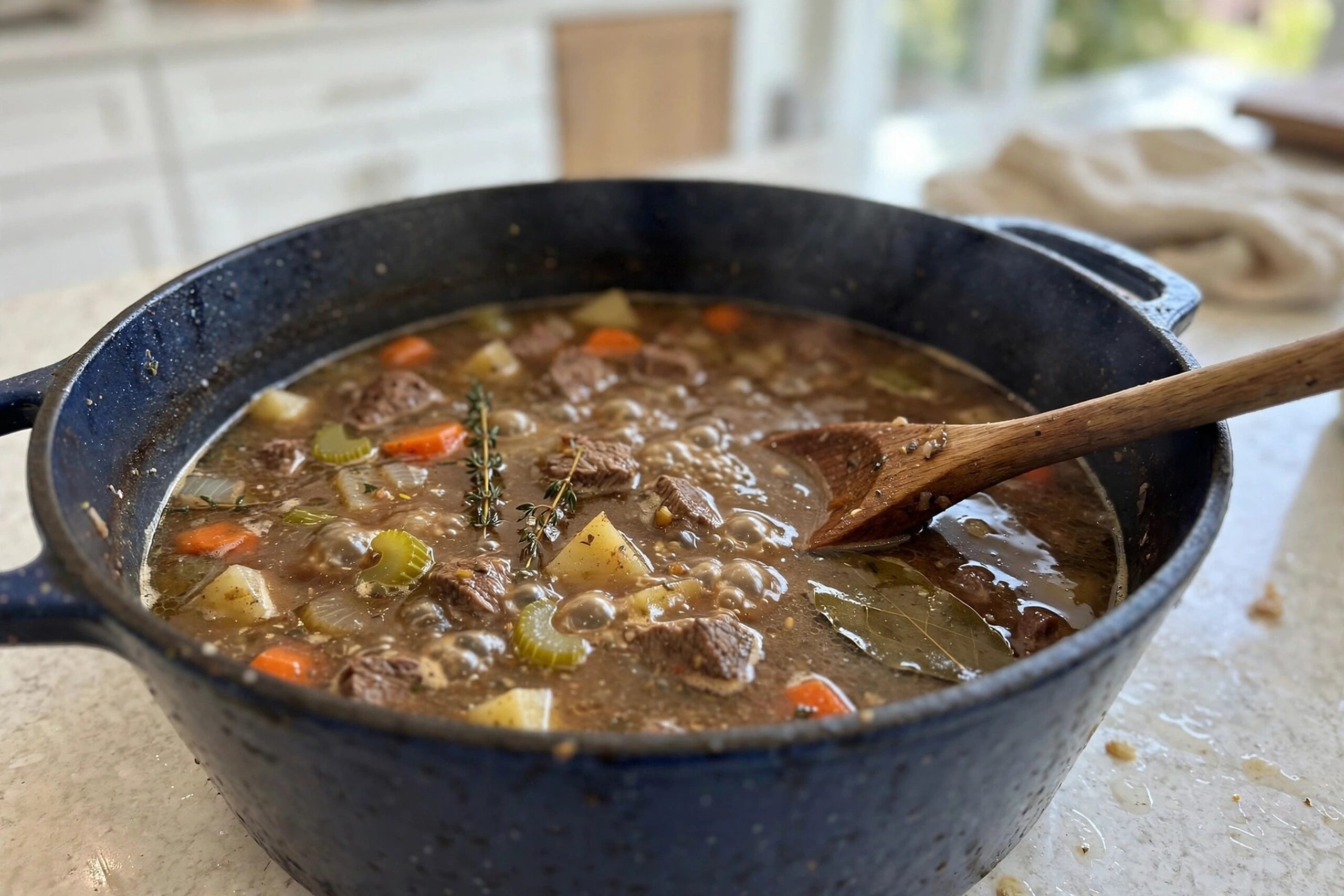
Step 7: Add the carrots, potatoes and celery. Stir them down into the gravy, cover again, and continue simmering gently for 45 to 60 minutes more, until the beef is completely fork-tender and the vegetables are soft all the way through. Adding the vegetables in this second stage keeps them from cooking to mush during the beef’s long simmer.
Step 8: If you are using peas, stir them in now and simmer for 3 to 4 minutes, just until they are bright green and heated through. Remove and discard the bay leaves.
Step 9: Check the gravy. If you want it thicker, simmer the stew uncovered for 10 minutes to reduce it slightly, or mash a few potato chunks against the side of the pot and stir them in. If it is thicker than you like, splash in a little extra broth or water. Taste and adjust the salt and pepper — stew often needs a final seasoning once everything has cooked together.
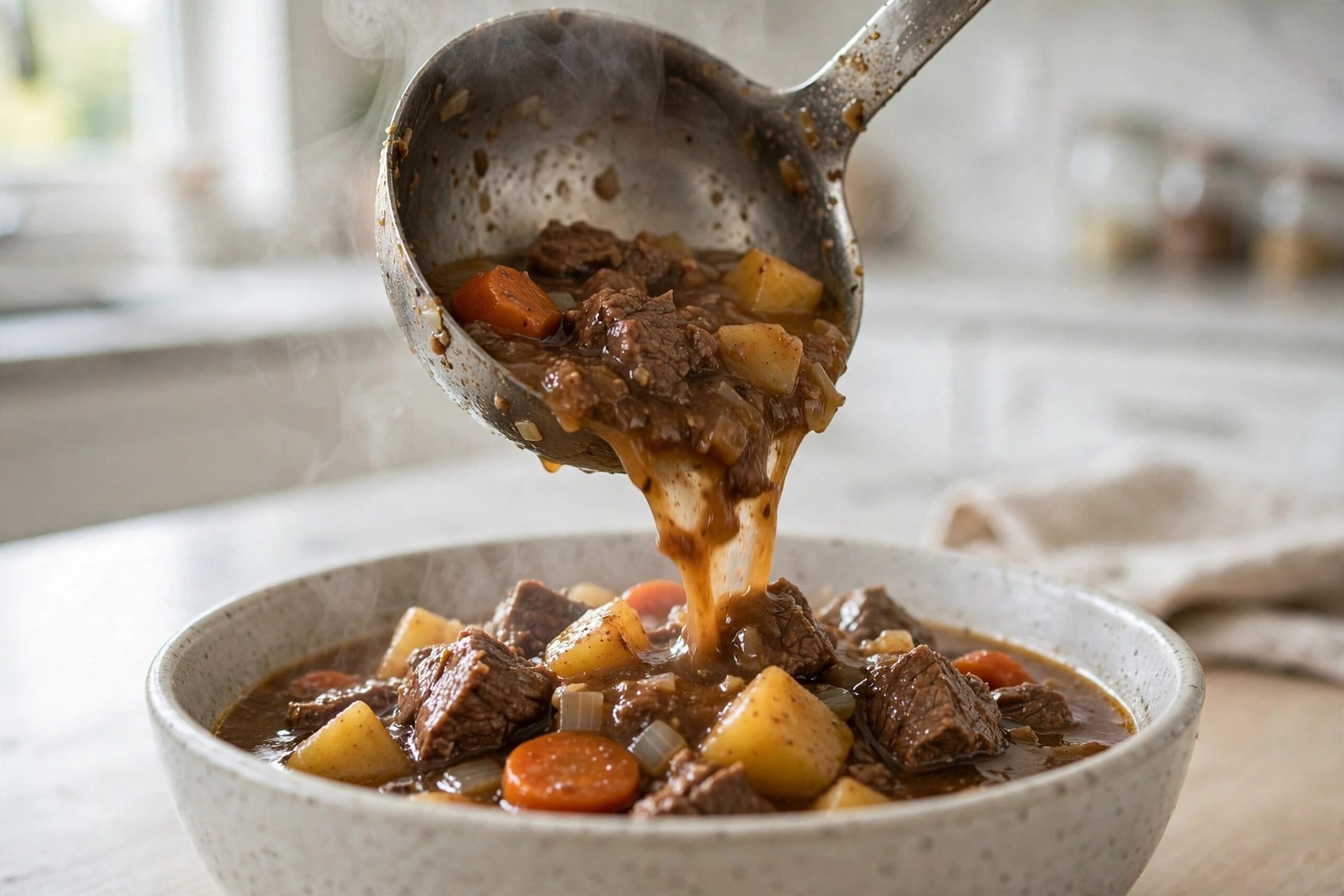
Step 10: Rest the stew off the heat for 10 minutes. This brief pause lets the gravy settle and the beef relax, and it makes serving much neater. Ladle into warm bowls, scatter with fresh parsley, and serve with crusty bread, buttered rolls or a simple green salad.
 Try this nextSweet Corn Chowder
Tips for Tender Beef and Rich Gravy
- Choose chuck roast: its marbling and connective tissue melt during the long simmer into tender, flavorful bites. Lean cuts like round stay tough in stew — save them for another day.
- Dry beef browns best: pat it dry, season it, flour it, and never crowd the pot. Brown in batches even though it takes a few extra minutes.
- Low and slow is the rule: a bare simmer tenderizes; a boil toughens. If your stew is bubbling hard, turn it down and give it time instead.
- Cut pieces evenly: uniform 1 1/2-inch cubes cook at the same rate, so nothing is chewy while the rest falls apart.
- Don’t rush the tenderness: if the beef isn’t fork-tender, it doesn’t need higher heat — it needs another 20 to 30 minutes. Time is the tenderizer.
Easy Variations
Oven Beef Stew
After Step 5, cover the Dutch oven and transfer it to a 325°F (165°C) oven instead of simmering on the stove. Cook for 1 hour 30 minutes, add the vegetables, and return to the oven for 1 hour more. The oven’s even heat makes an exceptionally gentle, hands-off stew.
Slow Cooker Beef Stew
Brown the beef and cook the onion mixture on the stove as directed — this step is worth it — then transfer everything except the peas to a slow cooker. Cook on Low for 8 to 9 hours or High for 4 to 5 hours, adding the vegetables for the final 2 hours on Low if you like them firmer. Stir in the peas at the end.
Extra Vegetable Stew
Add mushrooms browned along with the onions, a diced turnip or parsnip with the potatoes, or a handful of green beans in the last 20 minutes. Stew welcomes whatever the crisper drawer offers.
How to Store and Make Ahead
Refrigerator: cool the stew quickly and refrigerate in airtight containers for up to 4 days. The flavor genuinely improves after the first night, as the beef and vegetables soak up the seasoned gravy.
Freezer: freeze in portions for up to 3 months. Potatoes can soften slightly after freezing, but in a stew their texture holds up well enough that most families never notice. Thaw overnight in the refrigerator before reheating.
Reheating: warm gently over medium-low heat, stirring occasionally and adding a splash of broth if the gravy has thickened. Avoid boiling, which can break down the vegetables.
Make ahead: this is my favorite make-ahead main dish. Cook it fully a day before you need it, refrigerate it in the pot, and reheat it gently — dinner is ready with almost no day-of work, and it tastes even better than fresh.
Frequently Asked Questions
Why is my beef tough?
Almost always, it simply needs more time. Chuck roast goes through a tough stage before its connective tissue melts, usually after 2 hours or more of gentle simmering. Keep the heat low, keep the lid on, and check every 20 minutes — it will turn tender.
Can I skip browning the beef?
You can, and the stew will still be good, but it will not be great. Browning creates the deep, savory foundation of the gravy and the beef’s rich color. If time is truly short, brown at least half the batch rather than skipping the step entirely.
How do I thicken a thin stew?
Simmer it uncovered to reduce, mash a few potato chunks into the gravy, or stir in a slurry of 1 tablespoon of cornstarch mixed with 2 tablespoons of cold water and simmer for 2 minutes. The flour on the beef plus the potatoes usually make extra thickening unnecessary.
What potatoes are best for stew?
Yukon Gold potatoes hold their shape while turning creamy inside, which makes them ideal. Red potatoes also work well. Russets tend to fall apart — pleasant if you like a thicker, rustic gravy, less ideal if you want neat chunks.
Can I add mushrooms or other vegetables?
Yes. Brown 8 ounces (225 g) of sliced mushrooms with the onions for deep flavor, and feel free to add parsnips, turnips or pearl onions with the carrots and potatoes. Keep total vegetable volume similar so the gravy ratio stays right.
Final Thoughts
Classic beef stew asks for an afternoon and gives back far more than a meal: a warm kitchen, a pot that feeds a crowd, and leftovers that make tomorrow easier. It is the recipe I trust for cold nights, family visits and any day that calls for something steady and satisfying.
Make it this weekend, serve it with good bread for the gravy, and enjoy the quiet that falls over the table when everybody takes the first bite. Tell me in the comments whether your house is a stovetop, oven or slow cooker stew house. Happy cooking!
Samuel
Classic Beef Stew
When the days get short and the kitchen windows fog up, there is one pot I reach for without thinking: Classic Beef Stew. Chunks of beef simmered low and slow until they…
Ingredients
Beef
Stew
Method
- 1Pat the beef cubes very dry with paper towels — this is the single most important step for good browning, because wet beef steams instead of searing. Season with the salt and pepper, then toss with the flour until every piece is lightly coated. The flour will help the gravy thicken later.
- 2Heat 1 tablespoon of the oil in a large Dutch oven over medium-high heat until it shimmers. Working in two or three batches so the pot is never crowded, brown the beef for 4 to 5 minutes per batch, turning the pieces until they have a deep brown crust on most sides. Add more oil between batches as needed. Transfer the browned beef to a plate. Crowded beef will not brown, so patience here pays off in flavor you can taste in every bite.
- 3Reduce the heat to medium. Add the onion to the drippings in the pot and cook, stirring and scraping up the browned bits from the bottom, for 5 to 6 minutes, until softened and lightly golden. Those browned bits are pure flavor — let the onion’s moisture lift every last one into the stew.
- 4Stir in the garlic and tomato paste and cook for 1 to 2 minutes, stirring constantly, until the paste darkens slightly and smells sweet. This quick fry deepens the gravy and removes the paste’s raw edge.
- 5Pour in the beef broth and Worcestershire sauce, scraping the bottom of the pot clean. Return the beef and any juices from the plate to the pot, and add the thyme and bay leaves. Bring the stew to a boil, then reduce the heat to the lowest setting that keeps a bare, gentle simmer.
- 6Cover the pot and simmer gently for 1 hour 30 minutes, stirring occasionally. Keep the bubbles lazy — a hard boil tightens beef instead of tenderizing it. By the end of this stage the beef should be starting to yield when pressed with a spoon, and the gravy will already smell wonderful.
- 7Add the carrots, potatoes and celery. Stir them down into the gravy, cover again, and continue simmering gently for 45 to 60 minutes more, until the beef is completely fork-tender and the vegetables are soft all the way through. Adding the vegetables in this second stage keeps them from cooking to mush during the beef’s long simmer.
- 8If you are using peas, stir them in now and simmer for 3 to 4 minutes, just until they are bright green and heated through. Remove and discard the bay leaves.
- 9Check the gravy. If you want it thicker, simmer the stew uncovered for 10 minutes to reduce it slightly, or mash a few potato chunks against the side of the pot and stir them in. If it is thicker than you like, splash in a little extra broth or water. Taste and adjust the salt and pepper — stew often needs a final seasoning once everything has cooked together.
- 10Rest the stew off the heat for 10 minutes. This brief pause lets the gravy settle and the beef relax, and it makes serving much neater. Ladle into warm bowls, scatter with fresh parsley, and serve with crusty bread, buttered rolls or a simple green salad.
Notes
Refrigerator: cool the stew quickly and refrigerate in airtight containers for up to 4 days. The flavor genuinely improves after the first night, as the beef and vegetables soak up the seasoned gravy. Freezer: freeze in portions for up to 3 months. Potatoes can soften slightly after freezing, but in a stew their texture holds up well enough that most families never notice. Thaw overnight in the refrigerator before reheating.