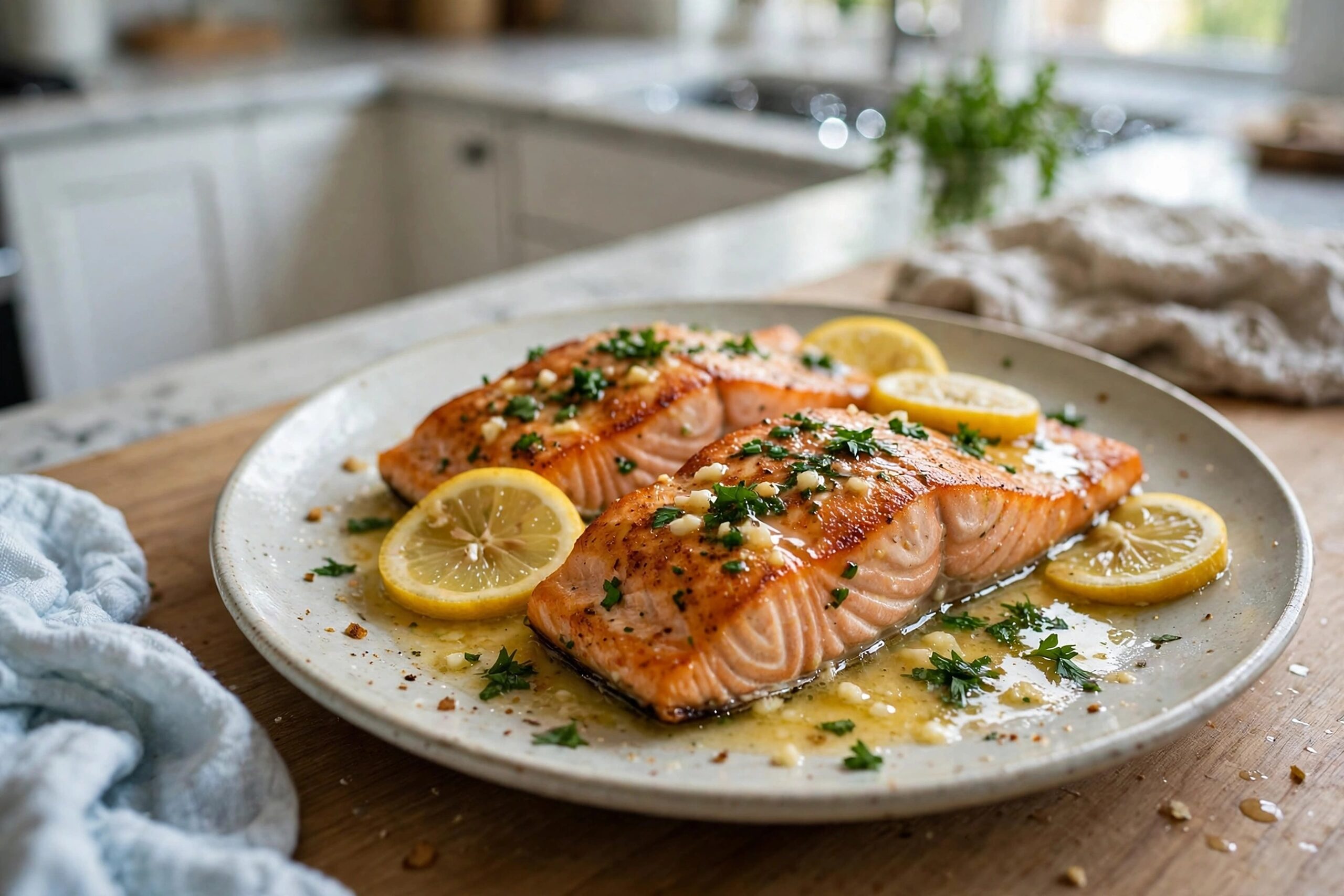
Lemon Garlic Butter Salmon
Lemon Garlic Butter Salmon
Some nights you want dinner to feel a little special without turning the kitchen upside down, and that’s exactly when I make Lemon Garlic Butter Salmon. Crisp-skinned salmon fillets, a glossy lemon…
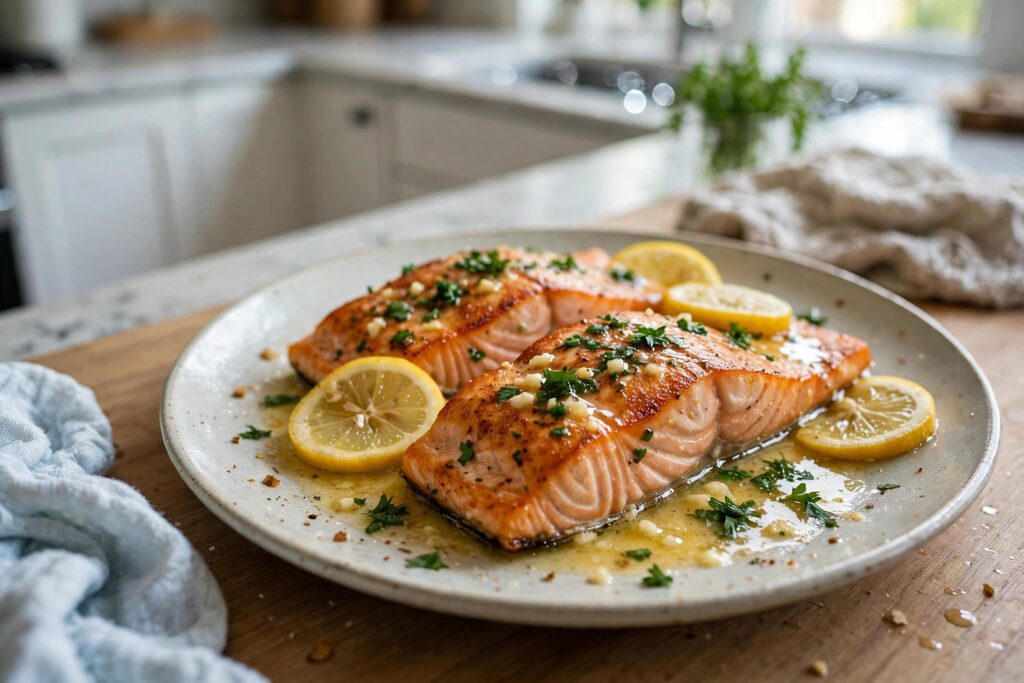
Some nights you want dinner to feel a little special without turning the kitchen upside down, and that’s exactly when I make Lemon Garlic Butter Salmon. Crisp-skinned salmon fillets, a glossy lemon garlic butter sauce, and a shower of fresh parsley — it tastes like a restaurant plate and takes about 25 minutes, start to finish.
I’m Samuel, and here at Samuel’s Recipes I believe salmon rewards a cook who keeps things simple: dry the fish well, sear it hot and leave it alone, then build the sauce in the same pan so nothing good goes to waste. Lemon and garlic were made for salmon, and butter — well, butter makes everything at home at the table.
Below you’ll find the complete method: how to get that shattering crisp skin, how to tell exactly when the salmon is done, and how to finish the sauce so it’s bright and silky rather than greasy. A weeknight hero and a company dinner, all in one skillet.
Why You’ll Love This Recipe
- Ready in 25 minutes: a genuinely fast dinner that still feels like an occasion.
- Crisp skin, tender middle: a hot pan, dry fish, and patience give you the best of both textures.
- Bright, buttery sauce: lemon, garlic and butter made right in the searing pan — no extra dishes, no wasted flavor.
- Simple ingredients: salmon, lemon, garlic, butter, parsley. That’s nearly the whole shopping list.
- Healthy and satisfying: rich in good fats and protein, and lovely with vegetables, rice or a green salad.
- Foolproof doneness: clear visual cues plus a temperature target, so no more dry, overcooked salmon.
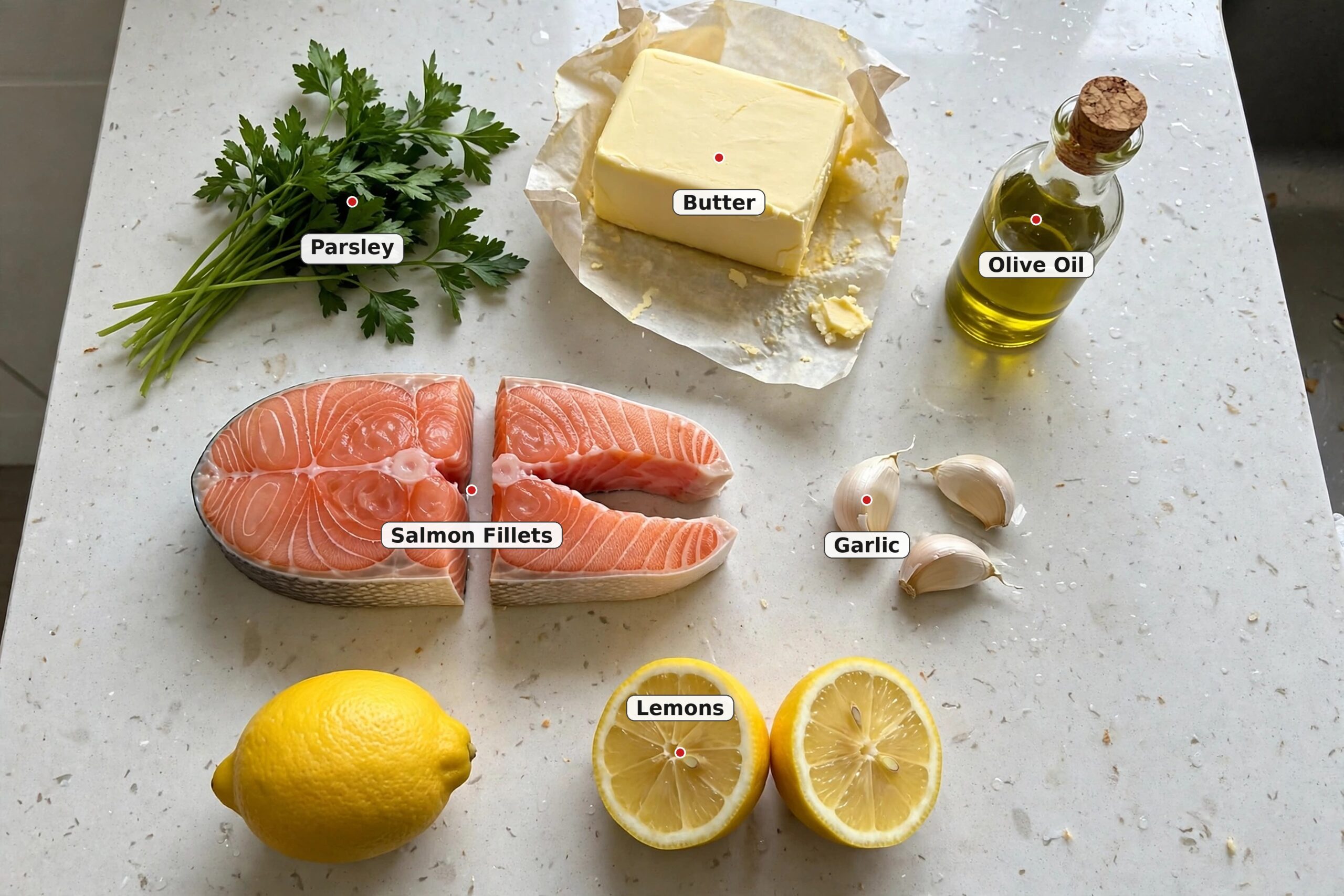
Ingredients
For the Salmon
- 4 salmon fillets (about 6 ounces / 170 g each), skin-on, about 1 inch thick
- 1 teaspoon fine salt
- 1/2 teaspoon black pepper
- 1/2 teaspoon paprika (optional, for color)
- 1 tablespoon olive oil
For the Lemon Garlic Butter Sauce
- 4 tablespoons (55 g) unsalted butter, cut into pieces
- 4 cloves garlic, minced
- 1/4 cup (60 ml) chicken broth (or water)
- 3 tablespoons fresh lemon juice (about 1 large lemon), plus lemon slices for serving
- 1 teaspoon lemon zest
- 2 tablespoons chopped fresh parsley
- Pinch of red pepper flakes (optional)
Instructions
Step 1: Take the salmon out of the refrigerator 15 minutes before cooking. Pat the fillets very dry on all sides with paper towels — especially the skin. Dry fish is crisp fish. Season the flesh side with the salt, pepper and paprika, and season the skin lightly with salt.
Step 2: Heat the olive oil in a large skillet (cast iron or stainless steel works best) over medium-high heat until it shimmers and just begins to smoke faintly.
Step 3: Lay the fillets in the pan skin-side down, laying them away from you so the oil doesn’t splash. Press each fillet gently with a spatula for 10 seconds so the skin makes full contact with the pan and doesn’t curl.
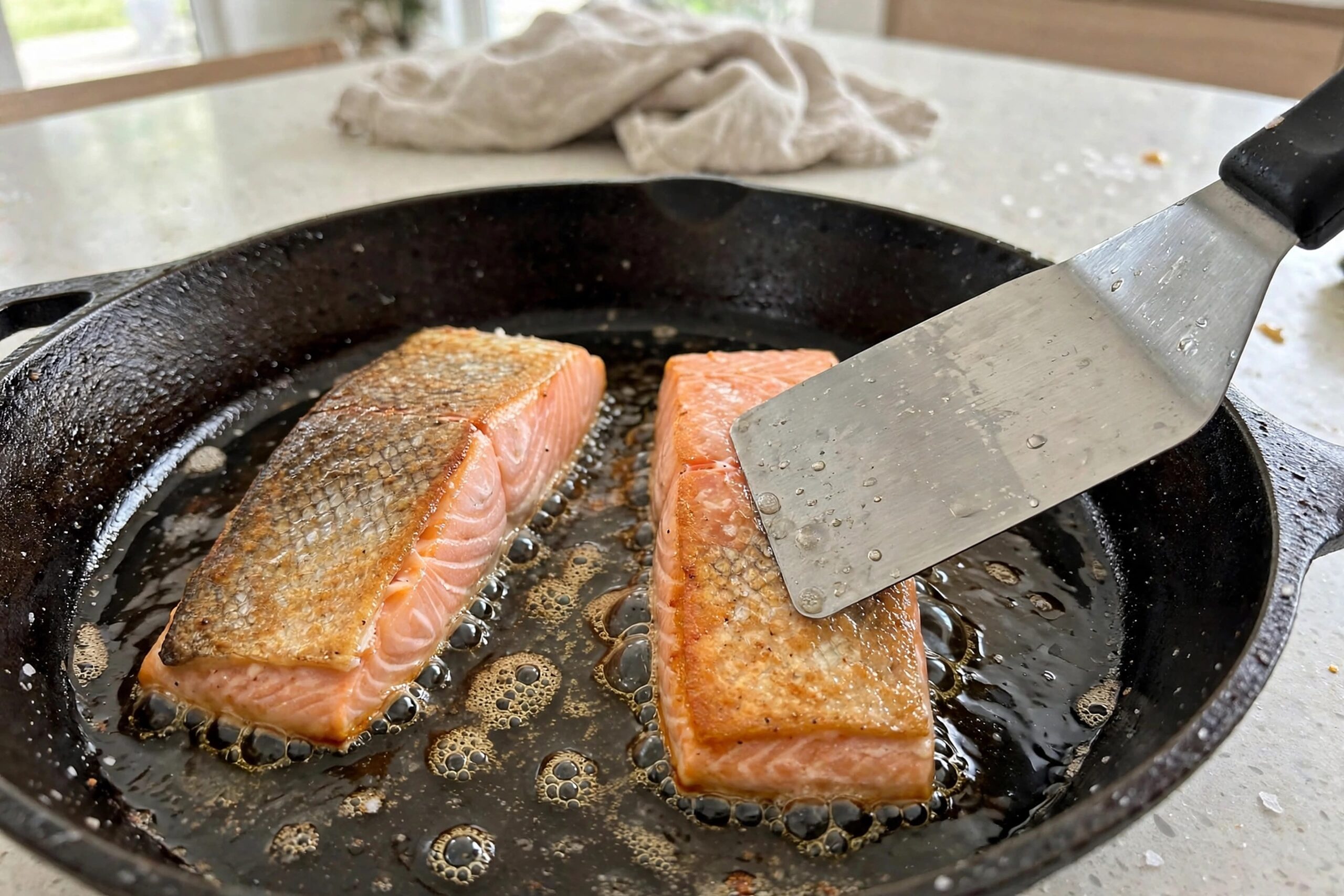
Step 4: Cook, undisturbed, for 6 to 7 minutes. Don’t move the fish — the skin is crisping and will release from the pan when it’s ready. You’ll see the flesh turn opaque about two-thirds of the way up the sides.
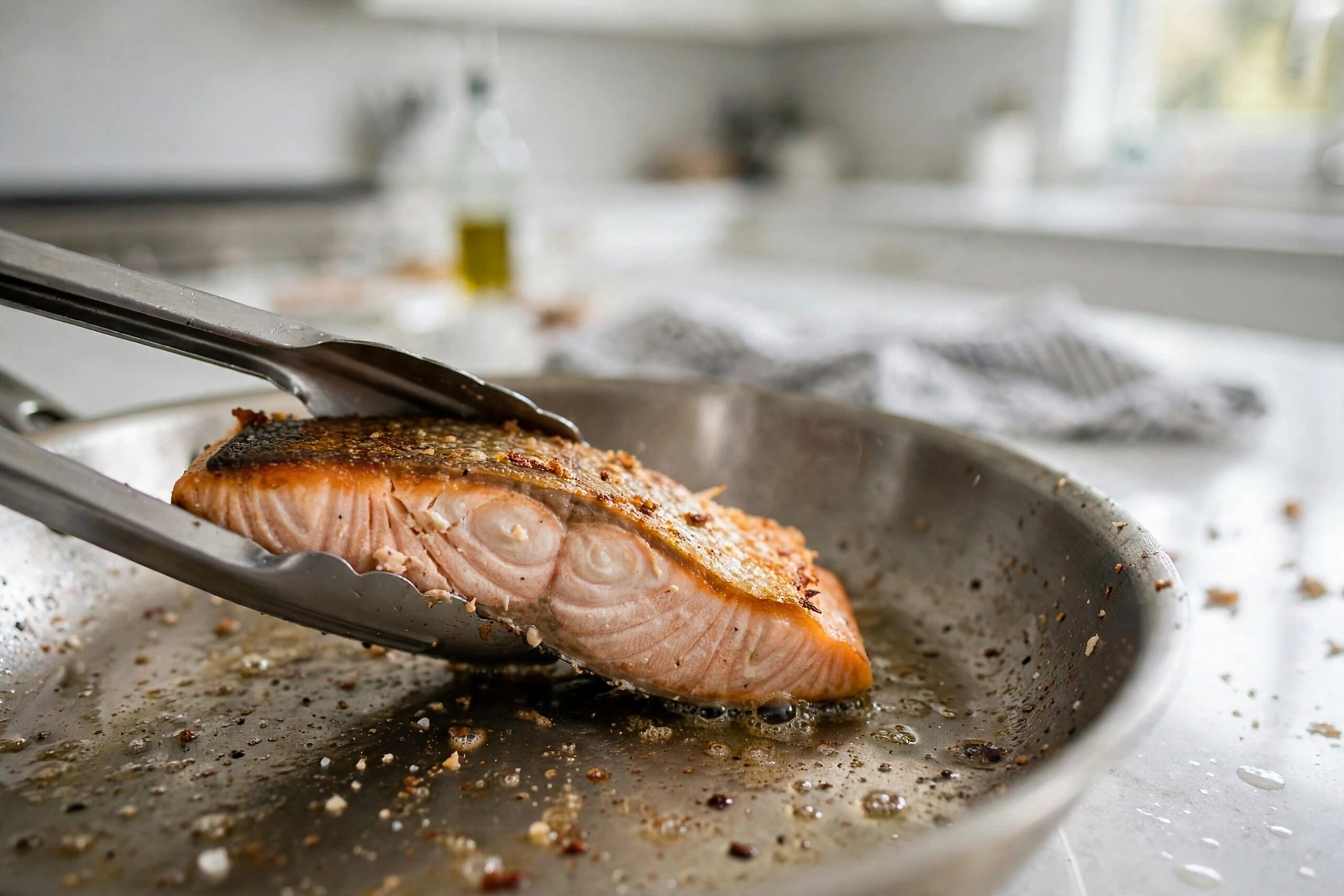
Step 5: Flip the fillets once and cook for 1 to 2 minutes more, until the flesh flakes easily and the center is just barely translucent, or a thermometer reads 125°F (52°C) for medium — the temperature will rise as it rests. Transfer the salmon to a warm plate, skin-side up, so the skin stays crisp.
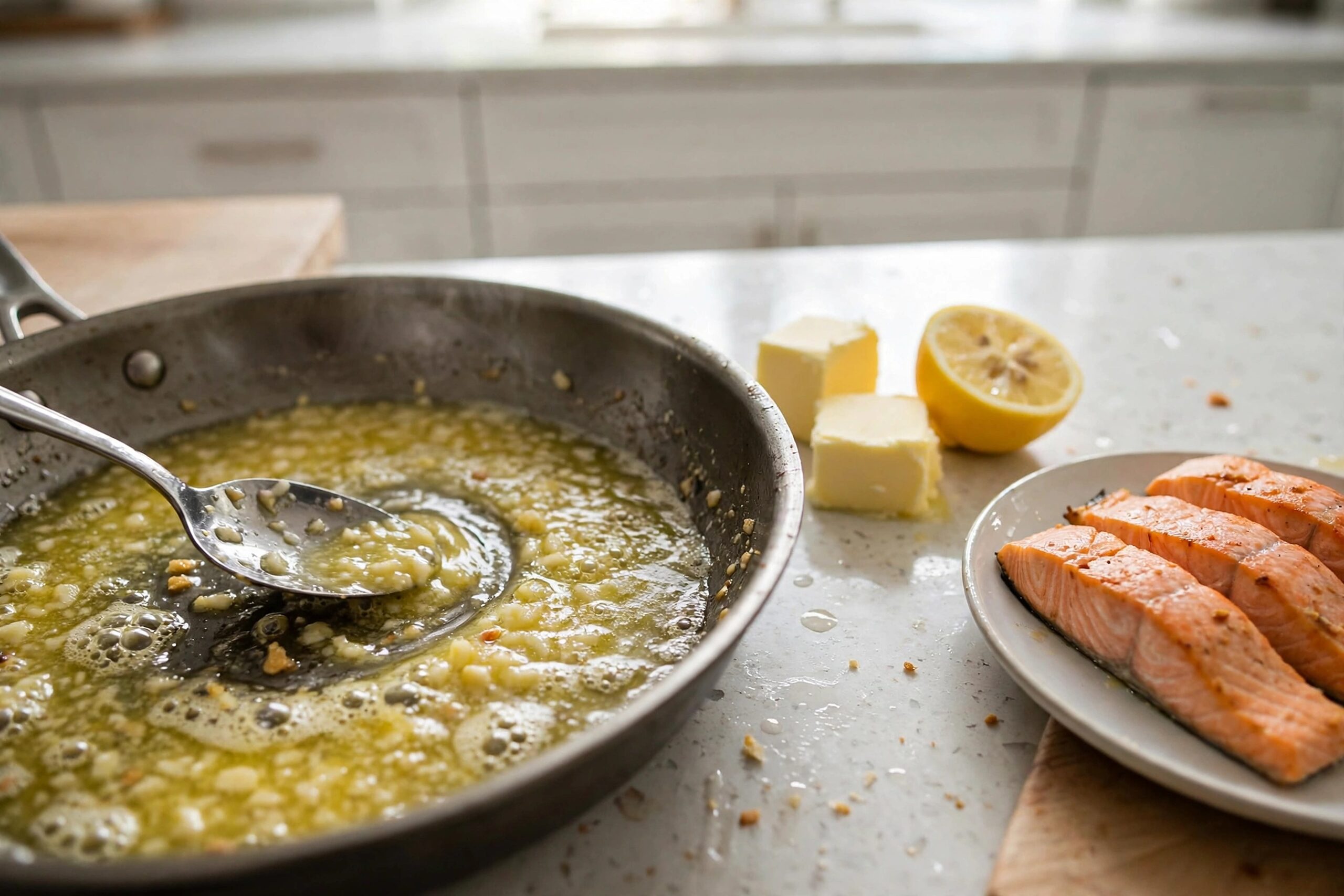
Step 6: Lower the heat to medium. Add the butter to the same skillet and let it melt and foam. Stir in the garlic and red pepper flakes, if using, and cook for 30 seconds until fragrant — don’t let the garlic brown.
Step 7: Pour in the chicken broth and lemon juice, scraping up all the golden bits from the pan. Simmer for 1 to 2 minutes, until the sauce reduces slightly and looks glossy. Stir in the lemon zest and half the parsley, and taste for salt.
Step 8: Return the salmon to the pan, skin-side up, just long enough to warm through — about 30 seconds — or simply spoon the hot sauce around (not over) the fillets on their plates to keep that skin crisp.
Step 9: Serve right away with lemon slices, the remaining parsley scattered over, and plenty of the sauce spooned around each fillet.
 Try this nextChicken Pot Pie
Tips for Perfect Salmon Every Time
- Dry, dry, dry: moisture is the enemy of crisp skin. Pat the fillets twice if they seem wet.
- Leave it alone: salmon releases from the pan on its own when the skin is crisp. If it sticks, it isn’t ready to flip — give it another minute.
- Cook mostly skin-side: about 90% of the cooking happens skin-down. The brief flip at the end just finishes the top.
- Pull it early: salmon keeps cooking off the heat. Take it off at 125°F (52°C) for moist, medium flesh; for fully cooked through, aim for 135°F (57°C) and rest well.
- Sauce around, not over: lemon butter poured over the top softens the skin you worked for. Spoon it around the fish instead.
- Fresh lemon, always: bottled juice tastes flat next to fresh. Zest first, then juice.
Easy Variations
Baked Lemon Garlic Salmon
Prefer hands-off? Place the seasoned fillets on a lined baking sheet, whisk the melted butter, garlic, lemon juice and zest together, and pour it over. Bake at 425°F (220°C) for 10 to 12 minutes. The skin won’t crisp, but the flavor is all there.
Salmon with Asparagus, One Pan
After flipping the salmon, tuck a handful of thin asparagus spears around the fillets for the last 3 to 4 minutes, then make the sauce as written. The asparagus cooks in the lemon butter and dinner is done in one pan.
How to Store
Refrigerator: store leftover salmon in an airtight container for up to 2 days. The sauce keeps separately for up to 3 days.
Freezer: cooked salmon freezes acceptably for up to 2 months, though the texture softens. Wrap fillets tightly. Raw fillets freeze better — thaw overnight in the refrigerator before cooking.
Reheating: warm gently in a covered skillet over low heat, or in a 275°F (135°C) oven for about 10 minutes. Low and slow keeps salmon from drying out. Leftovers are also excellent cold, flaked over a salad.
Frequently Asked Questions
How do I know when salmon is done?
The flesh should flake easily with a fork and look just barely translucent in the very center. On a thermometer, 125°F (52°C) is moist medium and 145°F (63°C) is the USDA fully-cooked mark — most home cooks prefer it pulled somewhere between the two.
Can I use skinless fillets?
Yes. Sear the presentation side down first for 4 to 5 minutes, flip, and cook 1 to 2 minutes more. The timing is a little shorter without the skin insulating the fish.
Why did my salmon stick to the pan?
The pan wasn’t hot enough, the fish was wet, or it was moved too soon. Heat the pan properly, dry the fillets well, and wait — properly crisped skin releases all by itself.
What goes well with lemon garlic butter salmon?
Rice pilaf, roasted asparagus, garlic green beans, a simple green salad, or buttered orzo to catch the extra sauce. Anything that loves lemon butter — which is most things.
Can I use frozen salmon?
Yes, thaw it fully in the refrigerator overnight first, then pat it very dry — thawed fish gives off extra moisture, so give it an extra minute of air-drying on the paper towels.
Final Thoughts
Lemon garlic butter salmon is the dinner I make when I want to take care of people without spending the evening at the stove: crisp skin, bright sauce, and a plate that looks like you tried much harder than you did.
Make it this week, keep that skin crisp, and tell me in the comments what you served alongside. Happy cooking!
Samuel
Lemon Garlic Butter Salmon
Some nights you want dinner to feel a little special without turning the kitchen upside down, and that’s exactly when I make Lemon Garlic Butter Salmon. Crisp-skinned salmon fillets, a glossy lemon…
Ingredients
Salmon
Lemon Garlic Butter Sauce
Method
- 1Take the salmon out of the refrigerator 15 minutes before cooking. Pat the fillets very dry on all sides with paper towels — especially the skin. Dry fish is crisp fish. Season the flesh side with the salt, pepper and paprika, and season the skin lightly with salt.
- 2Heat the olive oil in a large skillet (cast iron or stainless steel works best) over medium-high heat until it shimmers and just begins to smoke faintly.
- 3Lay the fillets in the pan skin-side down, laying them away from you so the oil doesn’t splash. Press each fillet gently with a spatula for 10 seconds so the skin makes full contact with the pan and doesn’t curl.
- 4Cook, undisturbed, for 6 to 7 minutes. Don’t move the fish — the skin is crisping and will release from the pan when it’s ready. You’ll see the flesh turn opaque about two-thirds of the way up the sides.
- 5Flip the fillets once and cook for 1 to 2 minutes more, until the flesh flakes easily and the center is just barely translucent, or a thermometer reads 125°F (52°C) for medium — the temperature will rise as it rests. Transfer the salmon to a warm plate, skin-side up, so the skin stays crisp.
- 6Lower the heat to medium. Add the butter to the same skillet and let it melt and foam. Stir in the garlic and red pepper flakes, if using, and cook for 30 seconds until fragrant — don’t let the garlic brown.
- 7Pour in the chicken broth and lemon juice, scraping up all the golden bits from the pan. Simmer for 1 to 2 minutes, until the sauce reduces slightly and looks glossy. Stir in the lemon zest and half the parsley, and taste for salt.
- 8Return the salmon to the pan, skin-side up, just long enough to warm through — about 30 seconds — or simply spoon the hot sauce around (not over) the fillets on their plates to keep that skin crisp.
- 9Serve right away with lemon slices, the remaining parsley scattered over, and plenty of the sauce spooned around each fillet.
Notes
Refrigerator: store leftover salmon in an airtight container for up to 2 days. The sauce keeps separately for up to 3 days. Freezer: cooked salmon freezes acceptably for up to 2 months, though the texture softens. Wrap fillets tightly. Raw fillets freeze better — thaw overnight in the refrigerator before cooking.