Fluffy Buttermilk Pancakes (Classic Diner Style)
Fluffy Buttermilk Pancakes (Classic Diner Style)
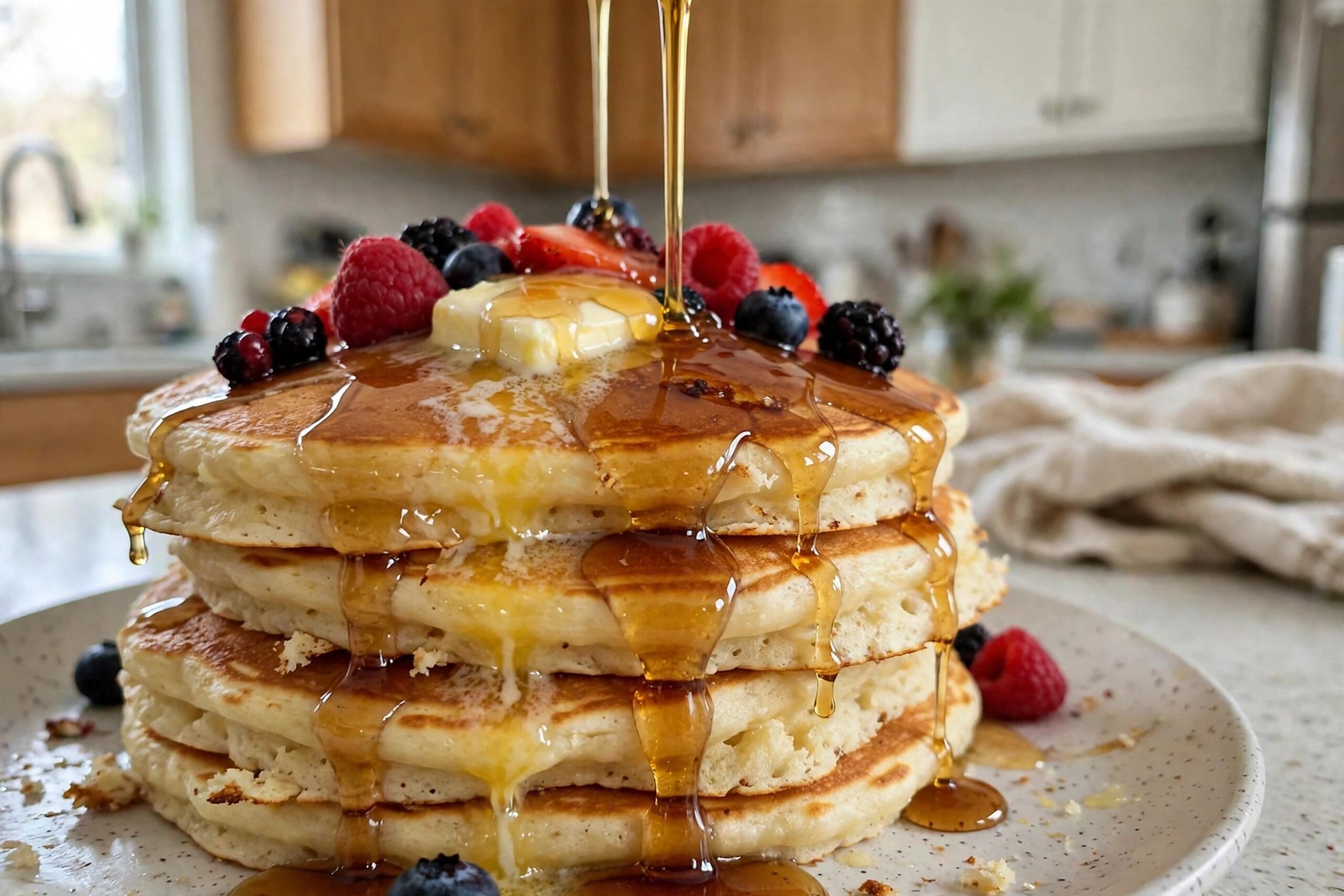
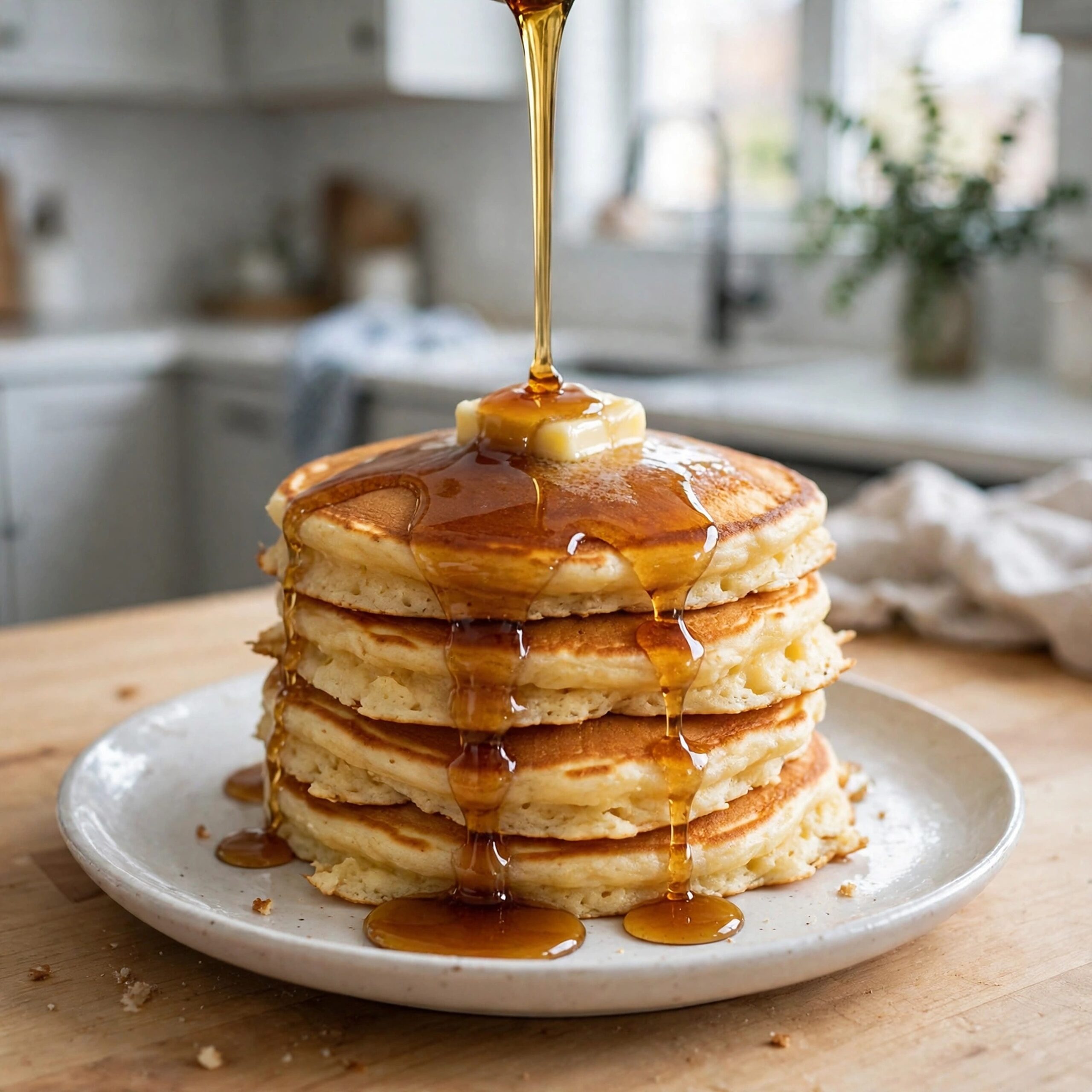
There is a particular kind of happiness that only a tall stack of Fluffy Buttermilk Pancakes can deliver. Golden at the edges, soft and steamy in the middle, with butter melting down…
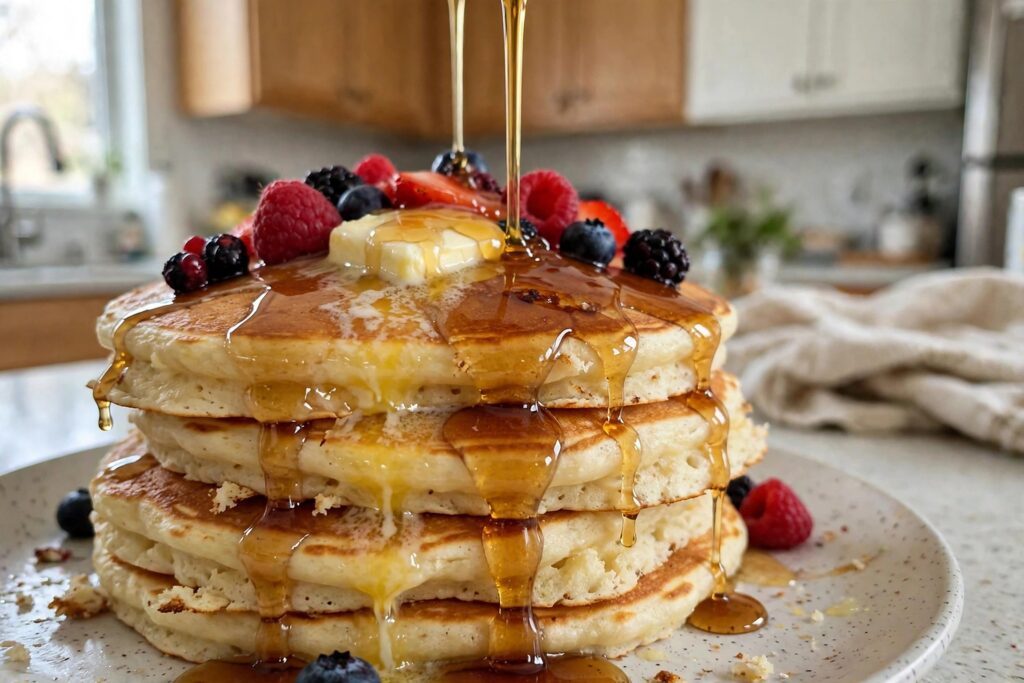
There is a particular kind of happiness that only a tall stack of Fluffy Buttermilk Pancakes can deliver. Golden at the edges, soft and steamy in the middle, with butter melting down the sides and maple syrup pooling on the plate — this is the classic diner breakfast, made right at home in your own kitchen.
I’m Samuel, and here at Samuel’s Recipes I believe a pancake should be thick enough to stand proud on the plate, tender enough to cut with the side of a fork, and simple enough to make half asleep on a Saturday morning. This recipe is the one I come back to again and again: real buttermilk, a short rest for the batter, and a hot griddle. That’s the whole secret.
Below you’ll find the complete recipe with step-by-step instructions, the tips that keep these pancakes tall instead of flat, easy variations for the family, and storage advice for busy weekday mornings. Let’s get the coffee on and the griddle heating.
Why You’ll Love This Recipe
- Tall and fluffy, every time: baking powder, baking soda and real buttermilk work together for a proper diner-style rise — no flat, gummy pancakes.
- Simple pantry ingredients: flour, sugar, eggs, butter and buttermilk. Nothing fancy, nothing hard to find.
- Ready in about 25 minutes: ten minutes of mixing and resting, fifteen minutes at the griddle, and breakfast is on the table.
- A batter that forgives: a few lumps are not just fine, they’re correct — this recipe is built for real home cooks, not perfectionists.
- Freezer friendly: make a double batch and freeze the extras for quick weekday breakfasts straight from the toaster.
- Endlessly adaptable: blueberries, chocolate chips or a handful of chopped pecans all fold in beautifully.
Ingredients
Dry Ingredients
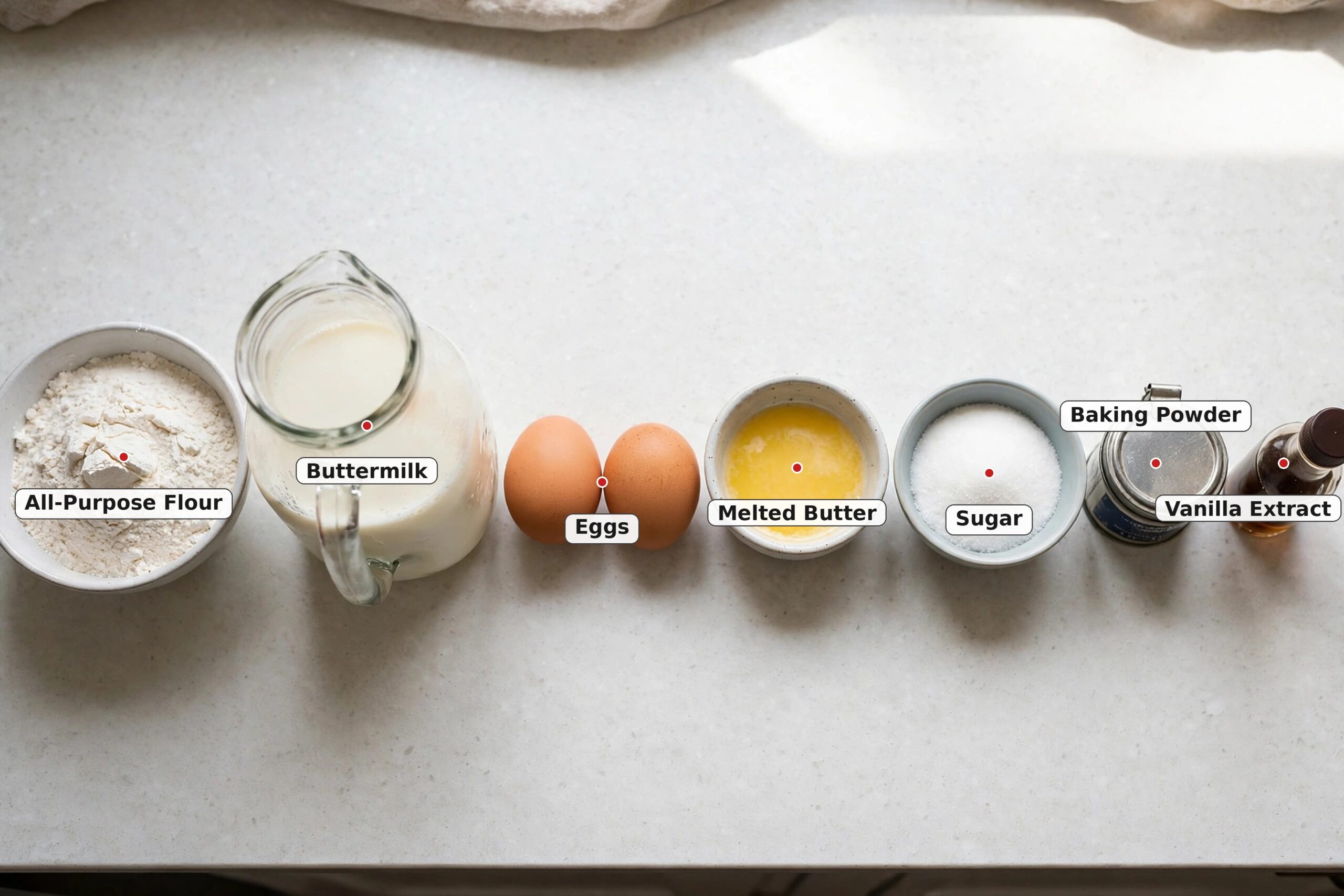
- 2 cups (250 g) all-purpose flour, spooned into the cup and leveled
- 2 tablespoons granulated sugar
- 2 teaspoons baking powder
- 1/2 teaspoon baking soda
- 1 teaspoon fine salt
Wet Ingredients
- 2 cups (480 ml) buttermilk, shaken well, at room temperature if possible
- 2 large eggs
- 3 tablespoons unsalted butter, melted, plus more for the griddle
- 1 teaspoon vanilla extract
For Serving
- Softened butter
- Warm maple syrup
- Fresh berries (optional)
Instructions
Step 1: In a large mixing bowl, whisk together the flour, sugar, baking powder, baking soda and salt until well combined and airy. This even distribution of the leaveners is what helps every pancake rise the same.
Step 2: In a second bowl or a large measuring jug, whisk the buttermilk, eggs, melted butter and vanilla until smooth. If your buttermilk is fridge-cold, the melted butter may form little flecks — that’s fine, they’ll melt away on the griddle.
Step 3: Pour the wet ingredients into the dry and stir gently with a spatula or wooden spoon until just combined, about 10 to 12 strokes. The batter should be thick and lumpy. Stop as soon as the flour disappears — overmixing develops gluten and makes pancakes tough and flat.
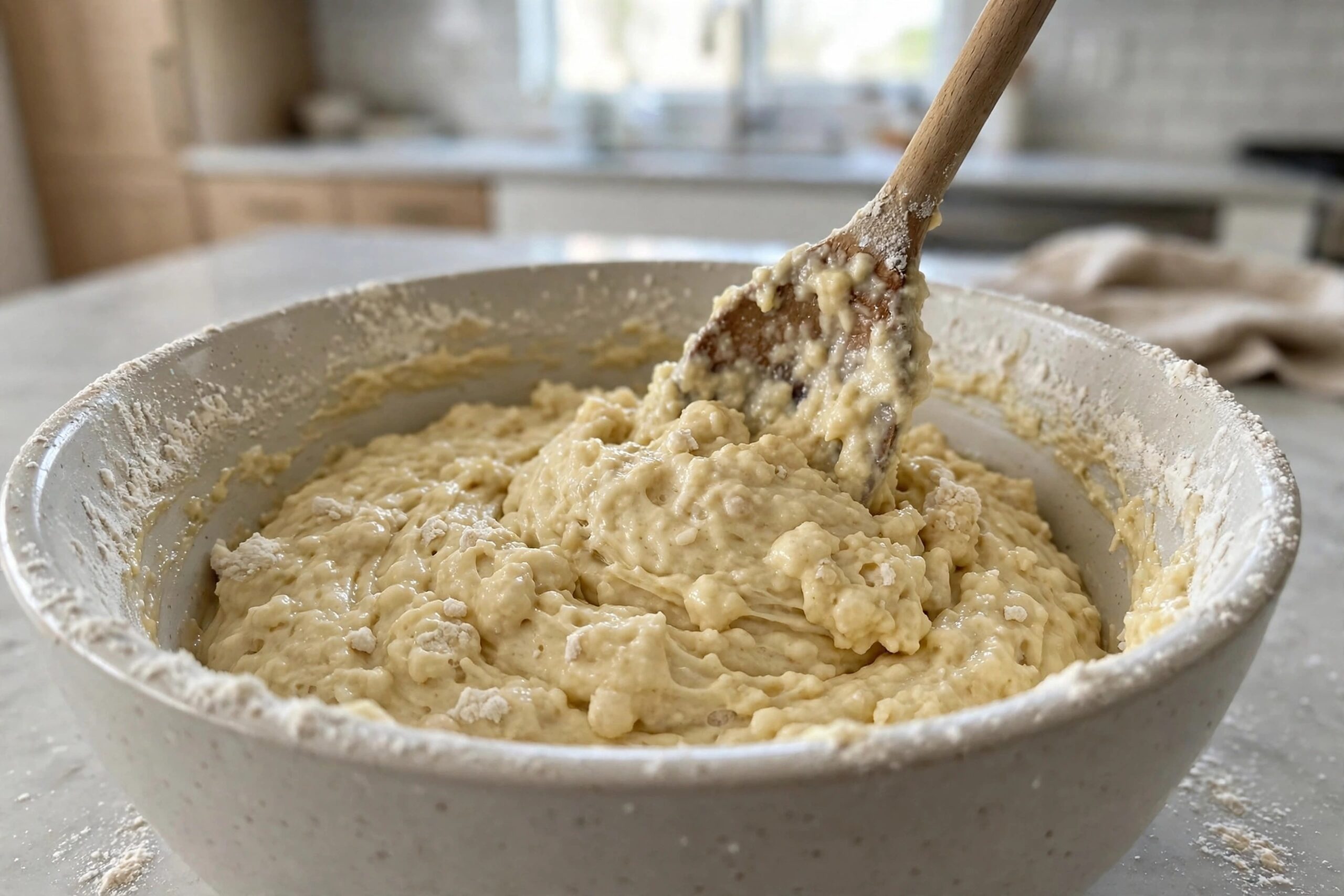
Step 4: Set the batter aside to rest for 10 minutes. During the rest, the flour hydrates and the baking powder gets a head start, which means taller, more tender pancakes. Don’t stir the batter again after resting.
Step 5: While the batter rests, heat a griddle or large skillet over medium heat, or set an electric griddle to 375°F (190°C). It’s ready when a few drops of water dance across the surface and evaporate quickly.
Step 6: Lightly butter the griddle, wiping away any excess with a paper towel — too much butter fries the edges and browns the pancakes unevenly. Scoop the batter with a 1/3-cup measure and pour it onto the hot surface, spacing the pancakes so they don’t touch.
Step 7: Cook for 2 to 3 minutes, until bubbles appear across the surface and the edges look set and slightly dry. The underside should be a deep golden brown.
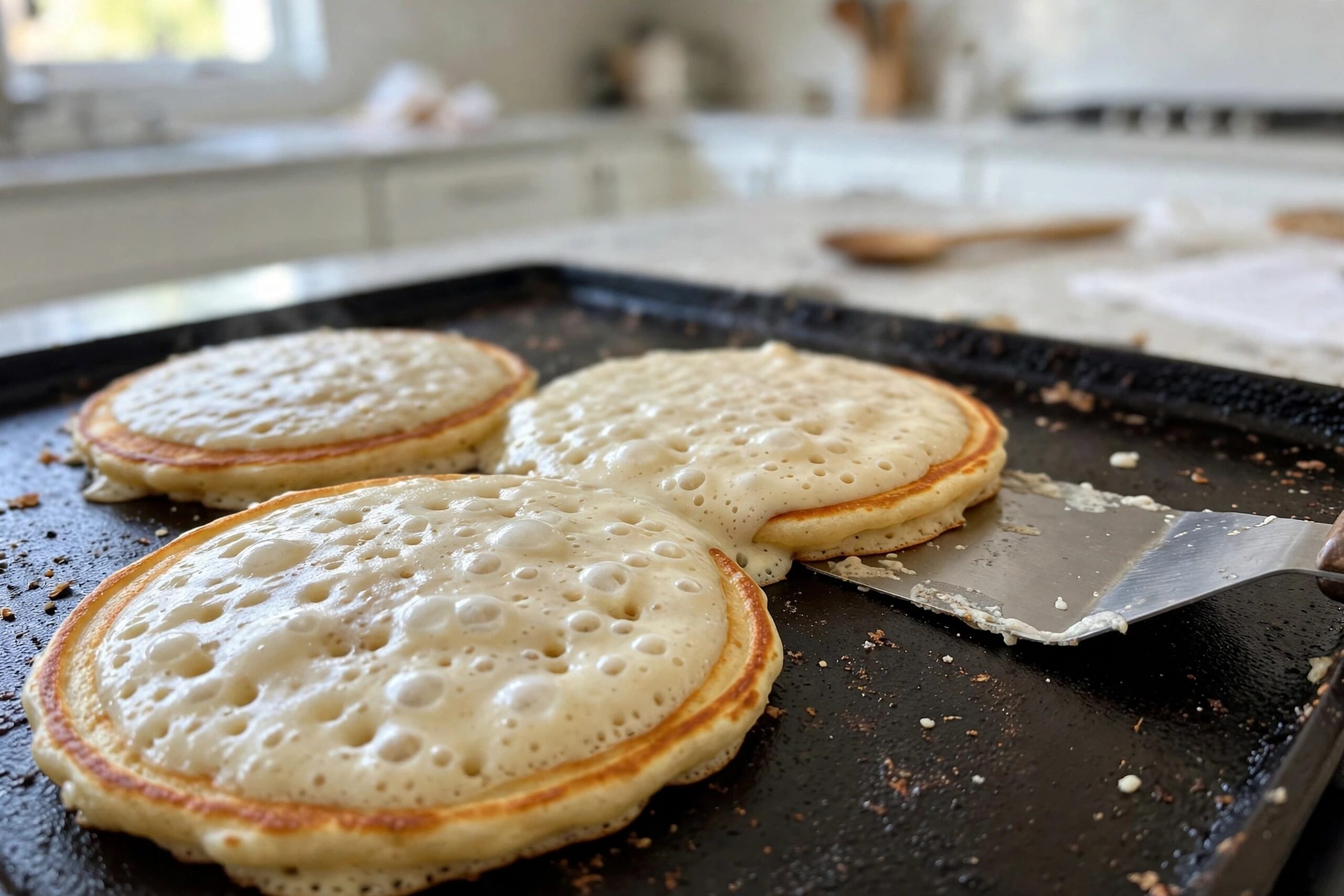
Step 8: Flip each pancake once, with one confident motion, and cook for 1 to 2 minutes more on the second side. Never press down on a pancake with the spatula — that squeezes out the air you worked to create. The second side will be lighter in color, and that’s exactly right.
Step 9: Transfer the finished pancakes to a warm plate or a low oven (200°F / 95°C) while you cook the remaining batter, adding a little butter to the griddle between batches as needed.
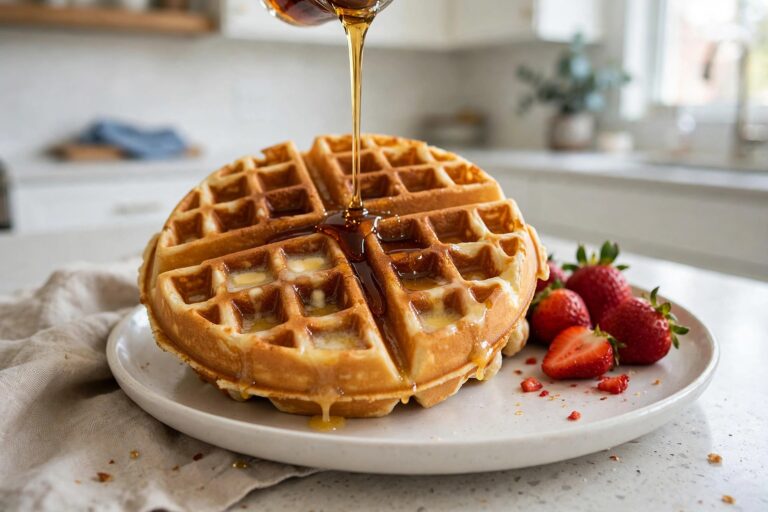
Step 10: Serve in tall stacks with softened butter, warm maple syrup and berries, if you like. Pancakes wait for no one — get them to the table while they’re steaming.
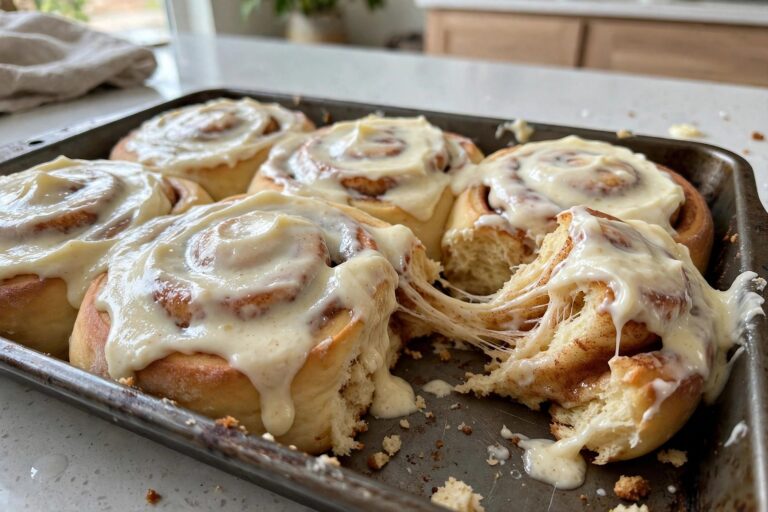
 Try this nextSoft Cinnamon Rolls
Tips for the Fluffiest Pancakes
- Use real buttermilk: its acidity reacts with the baking soda for lift and gives the pancakes their gentle tang. In a pinch, stir 2 tablespoons of lemon juice or white vinegar into 2 cups of regular milk and let it stand 10 minutes.
- Lumps are your friend: a smooth batter is an overmixed batter. Stir just until the flour is gone.
- Rest the batter: those 10 minutes are not optional if you want height. Use the time to heat the griddle and start the coffee.
- Mind the heat: too hot and the outside scorches before the middle cooks; too cool and the pancakes spread thin and pale. Medium heat and a patient first test pancake will tell you everything.
- Flip once, and only once: wait for the bubbles and set edges, then commit. Extra flipping deflates the stack.
- Measure flour correctly: spoon it into the cup and level it off. Scooping straight from the bag packs in extra flour and makes heavy pancakes.
Easy Variations
Blueberry Buttermilk Pancakes
Scatter a small handful of fresh or frozen blueberries over each pancake right after pouring the batter onto the griddle. Adding them this way — rather than stirring them into the bowl — keeps every pancake evenly studded and stops the batter turning grey.
Chocolate Chip Pancakes
Sprinkle 1 to 2 teaspoons of mini chocolate chips over each pancake before flipping. A favorite with grandchildren, and honestly, with everyone else too.
Cinnamon and Pecan Pancakes
Add 1 teaspoon of ground cinnamon to the dry ingredients and fold 1/2 cup (60 g) of finely chopped pecans into the batter. Serve with extra butter and a dusting of powdered sugar.
How to Store
Room temperature: pancakes are best fresh, but leftovers will sit happily under a clean towel for a couple of hours if breakfast runs long.
Refrigerator: cool completely, stack with small squares of parchment between them, and refrigerate in an airtight container for up to 3 days.
Freezer: freeze in a single layer on a baking sheet until solid, then transfer to a freezer bag with parchment between the pancakes. They keep well for up to 2 months.
Reheating: the toaster is the best tool for the job — one cycle on medium brings back the edges and warms the middle. From frozen, toast twice or warm in a 350°F (175°C) oven for about 10 minutes, wrapped in foil.
Frequently Asked Questions
Why are my pancakes flat instead of fluffy?
The usual culprits are old baking powder, overmixed batter, or skipping the rest. Check the date on your baking powder — it loses its strength after about six months once opened — stir the batter only until the flour disappears, and give it the full 10 minutes to rest.
Can I make the batter the night before?
You can, but the pancakes won’t rise quite as high, because the baking soda does much of its work soon after it meets the buttermilk. For the best compromise, mix the dry and wet ingredients separately the night before, refrigerate the wet bowl, and combine them in the morning.
Can I use regular milk instead of buttermilk?
Yes, with the lemon juice or vinegar trick described in the tips above. The flavor won’t be quite as rich and tangy, but the pancakes will still rise well and taste lovely.
How do I keep pancakes warm while I finish the batch?
Set your oven to 200°F (95°C) and keep the finished pancakes on a baking sheet in a single layer. They’ll stay warm and tender for up to 30 minutes without drying out.
Can I make these pancakes smaller or bigger?
Of course. Silver-dollar pancakes take a tablespoon of batter each and about a minute per side; big 6-inch diner pancakes need a full 1/2 cup and an extra minute. Just watch the bubbles — they always tell you when it’s time to flip.
Final Thoughts
A good pancake breakfast doesn’t ask for much: a bowl, a whisk, a hot griddle and a little patience while the batter rests. These fluffy buttermilk pancakes are the ones I make when family comes to stay, when the grandkids sleep over, and on those quiet mornings when a proper breakfast is the whole plan for the day.
Make a stack this weekend, pour the syrup generously, and enjoy them hot. When you do, come back and tell me in the comments how tall your stack stood. Happy cooking!
Samuel
Fluffy Buttermilk Pancakes (Classic Diner Style)
There is a particular kind of happiness that only a tall stack of Fluffy Buttermilk Pancakes can deliver. Golden at the edges, soft and steamy in the middle, with butter melting down…
Ingredients
Dry Ingredients
Wet Ingredients
Serving
Method
- 1In a large mixing bowl, whisk together the flour, sugar, baking powder, baking soda and salt until well combined and airy. This even distribution of the leaveners is what helps every pancake rise the same.
- 2In a second bowl or a large measuring jug, whisk the buttermilk, eggs, melted butter and vanilla until smooth. If your buttermilk is fridge-cold, the melted butter may form little flecks — that’s fine, they’ll melt away on the griddle.
- 3Pour the wet ingredients into the dry and stir gently with a spatula or wooden spoon until just combined, about 10 to 12 strokes. The batter should be thick and lumpy. Stop as soon as the flour disappears — overmixing develops gluten and makes pancakes tough and flat.
- 4Set the batter aside to rest for 10 minutes. During the rest, the flour hydrates and the baking powder gets a head start, which means taller, more tender pancakes. Don’t stir the batter again after resting.
- 5While the batter rests, heat a griddle or large skillet over medium heat, or set an electric griddle to 375°F (190°C). It’s ready when a few drops of water dance across the surface and evaporate quickly.
- 6Lightly butter the griddle, wiping away any excess with a paper towel — too much butter fries the edges and browns the pancakes unevenly. Scoop the batter with a 1/3-cup measure and pour it onto the hot surface, spacing the pancakes so they don’t touch.
- 7Cook for 2 to 3 minutes, until bubbles appear across the surface and the edges look set and slightly dry. The underside should be a deep golden brown.
- 8Flip each pancake once, with one confident motion, and cook for 1 to 2 minutes more on the second side. Never press down on a pancake with the spatula — that squeezes out the air you worked to create. The second side will be lighter in color, and that’s exactly right.
- 9Transfer the finished pancakes to a warm plate or a low oven (200°F / 95°C) while you cook the remaining batter, adding a little butter to the griddle between batches as needed.
- 10Serve in tall stacks with softened butter, warm maple syrup and berries, if you like. Pancakes wait for no one — get them to the table while they’re steaming.
Notes
Room temperature: pancakes are best fresh, but leftovers will sit happily under a clean towel for a couple of hours if breakfast runs long. Refrigerator: cool completely, stack with small squares of parchment between them, and refrigerate in an airtight container for up to 3 days.