Soft Cinnamon Rolls
Soft Cinnamon Rolls
There is no smell in the world quite like a pan of cinnamon rolls in the oven. Warm butter, brown sugar and cinnamon drifting through the house can get anyone out of…
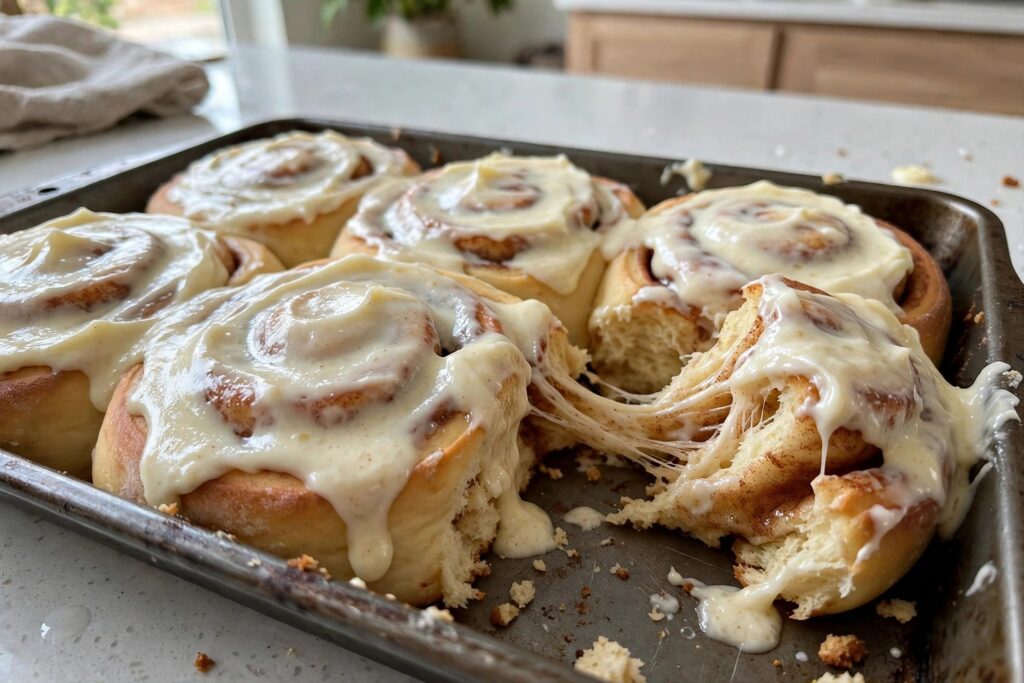
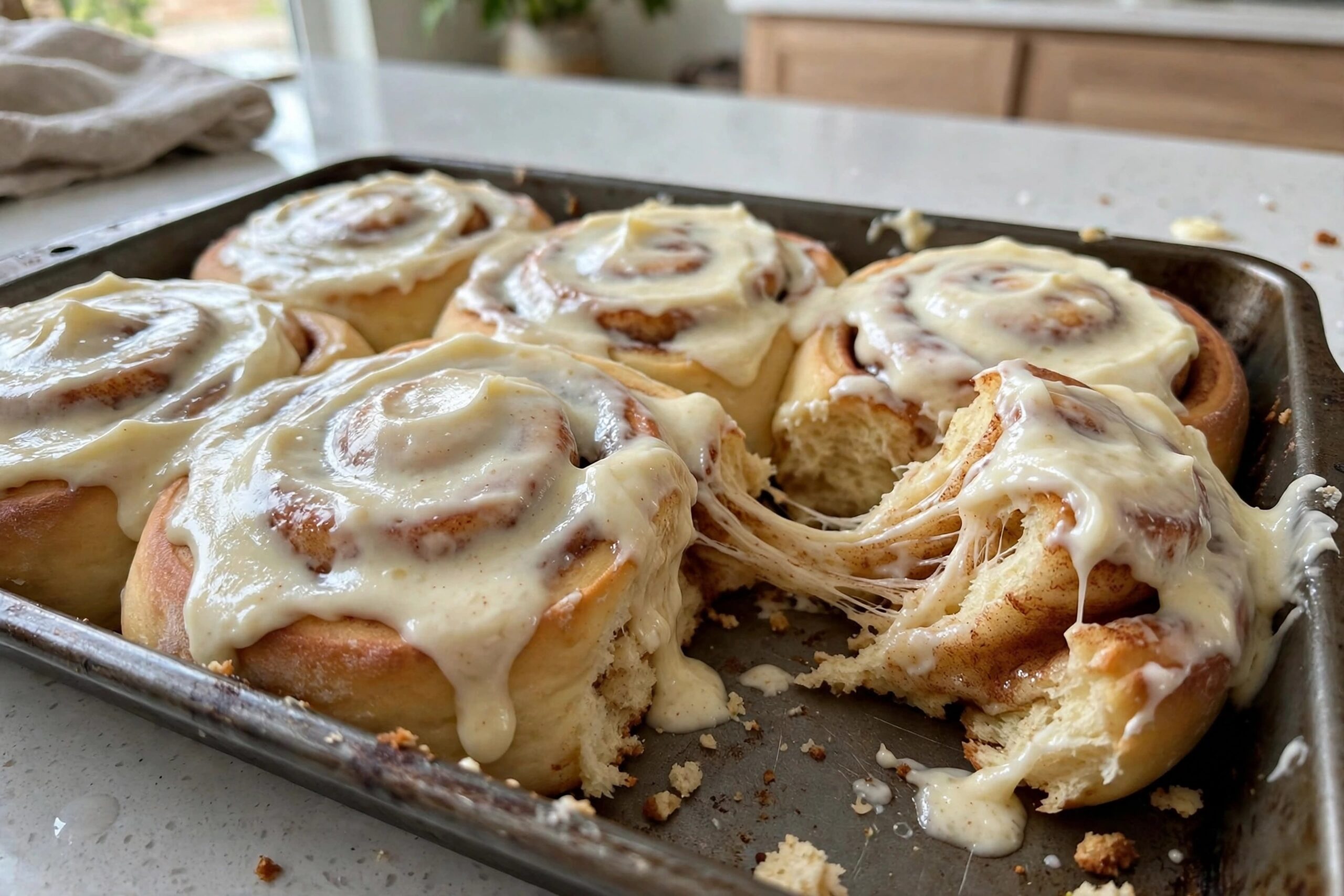
There is no smell in the world quite like a pan of cinnamon rolls in the oven. Warm butter, brown sugar and cinnamon drifting through the house can get anyone out of bed, and these Soft Cinnamon Rolls are the ones my family asks for on birthdays, holidays and every slow Sunday in between — pillowy spirals with a gooey center, finished with cream cheese frosting that melts into every swirl.
I’m Samuel, and here at Samuel’s Recipes I believe a cinnamon roll should be soft enough to pull apart with your fingers and rich enough to need nothing alongside it but a cup of coffee. This dough is forgiving — enriched with egg and butter, happy to rise on the counter or overnight in the refrigerator — and I’ll walk you through every step.
Below you’ll find the complete recipe, my overnight method, and tips for the softest crumb. Clear the counter and flour your hands — this is a morning worth savoring.
Why You’ll Love This Recipe
- Pillowy soft, never dry: an enriched dough with milk, egg and butter, plus a splash of cream over the rolls before baking, keeps them tender for days.
- Gooey cinnamon centers: soft butter — not melted — spread over the dough holds the brown sugar cinnamon filling in thick, swirled layers.
- Cream cheese frosting: tangy, sweet and spread on while the rolls are warm, so it melts into every spiral.
- Overnight friendly: shape the rolls the evening before, refrigerate, and bake them fresh in the morning with almost no work.
- A true occasion breakfast: twelve generous rolls feed a full table — and leftovers reheat beautifully.
Ingredients
For the Dough
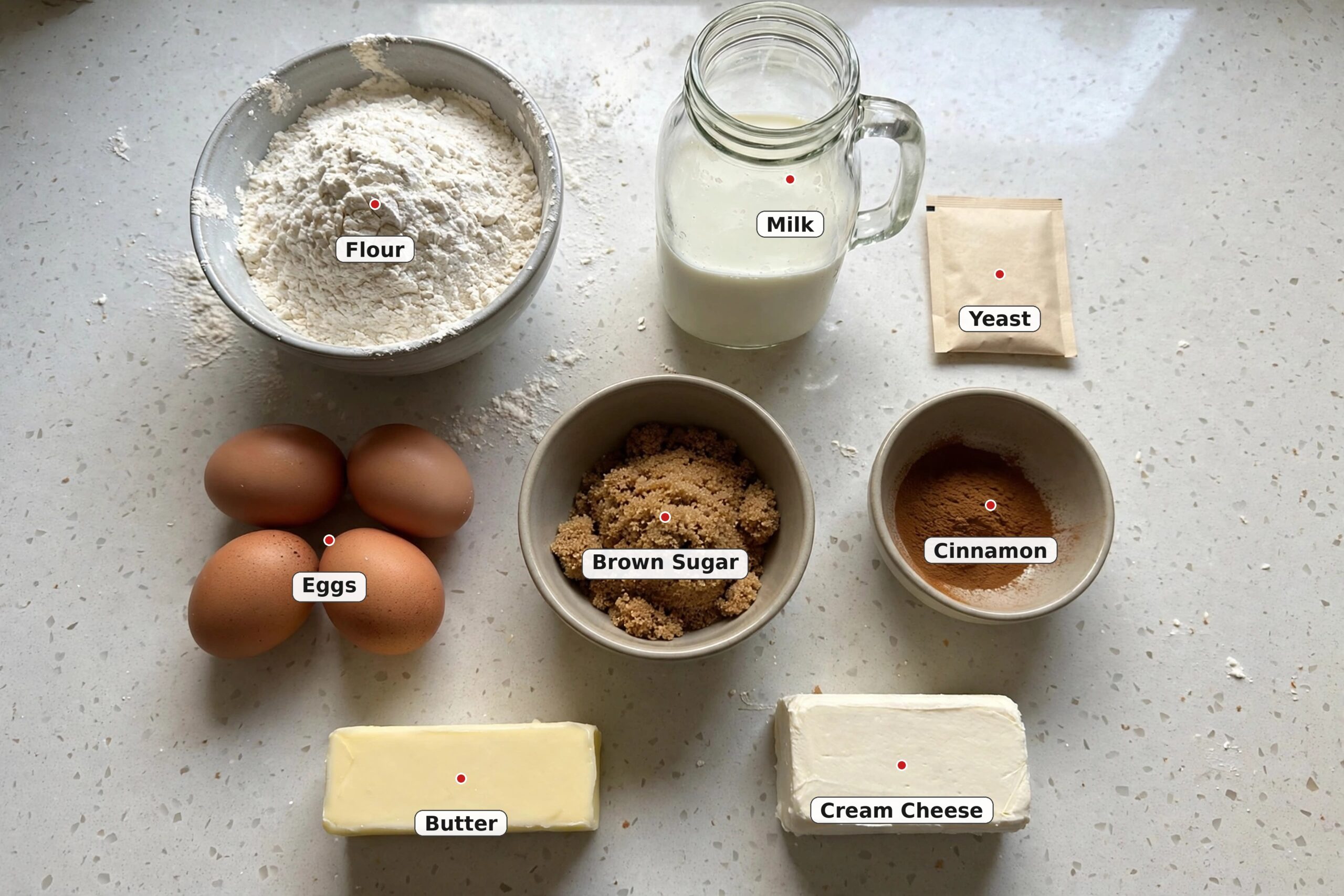
- 1 cup (240 ml) whole milk, warmed to about 110°F (43°C)
- 2 1/4 teaspoons (7 g) active dry yeast (1 standard packet)
- 1/2 cup (100 g) granulated sugar
- 1/3 cup (75 g) unsalted butter, melted
- 2 large eggs, at room temperature
- 4 to 4 1/2 cups (500–560 g) all-purpose flour, plus more for rolling
- 1 teaspoon fine salt
For the Filling
- 1/2 cup (115 g) unsalted butter, very soft but not melted
- 1 cup (200 g) packed brown sugar
- 2 tablespoons ground cinnamon
- 1/4 teaspoon fine salt
For Baking and Frosting
- 1/2 cup (120 ml) heavy cream, at room temperature (the secret to gooey centers)
- 4 ounces (115 g) cream cheese, softened
- 1/4 cup (55 g) unsalted butter, softened
- 1 1/2 cups (180 g) powdered sugar, sifted
- 1 teaspoon vanilla extract
- 2 to 3 tablespoons milk, as needed
- Pinch of salt
Instructions
Step 1: Wake up the yeast: stir the warm milk, yeast and a pinch of the sugar together in a large bowl (or the bowl of a stand mixer) and let it stand for 5 to 10 minutes, until foamy. If it doesn’t foam, the milk was too hot or the yeast is old — start again, because the rolls depend on it.
Step 2: Whisk in the sugar, melted butter and eggs. Add 4 cups (500 g) of the flour and the salt, and mix until a shaggy dough forms. Knead by hand for 8 to 10 minutes, or with a dough hook for 6 to 7 minutes, adding flour a spoonful at a time only if the dough is truly sticky. Finished dough should be soft, smooth and slightly tacky.
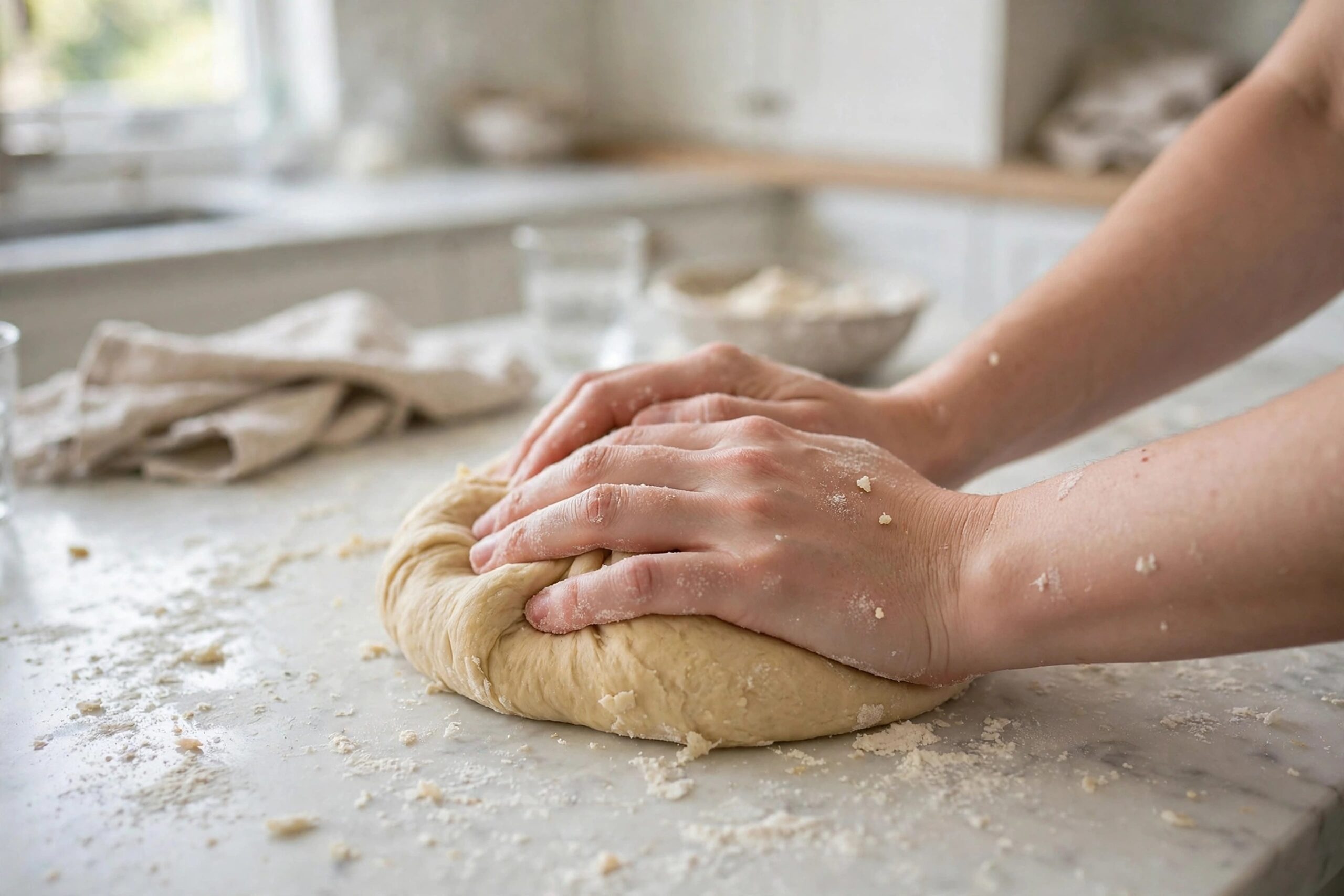
Step 3: Place the dough in a lightly greased bowl, cover, and let it rise in a warm spot for 1 to 1 1/2 hours, until doubled in size. On a cool day, the oven with just the light on makes a perfect rising spot.
Step 4: While the dough rises, stir the brown sugar, cinnamon and salt together for the filling, and grease a 9×13-inch (23×33 cm) baking pan. Turn the risen dough onto a lightly floured surface and roll it into a rectangle about 16×12 inches (40×30 cm), with a long side facing you. Aim for even thickness so the rolls bake uniformly.
Step 5: Spread the very soft butter over the dough in an even layer, leaving a 1/2-inch (1.25 cm) border bare along the far long edge. Sprinkle the cinnamon sugar evenly over the butter and press it in gently with your hands so it stays put when you roll.
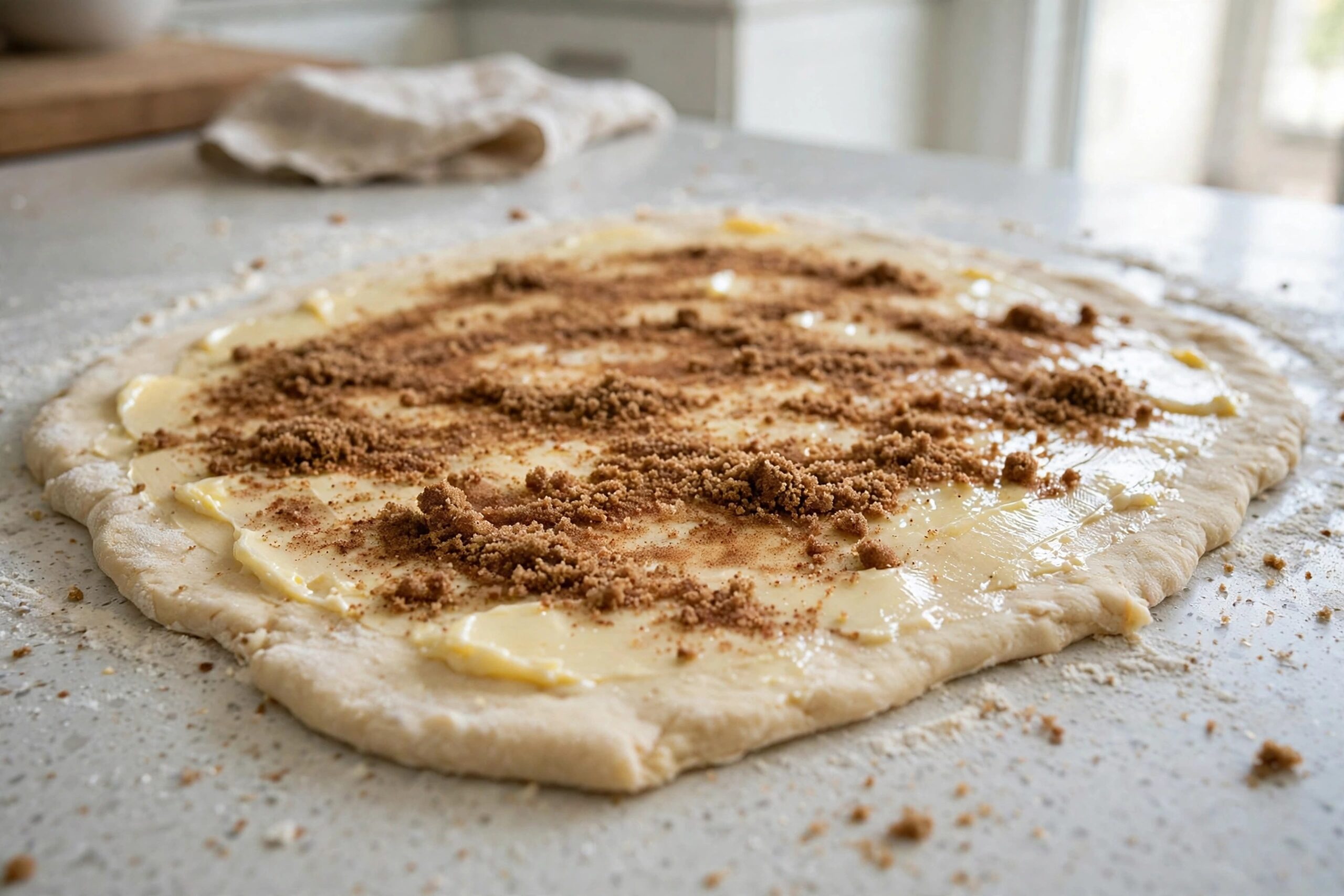
Step 6: Starting from the long edge closest to you, roll the dough up into a tight log, rolling away from you and keeping the tension even. Pinch the bare border to the log to seal the seam, and set the log seam side down.
Step 7: Cut the log into 12 equal rolls. The cleanest tool is unflavored dental floss or a length of thread: slide it under the log, cross the ends over the top and pull — you get perfect spirals with no squashing. A sharp serrated knife, used with a gentle sawing motion, also works. Each roll should be about 1 1/3 inches (3.5 cm) thick.
Step 8: Arrange the rolls in the prepared pan, cut side up, with a little space between them. Cover and let them rise for 30 to 45 minutes, until puffy and touching. (For overnight rolls, cover and refrigerate at this point instead; in the morning, let them sit at room temperature for 45 to 60 minutes before baking.)
Step 9: Preheat the oven to 350°F (175°C). Pour the room-temperature heavy cream evenly over the risen rolls — it soaks into the spirals as they bake and makes the centers wonderfully gooey. Bake for 22 to 26 minutes, until the rolls are golden on top and the centers register about 190°F (88°C), or look set and no longer doughy when you peek between two rolls.
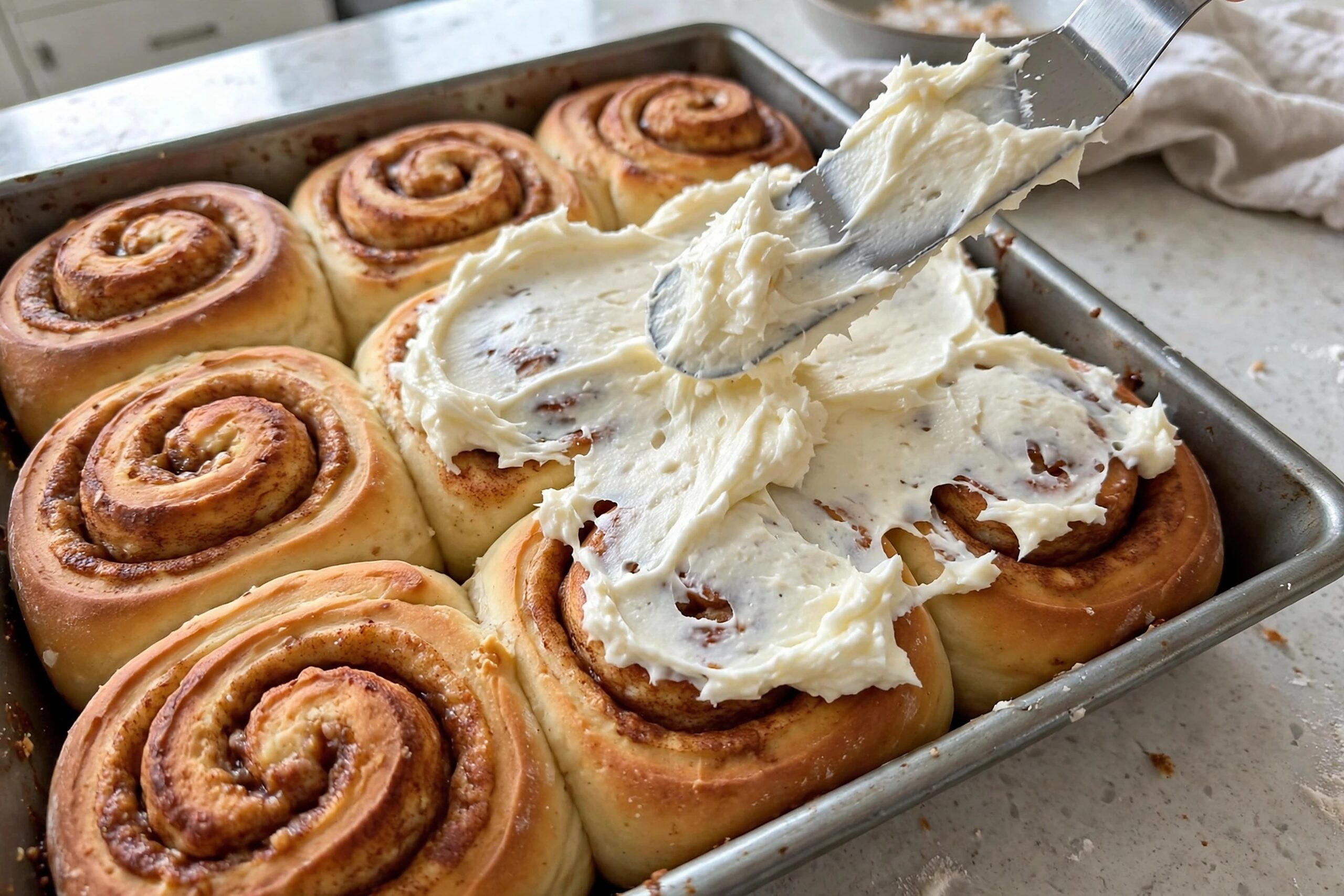
Step 10: While the rolls bake, beat the cream cheese and butter together until smooth, then beat in the powdered sugar, vanilla and salt, adding milk a spoonful at a time until the frosting is thick but spreadable. Let the rolls cool for just 5 to 10 minutes, then spread the frosting generously over the warm rolls so it melts down into the swirls. Serve warm.
 Try this nextBakery-Style Blueberry Muffins
Tips for the Softest Cinnamon Rolls
- Mind the milk temperature: about 110°F (43°C) — warm like bathwater. Hotter kills yeast; cooler slows the rise to a crawl.
- Don’t over-flour the dough: a soft, slightly tacky dough bakes into soft rolls. Extra flour is the number one cause of dry, bready cinnamon rolls.
- Soft butter, not melted, for the filling: melted butter leaks out during baking and takes the filling with it. Butter the consistency of mayonnaise spreads cleanly and stays in the swirls.
- Cut with floss: it sounds like a trick because it is one — and it works better than any knife at keeping the spirals round.
- Don’t overbake: pull the rolls when they’re golden and just set in the center. Five extra minutes is the difference between gooey and dry.
- Frost them warm: warm rolls drink the frosting into the spirals. If you prefer neat, distinct frosting, wait 15 minutes — but warm is how my family insists on them.
Easy Variations
Orange Cinnamon Rolls
Add 1 tablespoon of finely grated orange zest to the filling and replace the vanilla in the frosting with 2 tablespoons of orange juice. Bright, fragrant and made for spring mornings.
Apple Cinnamon Rolls
Scatter 1 cup (130 g) of finely diced peeled apple over the cinnamon sugar before rolling. The apple softens into the swirls as the rolls bake and makes them taste like apple pie’s favorite cousin.
How to Store
Room temperature: frosted rolls keep covered at room temperature for up to 2 days — the frosting and cream keep them moist.
Refrigerator: up to 5 days in an airtight container. The crumb firms when chilled but softens again on reheating.
Freezer: freeze baked, unfrosted rolls wrapped well for up to 3 months, or freeze the shaped, unbaked rolls after cutting: thaw overnight in the refrigerator, let them rise until puffy, and bake as directed.
Reheating: a single roll needs just 20 to 30 seconds in the microwave to taste fresh-baked. For a whole pan, cover with foil and warm at 325°F (165°C) for about 15 minutes.
Frequently Asked Questions
Can I really make these the night before?
Yes — it’s my preferred method for holidays. Shape the rolls, arrange them in the pan, cover tightly and refrigerate for up to 14 hours. In the morning, let the pan sit out for 45 to 60 minutes while the oven heats, pour over the cream, and bake.
Why didn’t my dough rise?
Almost always the yeast: either the milk was hot enough to kill it, or the yeast was past its prime. Check the foam at Step 1 — no foam means start over with fresh yeast and properly warm milk. A cold kitchen also slows things; give the dough up to 2 hours in winter.
Can I use instant yeast instead of active dry?
Certainly. Use the same amount, skip the foaming step, and mix it straight in with the flour. The first rise will be a little faster — start checking at 45 minutes.
Why did my filling leak out and burn on the pan?
The butter was probably melted rather than soft, or the seam wasn’t sealed. Use very soft butter, leave that bare border, pinch the seam firmly, and bake the log seam side down so the rolls hold their filling.
Final Thoughts
A warm pan of cinnamon rolls on the table is one of cooking’s great kindnesses. The dough asks for a little patience and pays it back a hundredfold.
Bake a pan this weekend, eat the middle roll first like you deserve to, and tell me in the comments whether your house goes for extra frosting or just a swipe. Happy cooking!
Samuel
Soft Cinnamon Rolls
There is no smell in the world quite like a pan of cinnamon rolls in the oven. Warm butter, brown sugar and cinnamon drifting through the house can get anyone out of…
Ingredients
Dough
Filling
Baking and Frosting
Method
- 1Wake up the yeast: stir the warm milk, yeast and a pinch of the sugar together in a large bowl (or the bowl of a stand mixer) and let it stand for 5 to 10 minutes, until foamy. If it doesn’t foam, the milk was too hot or the yeast is old — start again, because the rolls depend on it.
- 2Whisk in the sugar, melted butter and eggs. Add 4 cups (500 g) of the flour and the salt, and mix until a shaggy dough forms. Knead by hand for 8 to 10 minutes, or with a dough hook for 6 to 7 minutes, adding flour a spoonful at a time only if the dough is truly sticky. Finished dough should be soft, smooth and slightly tacky.
- 3Place the dough in a lightly greased bowl, cover, and let it rise in a warm spot for 1 to 1 1/2 hours, until doubled in size. On a cool day, the oven with just the light on makes a perfect rising spot.
- 4While the dough rises, stir the brown sugar, cinnamon and salt together for the filling, and grease a 9×13-inch (23×33 cm) baking pan. Turn the risen dough onto a lightly floured surface and roll it into a rectangle about 16×12 inches (40×30 cm), with a long side facing you. Aim for even thickness so the rolls bake uniformly.
- 5Spread the very soft butter over the dough in an even layer, leaving a 1/2-inch (1.25 cm) border bare along the far long edge. Sprinkle the cinnamon sugar evenly over the butter and press it in gently with your hands so it stays put when you roll.
- 6Starting from the long edge closest to you, roll the dough up into a tight log, rolling away from you and keeping the tension even. Pinch the bare border to the log to seal the seam, and set the log seam side down.
- 7Cut the log into 12 equal rolls. The cleanest tool is unflavored dental floss or a length of thread: slide it under the log, cross the ends over the top and pull — you get perfect spirals with no squashing. A sharp serrated knife, used with a gentle sawing motion, also works. Each roll should be about 1 1/3 inches (3.5 cm) thick.
- 8Arrange the rolls in the prepared pan, cut side up, with a little space between them. Cover and let them rise for 30 to 45 minutes, until puffy and touching. (For overnight rolls, cover and refrigerate at this point instead; in the morning, let them sit at room temperature for 45 to 60 minutes before baking.)
- 9Preheat the oven to 350°F (175°C). Pour the room-temperature heavy cream evenly over the risen rolls — it soaks into the spirals as they bake and makes the centers wonderfully gooey. Bake for 22 to 26 minutes, until the rolls are golden on top and the centers register about 190°F (88°C), or look set and no longer doughy when you peek between two rolls.
- 10While the rolls bake, beat the cream cheese and butter together until smooth, then beat in the powdered sugar, vanilla and salt, adding milk a spoonful at a time until the frosting is thick but spreadable. Let the rolls cool for just 5 to 10 minutes, then spread the frosting generously over the warm rolls so it melts down into the swirls. Serve warm.
Notes
Room temperature: frosted rolls keep covered at room temperature for up to 2 days — the frosting and cream keep them moist. Refrigerator: up to 5 days in an airtight container. The crumb firms when chilled but softens again on reheating.