Cinnamon French Toast
Cinnamon French Toast
Some mornings call for something simple, warm and just a little bit special, and that is exactly where Cinnamon French Toast earns its place. Thick slices of bread soaked in a cinnamon-spiced…
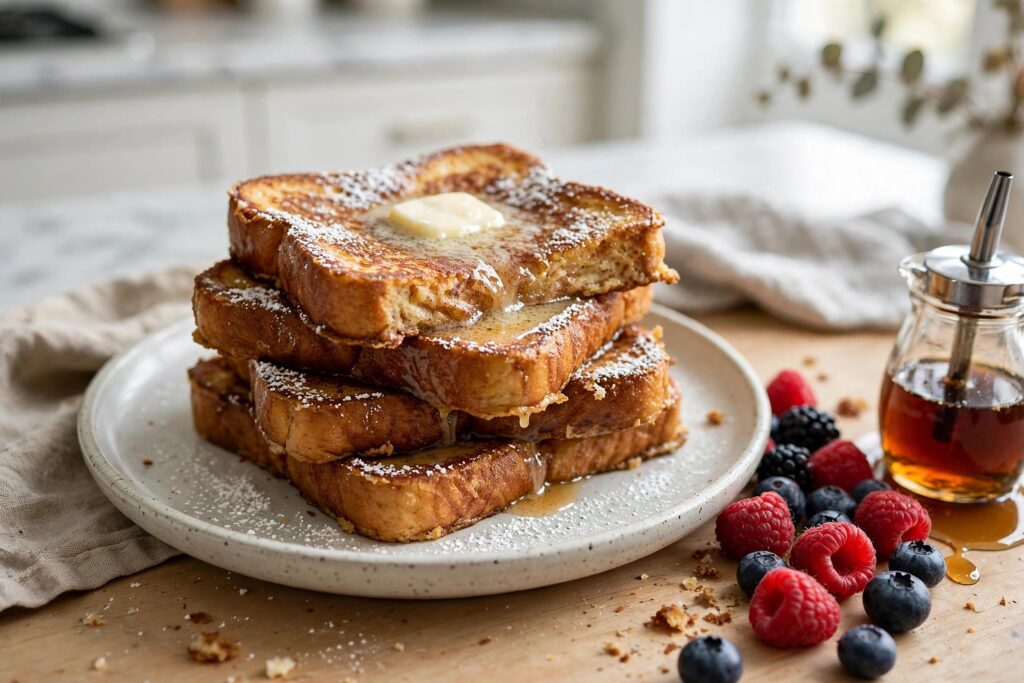
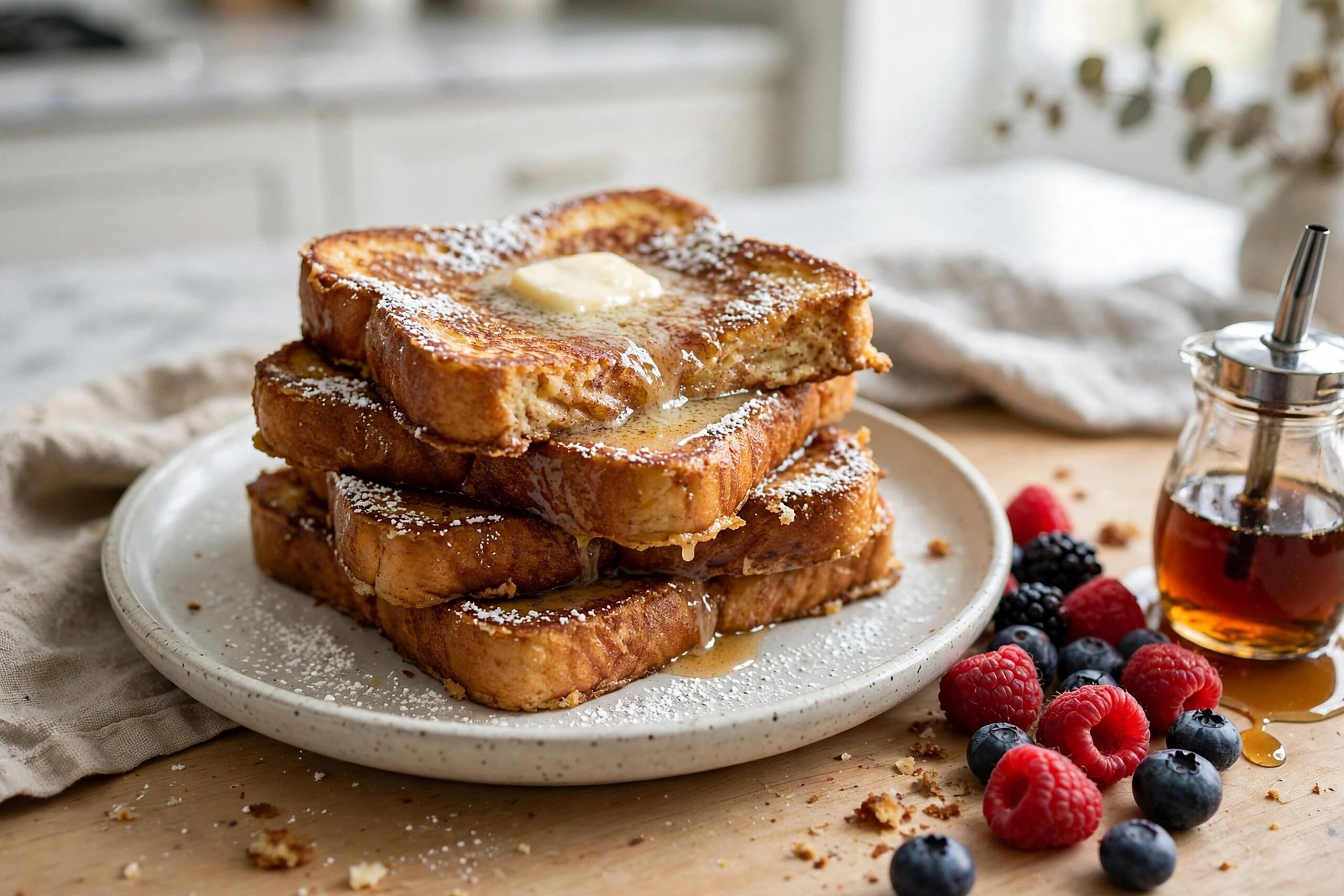
Some mornings call for something simple, warm and just a little bit special, and that is exactly where Cinnamon French Toast earns its place. Thick slices of bread soaked in a cinnamon-spiced custard, fried in butter until the edges turn golden and crisp, then showered with powdered sugar and warm maple syrup — it is the kind of breakfast that brings everybody to the table without being called twice.
I’m Samuel, and here at Samuel’s Recipes I believe French toast should be custardy in the middle, never soggy, and deeply flavored all the way through — not just dusted with cinnamon at the end. The trick is a proper custard with real cinnamon and vanilla whisked right in, bread that’s thick and a day old, and a soak that’s generous but not endless.
Below you’ll find the complete recipe with step-by-step instructions, the bread choices that make the biggest difference, make-ahead advice for busy mornings and holiday brunches, and answers to the questions home cooks ask me most. Warm up the griddle and let’s get dipping.
Why You’ll Love This Recipe
- Custardy middle, crisp edges: a rich egg-and-milk custard and a hot buttered griddle give you both textures in every bite.
- Cinnamon in every bite: the spice goes into the custard itself, so the flavor runs through the toast instead of sitting on top.
- Ready in about 30 minutes: five minutes to whisk the custard, a short soak, and a few minutes per batch on the griddle.
- Uses up day-old bread: slightly stale bread soaks up custard without falling apart — this recipe turns leftovers into the main event.
- Scales beautifully: double the custard and keep finished slices warm in a low oven for a full brunch table.
- Kid approved, cook friendly: little helpers love the dipping, and the short ingredient list keeps the cook relaxed.
Ingredients
For the Custard
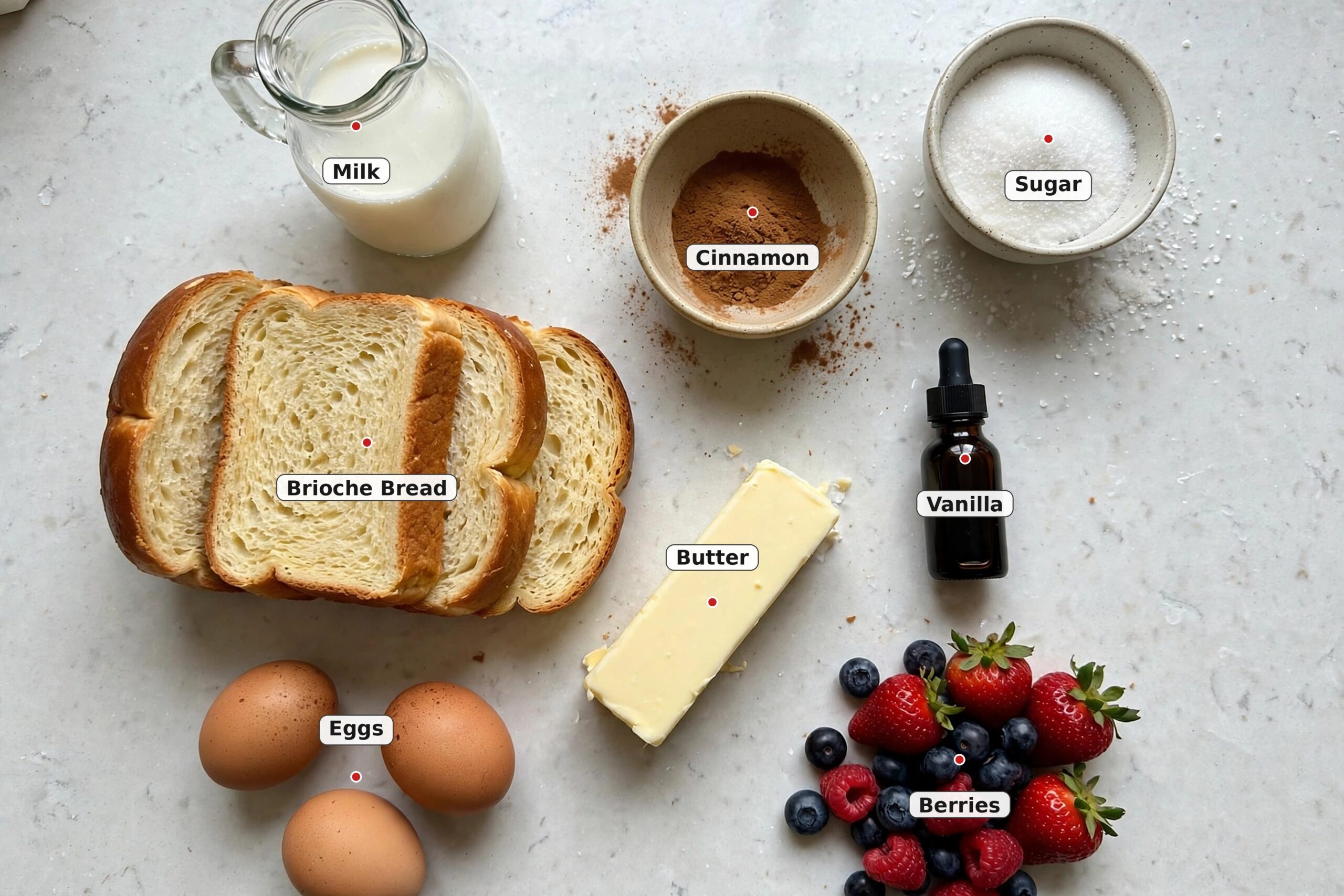
- 4 large eggs
- 3/4 cup (180 ml) whole milk
- 1/4 cup (60 ml) heavy cream (or more milk)
- 2 tablespoons granulated sugar
- 2 teaspoons ground cinnamon
- 2 teaspoons vanilla extract
- 1/8 teaspoon fine salt
- 1 teaspoon all-purpose flour (optional — helps the custard cling and brown)
For the Toast
- 8 thick slices (about 1 inch / 2.5 cm) brioche, challah or sturdy white bread, a day old if possible
- 2 to 3 tablespoons unsalted butter, for the griddle, plus more as needed
For Serving
- Powdered sugar, for dusting
- Warm maple syrup
- Fresh berries
- Softened butter
Instructions
Step 1: If your bread is very fresh, lay the slices on a wire rack for 20 to 30 minutes to dry slightly, or give them 5 minutes in a 275°F (135°C) oven. Slightly dry bread drinks up the custard without turning to mush — this small step makes a real difference.
Step 2: In a wide, shallow dish — a pie plate or a small baking dish is perfect — whisk the eggs until the yolks and whites are completely combined and no streaks remain. Streaky eggs leave white patches on the finished toast.
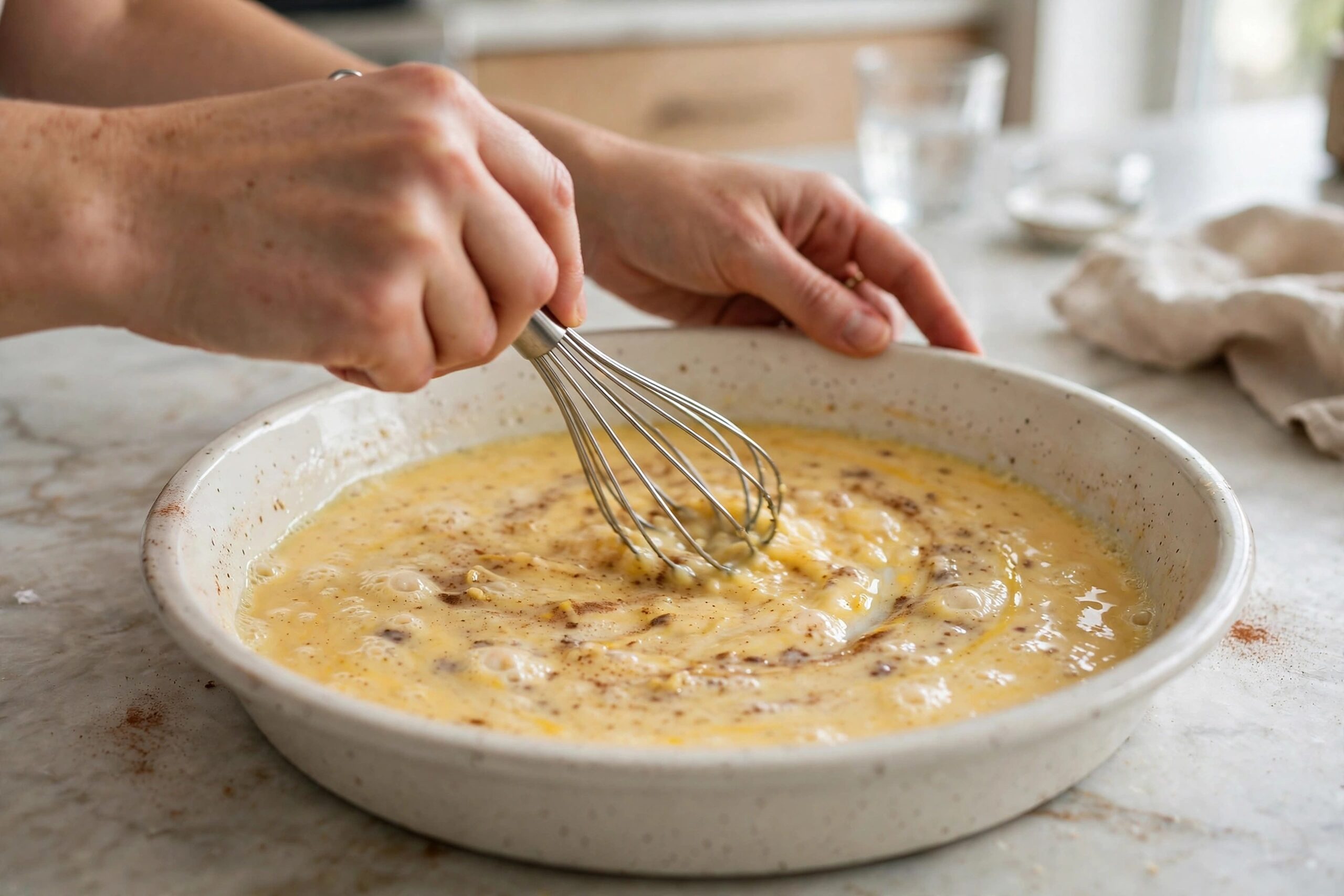
Step 3: Whisk in the milk, cream, sugar, cinnamon, vanilla, salt and flour until smooth. The cinnamon will want to float and clump; whisk briskly for a full 30 seconds and it will settle into the custard.
Step 4: Heat a large skillet or griddle over medium heat and let it warm for a couple of minutes. Meanwhile, lay two slices of bread in the custard and let them soak for about 20 to 30 seconds per side. The bread should feel heavy and saturated but still hold together when you lift it.
Step 5: Add about 1 tablespoon of butter to the hot pan and swirl it as it melts and foams. When the foam settles a little, lift the soaked slices out of the custard, let the excess drip back into the dish for a second, and lay them in the pan.
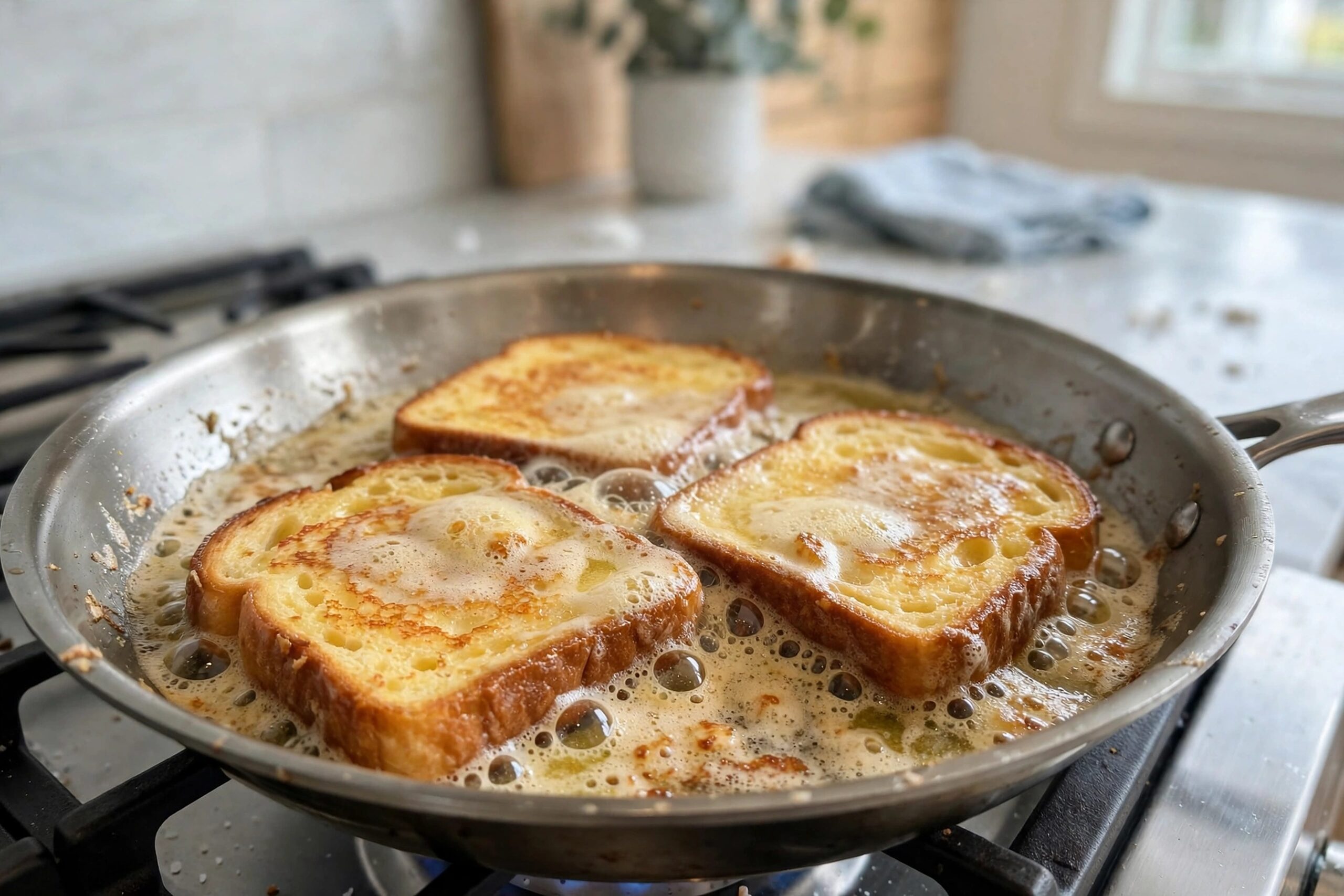
Step 6: Cook for 2 to 3 minutes on the first side, until deeply golden with crisp, lacy edges. Peek at a corner rather than moving the slices around — undisturbed contact with the pan is what builds the crust.
Step 7: Flip once and cook 1 to 2 minutes more, until the second side is golden and the center feels just set when pressed lightly — it should spring back a touch, not feel wet and squishy. The custard in the middle cooks through in these last minutes.
Step 8: Transfer the finished slices to a wire rack set on a baking sheet and keep warm in a 200°F (95°C) oven. Wipe the pan with a paper towel between batches — the butter and sugar left behind will darken and taste bitter if they carry over.
Step 9: Repeat soaking and cooking with the remaining bread, adding fresh butter for each batch and giving the custard a quick whisk now and then, since the cinnamon settles as it stands.
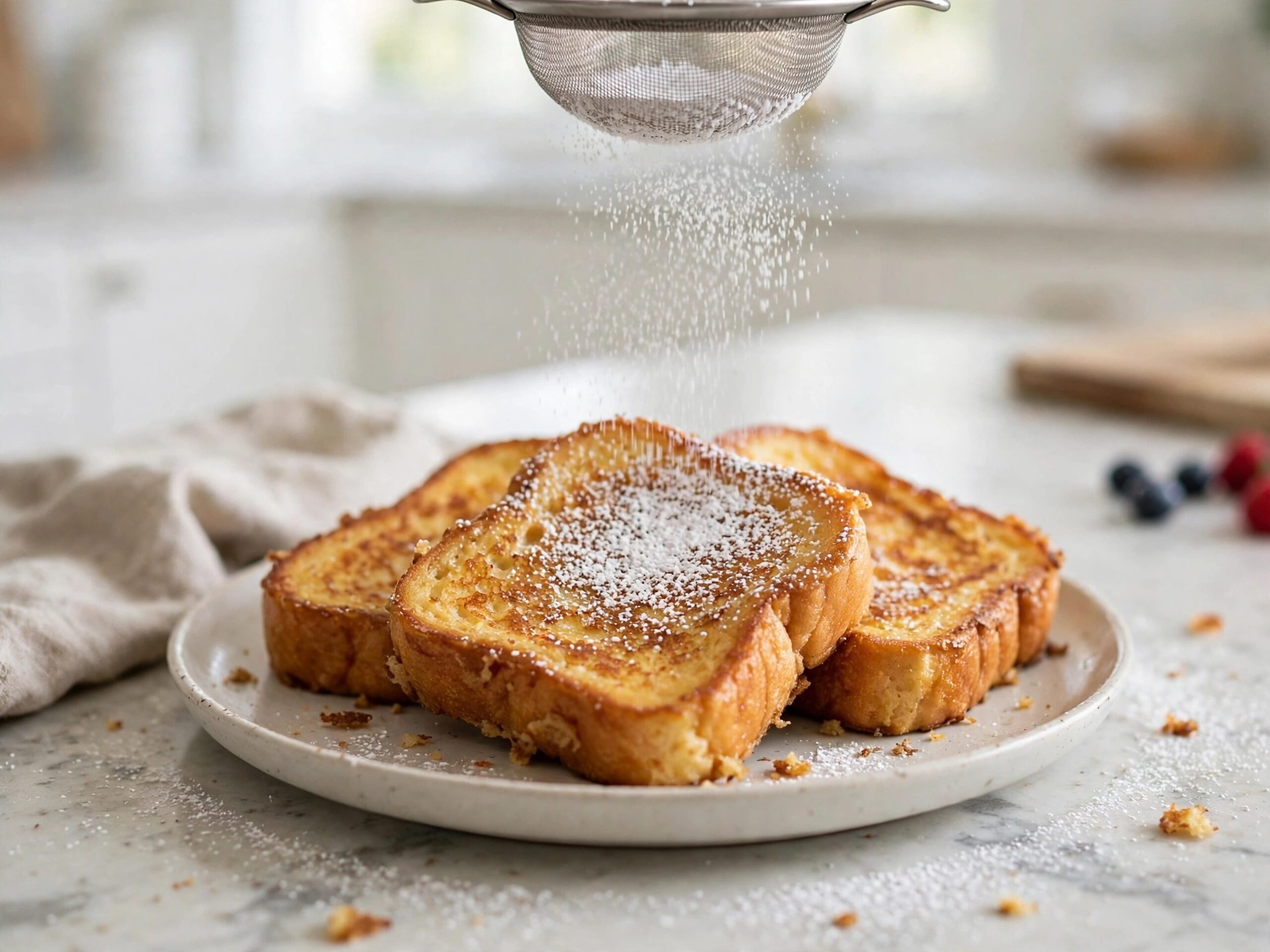
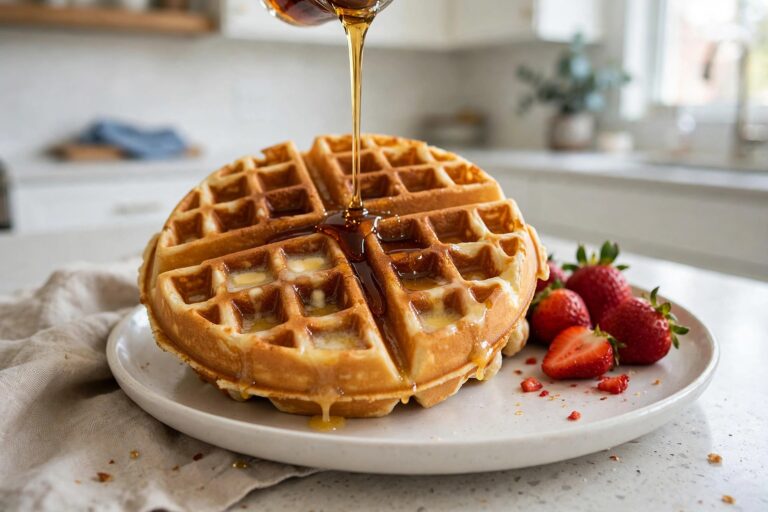
Step 10: Serve hot, two slices per plate, dusted with powdered sugar and finished with softened butter, warm maple syrup and a handful of fresh berries.
 Try this nextSoft Cinnamon Rolls
Tips for Perfect French Toast
- Choose the right bread: brioche and challah give the richest, most tender result; sturdy sandwich bread works if it’s cut thick. Thin, soft bread tears and goes soggy.
- Don’t drown the bread: twenty to thirty seconds a side is plenty for 1-inch slices. Longer soaks make the center gummy instead of custardy.
- Medium heat is the sweet spot: too hot and the outside scorches before the custard sets; too cool and the toast steams and turns pale and limp.
- Whisk the cinnamon in well: cinnamon is hydrophobic and loves to clump. Whisk it with the sugar and eggs first, before adding the milk, and it disperses much more evenly.
- Fresh butter for every batch: browned butter solids from the last batch will make the next slices taste burnt. A quick wipe and fresh butter keeps every batch clean and golden.
- Serve straight from the pan when you can: French toast waits poorly. For a crowd, the low-oven rack trick holds it nicely for about 20 minutes.
Easy Variations
Orange and Vanilla French Toast
Add 1 teaspoon of finely grated orange zest to the custard along with the cinnamon. The citrus brightens everything and is especially good with strawberries on top.
Apple Pie French Toast
Add 1/2 teaspoon of apple pie spice to the custard and serve the toast topped with warm sautéed apples — sliced apples cooked in butter with a spoonful of brown sugar and a pinch of cinnamon until tender.
Stuffed French Toast
Spread a little sweetened cream cheese and a few sliced strawberries between two thinner slices, sandwich them, then soak and cook as directed, adding a minute per side. A proper weekend project that eats like dessert.
How to Store
Room temperature: best eaten fresh; leftovers can sit covered for a couple of hours at most.
Refrigerator: cool completely and refrigerate in an airtight container for up to 3 days.
Freezer: freeze slices in a single layer on a baking sheet, then store in a freezer bag for up to 2 months. Frozen French toast is a genuine weekday gift to your future self.
Reheating: a toaster cycle brings back the crisp edges best. For several slices, warm them on a rack in a 350°F (175°C) oven for about 10 minutes, or 12 to 15 minutes from frozen.
Frequently Asked Questions
Why is my French toast soggy in the middle?
Almost always the soak was too long, the bread was too fresh or too thin, or the pan wasn’t hot enough. Use thick, slightly dry bread, soak briefly, and cook over steady medium heat until the center springs back when pressed.
Can I make French toast ahead for a brunch?
Yes — cook the full batch, cool it on a rack, refrigerate, and reheat on a rack in a 350°F (175°C) oven for about 10 minutes before serving. It comes back remarkably well. You can also whisk the custard the night before and refrigerate it; give it a good whisk in the morning.
What’s the best bread if I don’t have brioche or challah?
A sturdy white sandwich loaf cut thick, Texas toast, or even a day-old French loaf sliced on the diagonal all work well. Avoid very soft, thin-sliced bread and heavily seeded loaves, which fight the custard.
Can I skip the cream?
Certainly. Use a full cup of whole milk, or half milk and half half-and-half. The cream adds richness, but the toast is still lovely without it. For dairy-free, unsweetened almond milk and a little extra vanilla do a fine job.
How do I keep the cinnamon from sinking?
Whisk the custard again briefly before each dip. Cinnamon settles and also floats in patches, so a quick stir before every slice or two keeps the flavor even from the first slice to the last.
Final Thoughts
Cinnamon French toast is proof that a handful of everyday ingredients, treated with a little care, can make a morning feel like a holiday. Thick bread, a well-whisked custard, a hot buttered pan — that’s the whole of it, and it’s wonderful.
Make it this weekend, put the syrup on the table, and watch how fast the plates come back empty. Then tell me in the comments: berries, powdered sugar, or the full works? Happy cooking!
Samuel
Cinnamon French Toast
Some mornings call for something simple, warm and just a little bit special, and that is exactly where Cinnamon French Toast earns its place. Thick slices of bread soaked in a cinnamon-spiced…
Ingredients
Custard
Toast
Serving
Method
- 1If your bread is very fresh, lay the slices on a wire rack for 20 to 30 minutes to dry slightly, or give them 5 minutes in a 275°F (135°C) oven. Slightly dry bread drinks up the custard without turning to mush — this small step makes a real difference.
- 2In a wide, shallow dish — a pie plate or a small baking dish is perfect — whisk the eggs until the yolks and whites are completely combined and no streaks remain. Streaky eggs leave white patches on the finished toast.
- 3Whisk in the milk, cream, sugar, cinnamon, vanilla, salt and flour until smooth. The cinnamon will want to float and clump; whisk briskly for a full 30 seconds and it will settle into the custard.
- 4Heat a large skillet or griddle over medium heat and let it warm for a couple of minutes. Meanwhile, lay two slices of bread in the custard and let them soak for about 20 to 30 seconds per side. The bread should feel heavy and saturated but still hold together when you lift it.
- 5Add about 1 tablespoon of butter to the hot pan and swirl it as it melts and foams. When the foam settles a little, lift the soaked slices out of the custard, let the excess drip back into the dish for a second, and lay them in the pan.
- 6Cook for 2 to 3 minutes on the first side, until deeply golden with crisp, lacy edges. Peek at a corner rather than moving the slices around — undisturbed contact with the pan is what builds the crust.
- 7Flip once and cook 1 to 2 minutes more, until the second side is golden and the center feels just set when pressed lightly — it should spring back a touch, not feel wet and squishy. The custard in the middle cooks through in these last minutes.
- 8Transfer the finished slices to a wire rack set on a baking sheet and keep warm in a 200°F (95°C) oven. Wipe the pan with a paper towel between batches — the butter and sugar left behind will darken and taste bitter if they carry over.
- 9Repeat soaking and cooking with the remaining bread, adding fresh butter for each batch and giving the custard a quick whisk now and then, since the cinnamon settles as it stands.
- 10Serve hot, two slices per plate, dusted with powdered sugar and finished with softened butter, warm maple syrup and a handful of fresh berries.
Notes
Room temperature: best eaten fresh; leftovers can sit covered for a couple of hours at most. Refrigerator: cool completely and refrigerate in an airtight container for up to 3 days.