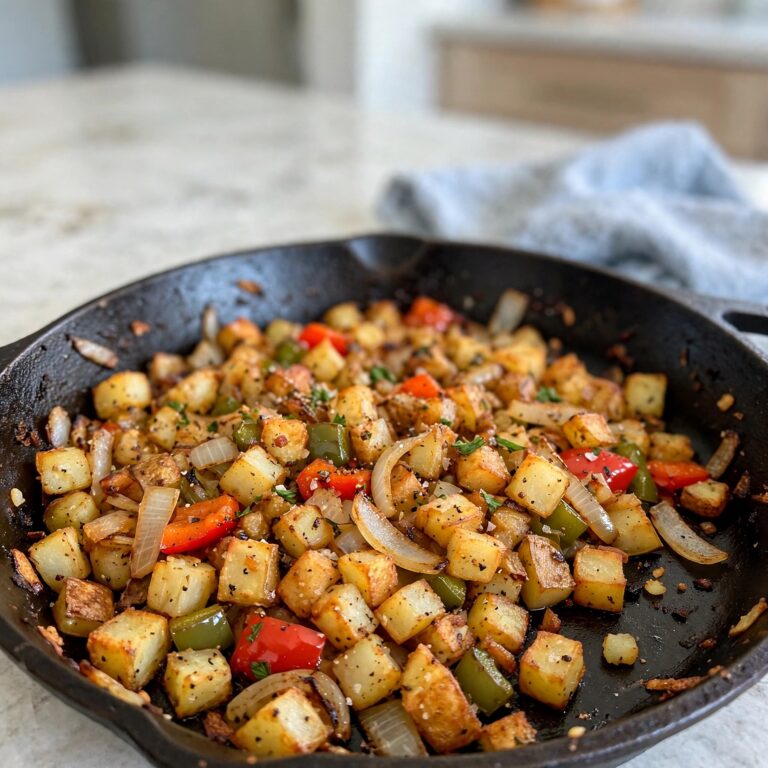
Cheesy Veggie Omelette
Cheesy Veggie Omelette
A good omelette is one of the great simple pleasures of the kitchen, and this Cheesy Veggie Omelette is the one I make most often at home. Fluffy, golden eggs wrapped around…

A good omelette is one of the great simple pleasures of the kitchen, and this Cheesy Veggie Omelette is the one I make most often at home. Fluffy, golden eggs wrapped around sweet peppers, onions, mushrooms and spinach, with plenty of cheese melted through the middle — it’s a diner breakfast you can have on the table in fifteen minutes, and it never fails to satisfy.
I’m Samuel, and here at Samuel’s Recipes I believe an omelette should be tender, never rubbery, and generous with its filling. The method matters more than the ingredients: cook the vegetables first so they don’t water down the eggs, keep the heat moderate, and let the cheese melt under a lid for the last half minute. Do those three things and you’ll turn out a beautiful omelette every single time.
Below you’ll find the complete recipe with step-by-step instructions, my tips for eggs that stay soft and fluffy, easy filling variations for every season, and answers to the questions I hear most from home cooks who’ve been fighting with their omelette pan. Get the coffee on — breakfast is nearly ready.
Why You’ll Love This Recipe
- Fluffy, tender eggs: a splash of milk, a proper whisk and moderate heat give you soft, pillowy eggs — never browned and rubbery.
- Loaded with vegetables: peppers, onion, mushrooms, tomatoes and spinach make this a full, satisfying breakfast in one pan.
- Plenty of melty cheese: sharp cheddar melts right through the middle, so every bite is rich and savory.
- Ready in about 15 minutes: a few minutes of chopping, a few minutes of cooking, and breakfast is served.
- Endlessly adaptable: swap in whatever vegetables are in the crisper drawer — this recipe is a template as much as a formula.
- Protein-packed and filling: three eggs, cheese and a pan full of vegetables keep you going all morning.
Ingredients
For the Eggs
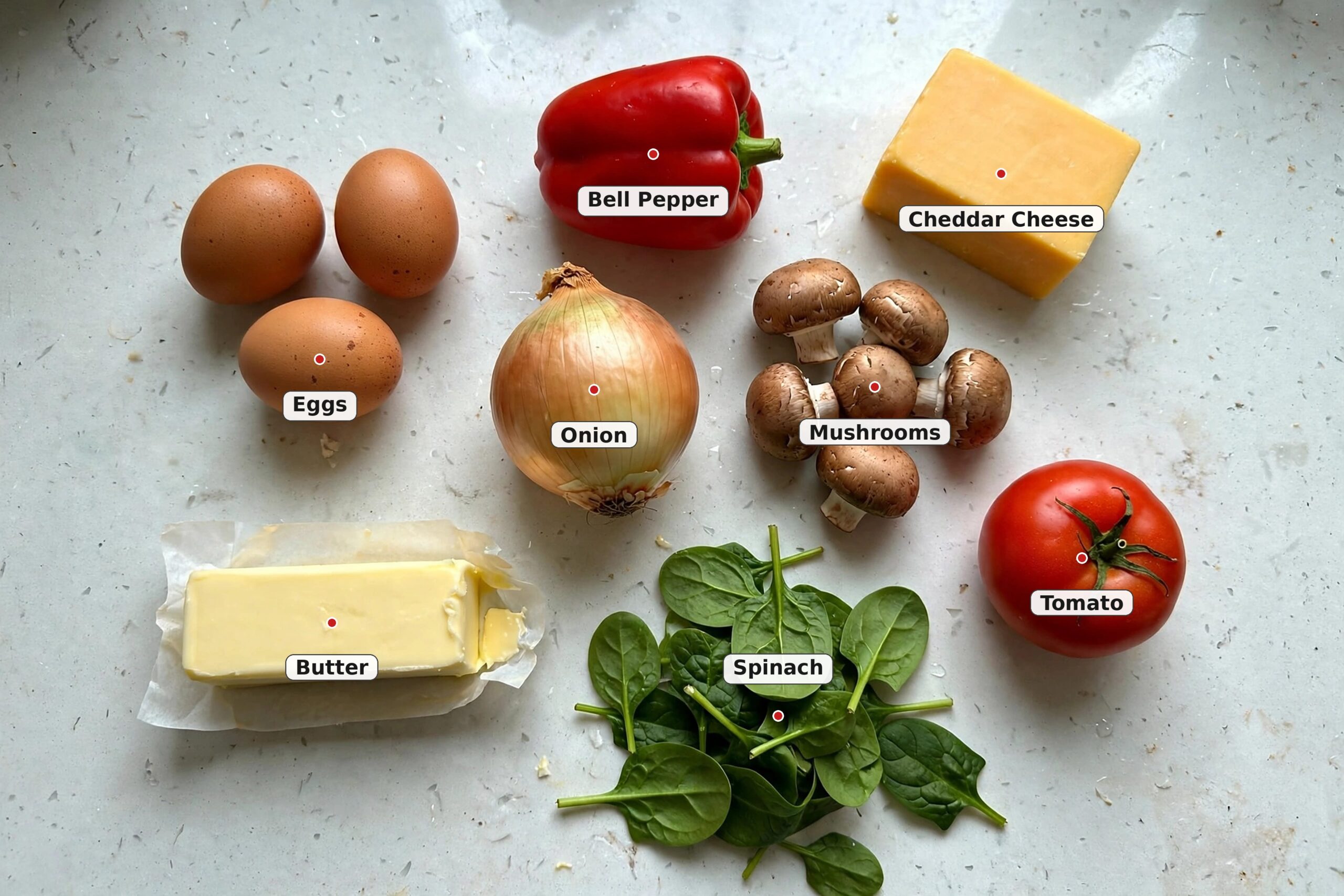
- 3 large eggs
- 1 tablespoon milk or water
- 1/4 teaspoon fine salt
- 1/8 teaspoon black pepper
- 1 teaspoon unsalted butter, for the pan
For the Filling
- 1 teaspoon olive oil or butter
- 1/4 cup (40 g) diced bell pepper, any color
- 2 tablespoons finely diced onion
- 1/4 cup (35 g) sliced mushrooms
- 1/4 cup (40 g) diced tomato, seeds scooped out
- 1 cup (30 g) baby spinach leaves, roughly chopped
- 1 small clove garlic, minced (optional)
For the Cheese and Serving
- 1/3 cup (40 g) shredded sharp cheddar cheese
- 1 tablespoon chopped fresh chives or parsley
- Hot sauce, for serving (optional)
- Buttered toast, for serving
Instructions
Step 1: Prepare all the filling ingredients before any heat goes on — dice the pepper and onion, slice the mushrooms, dice the tomato and chop the spinach. An omelette cooks in minutes, and there’s no time to chop once the eggs hit the pan.
Step 2: Heat the olive oil in a 9- or 10-inch (23–25 cm) nonstick skillet over medium heat. Add the pepper, onion and mushrooms with a pinch of salt and cook for 3 to 4 minutes, stirring now and then, until softened and any liquid the mushrooms release has cooked away.
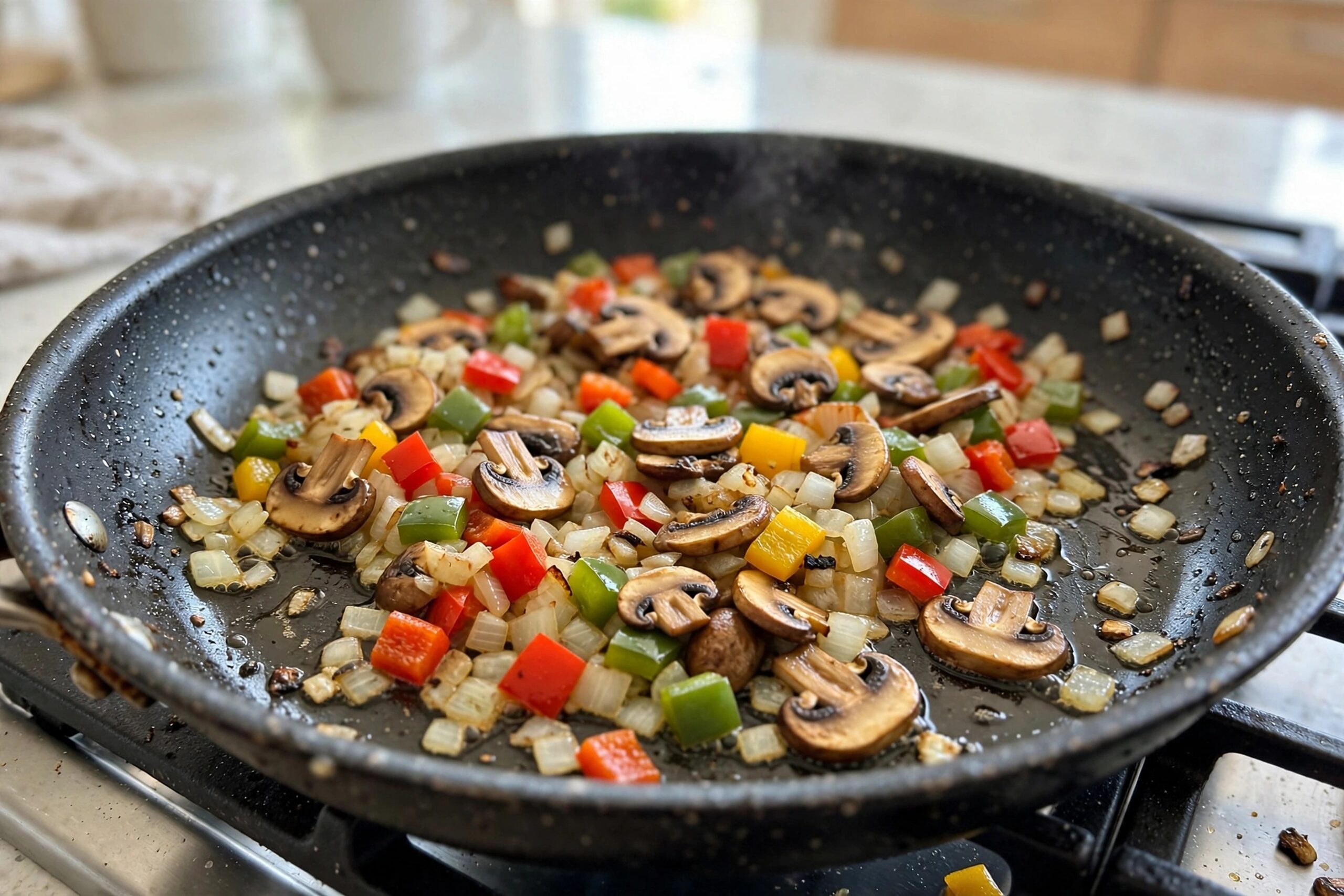
Step 3: Add the tomato and garlic and cook 30 seconds more, then stir in the spinach and cook just until wilted, about 30 seconds. Tip the vegetables onto a plate. Cooking the filling first is the whole secret to an omelette that isn’t watery.
Step 4: In a bowl, whisk the eggs, milk, salt and pepper until completely blended and slightly frothy, about 30 seconds. You want no streaks of white remaining — uniform eggs cook into a uniform, tender omelette.
Step 5: Wipe out the skillet, return it to medium-low heat and melt the butter, swirling to coat the bottom and sides. The butter should foam gently, not brown. If it browns, the pan is too hot — let it cool a moment.
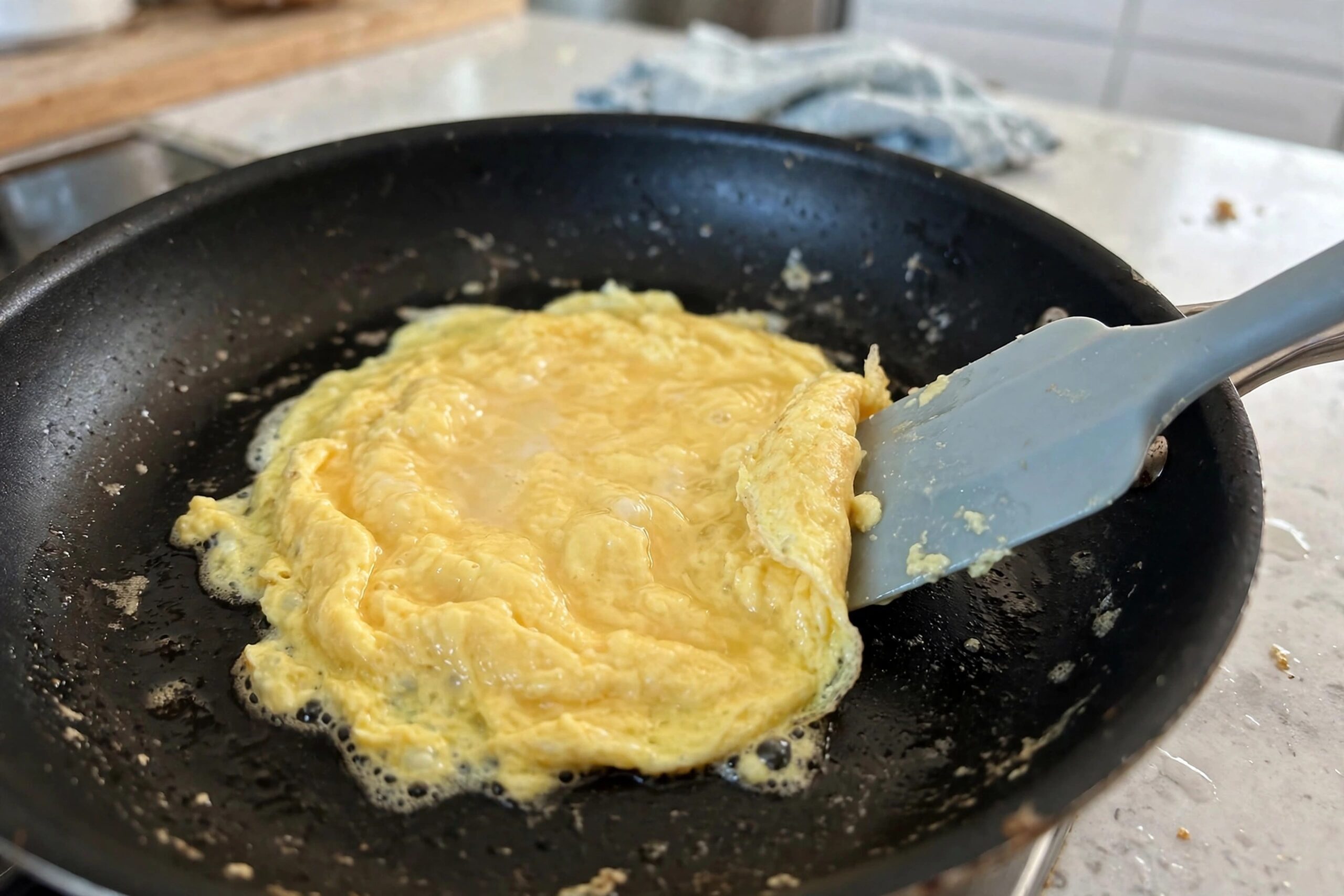
Step 6: Pour in the eggs. As they begin to set at the edges — about 20 seconds — use a silicone spatula to gently push the cooked edges toward the center, tilting the pan so the uncooked egg flows into the gaps. Repeat around the pan for about 1 minute, until the eggs are mostly set but the top is still glossy and just a little wet.
Step 7: Scatter the cheese evenly over the eggs, then spoon the warm vegetables over one half of the omelette. Let it cook undisturbed for 30 seconds so the cheese begins to melt into the eggs.
Step 8: Slide the spatula under the unfilled half and fold it over the vegetables in one confident motion. Put a lid on the pan, take it off the heat, and let the omelette rest for 30 to 60 seconds — the trapped warmth melts the cheese completely and finishes the eggs without overcooking them.
Step 9: Slide the omelette onto a warm plate, seam side down. It should be pale golden, soft and gently puffed, with cheese just starting to peek out at the edges.

Step 10: Scatter with chives or parsley, add a dash of hot sauce if you like, and serve right away with buttered toast. An omelette waits for no one — have the plate and the coffee ready before you start.
 Try this nextSoft Cinnamon Rolls
Tips for a Perfect Omelette
- Cook the vegetables first: raw vegetables release water into the eggs and make the omelette soggy. Three minutes in the pan first fixes that and deepens their flavor.
- Medium-low heat for the eggs: eggs cooked gently stay tender and pale. High heat makes them tough, browned and weepy.
- Use the right pan: a 9- or 10-inch nonstick skillet is ideal for a 3-egg omelette. Too big and the eggs spread thin and dry out; too small and they stay raw in the middle.
- Stop while the top is glossy: carryover heat finishes the eggs as the cheese melts. If the top looks fully dry in the pan, the omelette will be overdone on the plate.
- Shred your own cheese: it melts more smoothly than pre-shredded cheese, which is coated to prevent clumping and can turn grainy.
- Warm plate, ready table: an omelette loses its magic in about two minutes. Everything else should be waiting on it, not the other way around.
Easy Variations
Southwestern Omelette
Swap the cheddar for pepper Jack, fill with black beans, corn, diced pepper and tomato, and serve with salsa and a spoonful of sour cream. A little ground cumin whisked into the eggs ties it together.
Mushroom and Swiss Omelette
Double the mushrooms, cook them until properly golden, and use shredded Swiss or Gruyère instead of cheddar. A pinch of thyme in the pan with the mushrooms makes it taste like a French café breakfast.
Garden Herb and Goat Cheese Omelette
Use zucchini, tomato and spinach for the filling and crumble soft goat cheese over the top instead of cheddar. Finish with torn basil leaves — fresh, bright and lovely in summer.
How to Store
Room temperature: an omelette is a serve-it-now dish; don’t leave it sitting out for more than an hour.
Refrigerator: leftovers keep in an airtight container for up to 2 days. The texture won’t be quite as silky, but a wrapped slice makes a fine breakfast sandwich filling.
Freezer: I don’t recommend freezing a finished omelette — eggs turn rubbery. Instead, cook and freeze the vegetable filling in portions for up to 2 months, and make the eggs fresh.
Reheating: warm gently in a covered skillet over low heat for 2 to 3 minutes, or in the microwave at half power in 30-second bursts, just until heated through.
Frequently Asked Questions
Why does my omelette stick to the pan?
Usually the pan wasn’t fully preheated, there wasn’t enough butter, or a nonstick coating has worn out. Heat the pan first, butter it generously, and if omelettes are a habit, keep one skillet dedicated to eggs.
Why is my omelette watery?
Water comes from the vegetables, especially mushrooms, tomatoes and spinach. Cook the filling first until its liquid evaporates, scoop the seeds out of the tomato, and your omelette will stay firm and fluffy.
Can I make an omelette for several people?
Yes — cook them one at a time and hold each finished omelette on a warm plate in a 200°F (95°C) oven while you make the next. A 3-egg omelette takes about 4 minutes, so a table of four is very manageable.
Milk, water, or nothing in the eggs?
All three work. Milk makes a slightly richer, more tender omelette; water makes a lighter one and helps the eggs set with a little steam; nothing at all gives the firmest result. My everyday choice is the tablespoon of milk in this recipe.
What other cheeses work well?
Monterey Jack, mozzarella, Swiss, Gruyère, feta and goat cheese are all excellent. Use about 1/3 cup of a melty cheese, or 2 to 3 tablespoons of a strong crumbly one like feta so it doesn’t overwhelm the vegetables.
Final Thoughts
Master this one pan of eggs and vegetables and you’ve got a breakfast that works for a quiet Tuesday, a house full of grandchildren, and everything in between. Tender eggs, sweet vegetables, cheese in every bite — simple food, done right.
Make one this week and tell me in the comments what went into yours — I’m always looking for a new filling combination to try. Happy cooking!
Samuel
Cheesy Veggie Omelette
A good omelette is one of the great simple pleasures of the kitchen, and this Cheesy Veggie Omelette is the one I make most often at home. Fluffy, golden eggs wrapped around…
Ingredients
Eggs
Filling
Cheese and Serving
Method
- 1Prepare all the filling ingredients before any heat goes on — dice the pepper and onion, slice the mushrooms, dice the tomato and chop the spinach. An omelette cooks in minutes, and there’s no time to chop once the eggs hit the pan.
- 2Heat the olive oil in a 9- or 10-inch (23–25 cm) nonstick skillet over medium heat. Add the pepper, onion and mushrooms with a pinch of salt and cook for 3 to 4 minutes, stirring now and then, until softened and any liquid the mushrooms release has cooked away.
- 3Add the tomato and garlic and cook 30 seconds more, then stir in the spinach and cook just until wilted, about 30 seconds. Tip the vegetables onto a plate. Cooking the filling first is the whole secret to an omelette that isn’t watery.
- 4In a bowl, whisk the eggs, milk, salt and pepper until completely blended and slightly frothy, about 30 seconds. You want no streaks of white remaining — uniform eggs cook into a uniform, tender omelette.
- 5Wipe out the skillet, return it to medium-low heat and melt the butter, swirling to coat the bottom and sides. The butter should foam gently, not brown. If it browns, the pan is too hot — let it cool a moment.
- 6Pour in the eggs. As they begin to set at the edges — about 20 seconds — use a silicone spatula to gently push the cooked edges toward the center, tilting the pan so the uncooked egg flows into the gaps. Repeat around the pan for about 1 minute, until the eggs are mostly set but the top is still glossy and just a little wet.
- 7Scatter the cheese evenly over the eggs, then spoon the warm vegetables over one half of the omelette. Let it cook undisturbed for 30 seconds so the cheese begins to melt into the eggs.
- 8Slide the spatula under the unfilled half and fold it over the vegetables in one confident motion. Put a lid on the pan, take it off the heat, and let the omelette rest for 30 to 60 seconds — the trapped warmth melts the cheese completely and finishes the eggs without overcooking them.
- 9Slide the omelette onto a warm plate, seam side down. It should be pale golden, soft and gently puffed, with cheese just starting to peek out at the edges.
- 10Scatter with chives or parsley, add a dash of hot sauce if you like, and serve right away with buttered toast. An omelette waits for no one — have the plate and the coffee ready before you start.
Notes
Room temperature: an omelette is a serve-it-now dish; don’t leave it sitting out for more than an hour. Refrigerator: leftovers keep in an airtight container for up to 2 days. The texture won’t be quite as silky, but a wrapped slice makes a fine breakfast sandwich filling.